Prime Minister Modi calls for united female pressure on political parties to ensure the implementation of the Women's Reservation Law, rejecting claims that southern states will lose seats.
Prime Minister Narendra Modi addressed an election rally in Thiruvalla, Kerala, on Saturday, marking his first official comments on the government's strategy to implement the women's reservation law from the next Lok Sabha polls. He explicitly called on women to apply pressure on political parties to ensure the related bills are passed unopposed in Parliament, while simultaneously dismissing allegations that southern states would lose representation due to delimitation.
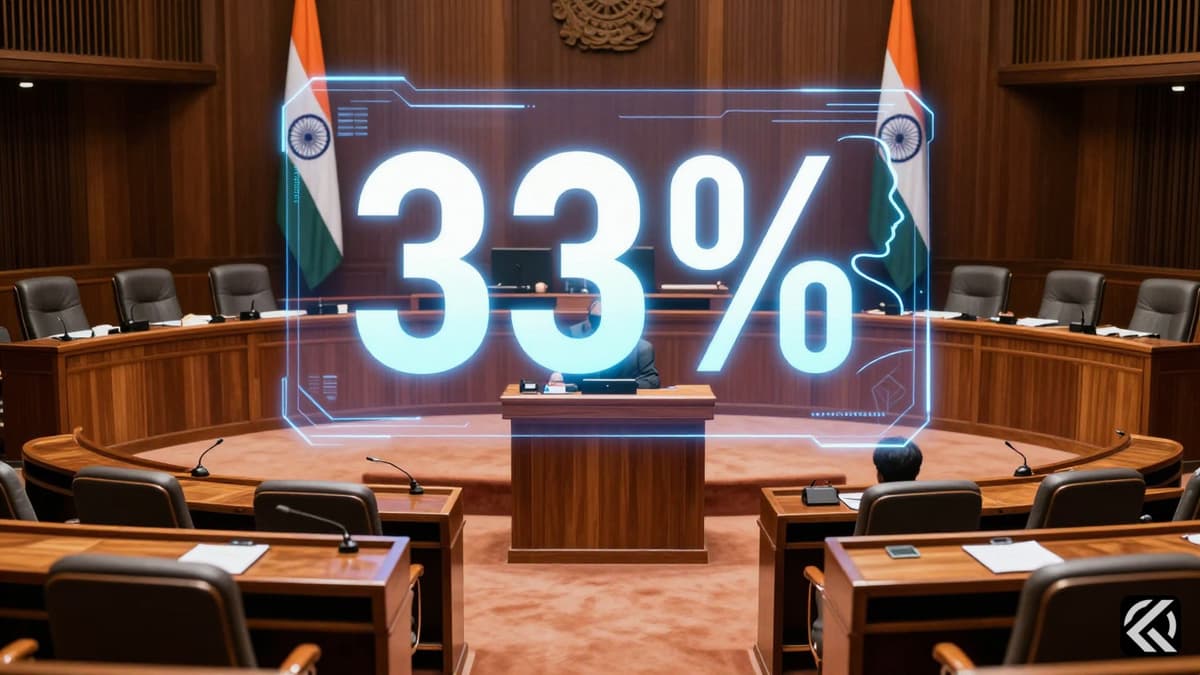
The Prime Minister confirmed that the Parliament's budget session is scheduled to reconvene for three days starting April 16. This session aims to finalize the legislation required to enact the 33% quota for women in the Lok Sabha and state assemblies, a measure set to take effect by the 2029 general elections. Addressing the concerns regarding population control and seat allocation, Modi stated that the government seeks a parliamentary stamp to ensure that Lok Sabha seats do not decline in Kerala, Tamil Nadu, Karnataka, Andhra Pradesh, Goa, or Telangana. He acknowledged the effective work these regions have done in controlling their population growth.
To facilitate this implementation, the government's proposal involves increasing the total number of seats in legislatures by approximately 50%. This increase will raise the number of Lok Sabha constituencies from the current 543 to 816. According to the Prime Minister, the additional seats created will be allotted exclusively for women. While he did not disclose the exact numerical breakdown of this expansion during the rally, the core of the Modi delimitation plan is to add seats rather than reallocate existing ones to avoid reducing the strength of southern states.
During his address, Modi emphasized the urgency of the issue, noting that the right for mothers and sisters has been pending for 40 years. He stated that this right should not remain unfulfilled in the 2029 polls. In a move to build consensus, the government had called for a meeting involving the Congress party and other opposition groups from the INDIA bloc. While the meeting, spearheaded by Home Minister Amit Shah, was attended by some opposition parties, key players including the Congress, the Trinamool Congress (TMC), and the Left have remained absent.
The absence of these major parties has led to calls from the Congress and Left for an all-party meeting, a scenario that the government suggests is unlikely to happen before Parliament meets mid-month. This timing is critical given that assembly polls in Tamil Nadu and West Bengal are scheduled for a week after Parliament convenes. Meanwhile, Kerala is currently heading into its own polls on April 9. The ruling BJP believes that accelerating the implementation of the women's quota will help deepen their traction with women voters in these three southern states, which have traditionally been strongholds for opposition parties.
The Prime Minister specifically directed his appeal to the women voters, asking them to tell members of the Congress and the LDF that the laws must be passed unopposed. He reinforced the message that the Women's Reservation Law is a decades-long pending right that requires immediate legislative action. By highlighting the specific states that would benefit from the delimitation adjustment, Modi sought to counter the narrative that population decline in these states would lead to a loss of parliamentary representation.
The government's firm stance on the Modi delimitation plan suggests a strategic move to secure political capital in the south, where demographic success has not translated into proportional political representation in the past. By guaranteeing that seat counts will not decline in Kerala, Tamil Nadu, Karnataka, and other southern states, the administration aims to remove a significant barrier to the passage of the reservation bill. The implementation timeline, targeting the 2029 polls, creates a four-year window for political recalibration. If the opposition parties continue to withhold support, the government's strategy of mobilizing women voters against these parties could fundamentally alter the electoral landscape in these strongholds, potentially shifting the balance of power ahead of the next general election cycle.
Jun 8, 2026 04:15 UTC
Trump Urges Netanyahu to Halt Iran Strike for Peace
Join 50,000+ readers getting the global briefing every morning.
No spam. Unsubscribe anytime.
Jun 8, 2026 02:28 UTC
Trump Walks Out of Meet the Press After Rejecting Evidence Demands
Jun 8, 2026 02:17 UTC
Magnitude 7.8 Quake Shakes Philippines, Urging Immediate Evacuations
Jun 8, 2026 00:51 UTC
Trump Claims Iran Nuclear Deal Imminent Despite Diplomatic Fractures
Jun 8, 2026 00:47 UTC
Iran Fires Missiles at Israel After Beirut Strike