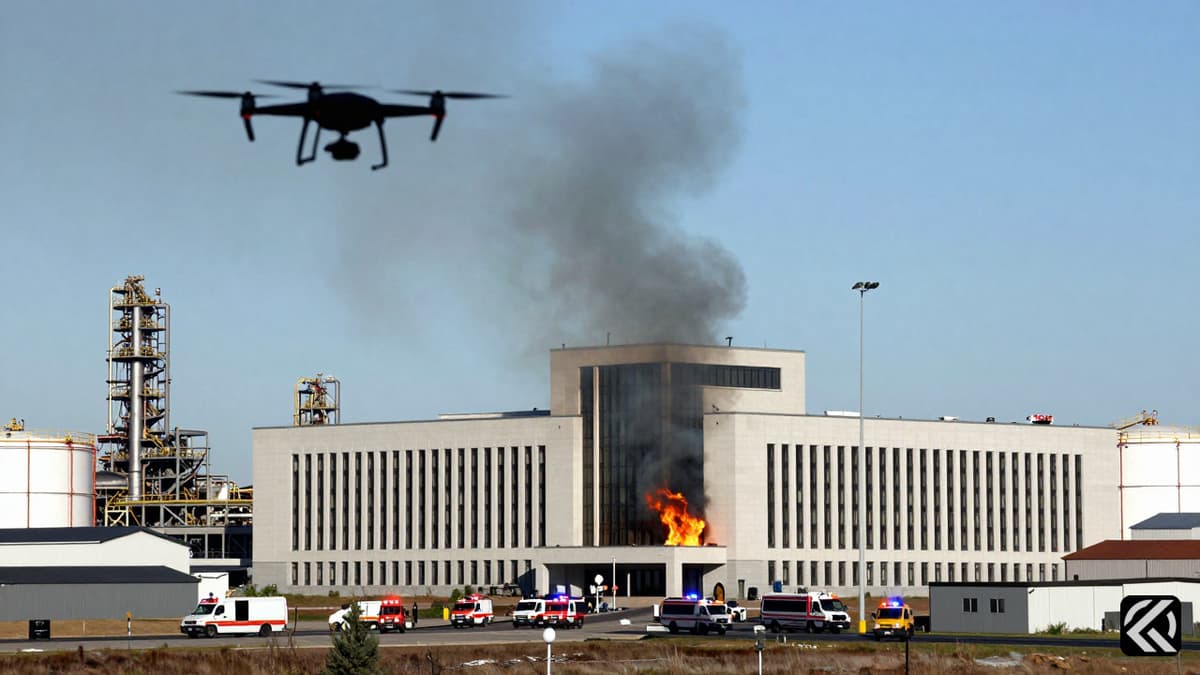
Hostile drones struck Kuwait City's ministries complex and the Shuwaikh oil sector on April 4, 2026, causing significant damage but no injuries as air defenses engaged.
Kuwait City faced a sudden security breach on the evening of April 4, 2026, when a drone attack on Kuwait targeted the prestigious Ministries Complex building. According to the country's Finance Ministry, the strike was a direct consequence of what they described as "unjust Iranian aggression," marking a significant escalation in regional tensions.
The incident unfolded late on Saturday, triggering a rapid response from emergency teams and relevant authorities who moved immediately in accordance with approved procedures. Simultaneously, videos circulating online captured flames erupting from a specific part of the Shuwaikh oil sector complex, indicating the attack's reach extended beyond the administrative center to critical energy infrastructure. The Finance Ministry confirmed in a statement on X that the Ministries Complex building was the primary target, suffering significant material damage, though they offered relief by reporting that no human injuries were sustained, praising God for the safety of the personnel.
Kuwait's military forces were immediately engaged in active defense as the situation developed. The country's air defense systems were reported to be working overtime to intercept incoming missiles and drones. This defensive posture was part of a broader context where Iran has pressed on with its offensive across the Gulf. The Kuwaiti army explicitly stated on X that the explosions heard throughout the region were not necessarily from the initial strike, but were the result of air defense interceptions targeting hostile missile and drone threats.
This specific drone attack on Kuwait is not an isolated event but rather a chapter in a rapidly escalating regional conflict. It serves as a retaliation for the February 28 strikes conducted by the United States and Israel. These earlier actions have since triggered a chain reaction, drawing Gulf states, including Kuwait, into a broader and more dangerous confrontation. The Ministry of Finance's statement highlighted that the attack on the Ministries Complex was a direct result of this ongoing "unjust Iranian aggression," underscoring the geopolitical gravity of the situation.
The attack on the Shuwaikh oil sector adds a layer of economic and strategic concern to the narrative. The visible flames shown in video footage of the area suggest that the Shuwaikh oil sector is a high-value target within the complex's infrastructure. The presence of significant material damage at the Ministries Complex, which houses vital government operations, indicates that the attackers aimed to disrupt the administrative heart of the nation. Despite the severity of the damage and the hostile nature of the intrusion, the immediate lack of casualties is a critical fact emphasized by officials.
The timing of the attack, occurring just days after the announcement of the broader regional conflict, suggests a coordinated effort by Iranian forces to respond to the previous US-Israeli strikes. The Kuwaiti army's emphasis on active interception highlights the intensity of the air threats currently facing the nation. Every explosion heard by the public is now contextualized as a defensive measure rather than just an offensive strike, painting a picture of a nation under siege but actively defending its sovereignty.
The situation underscores the fragility of regional stability in the Gulf. As Iran continues its offensive, the response from Gulf states involves not only active air defense but also diplomatic and administrative coordination, as evidenced by the swift response of the Finance Ministry and the release of official statements. The incident has forced a re-evaluation of security protocols and defense strategies, with the Ministries Complex and the oil sector now identified as critical vulnerabilities in the nation's infrastructure.
The convergence of these attacks marks a definitive shift from localized friction to a full-scale regional confrontation involving major global powers and their regional allies. With the Ministries Complex and the Shuwaikh oil sector already targeted, the pattern suggests a continued strategy of pressure from Iranian forces seeking to counteract the earlier February 28 strikes. If this trend continues, future incidents may involve more sophisticated threats or targets across the Gulf, potentially drawing in other regional actors and escalating the conflict further. The immediate absence of casualties offers a temporary reprieve, but the material damage and the explicit attribution to Iranian aggression signal a prolonged period of heightened alert and potential for further hostilities as the regional dynamics remain volatile.
Jun 8, 2026 00:47 UTC
Iran Fires Missiles at Israel After Beirut Strike
Jun 7, 2026 22:00 UTC
US, Iran Peace Hops Fade 100 Days Into War
Jun 7, 2026 20:57 UTC
Iran Strikes Israel: IRGC Promises Week of Continuous Offensive
Jun 7, 2026 18:43 UTC
Trump Demands Compliance Before Iran Deal Progress
Jun 8, 2026 00:51 UTC
Trump Claims Iran Nuclear Deal Imminent Despite Diplomatic Fractures


