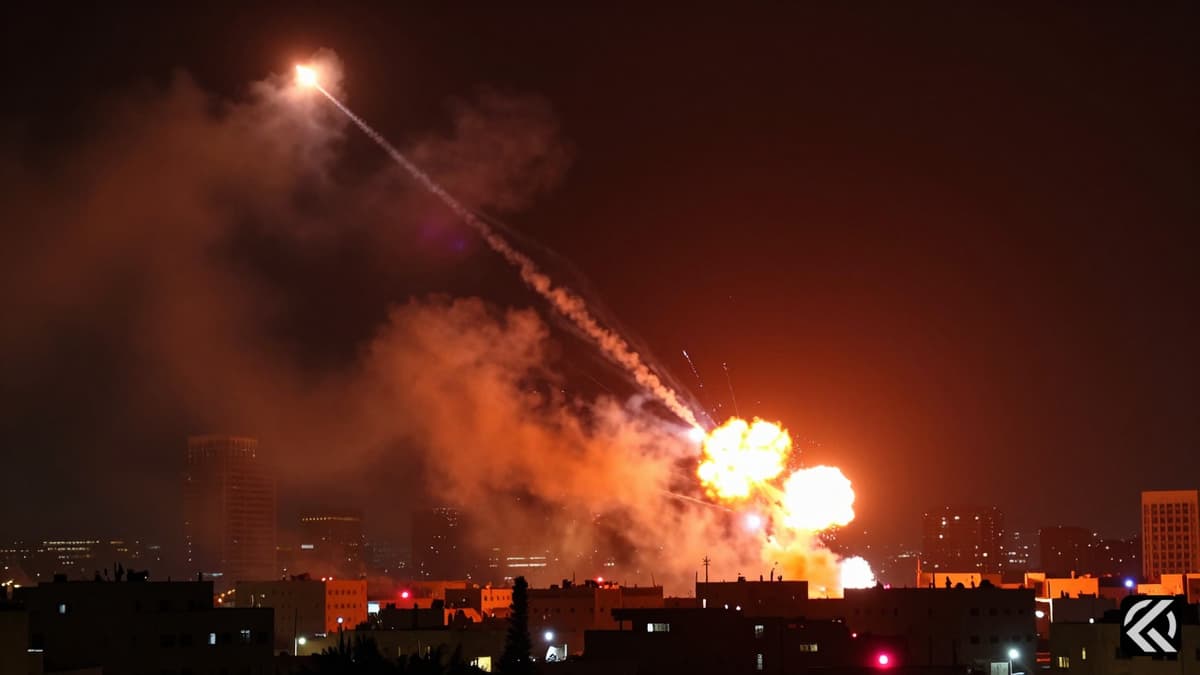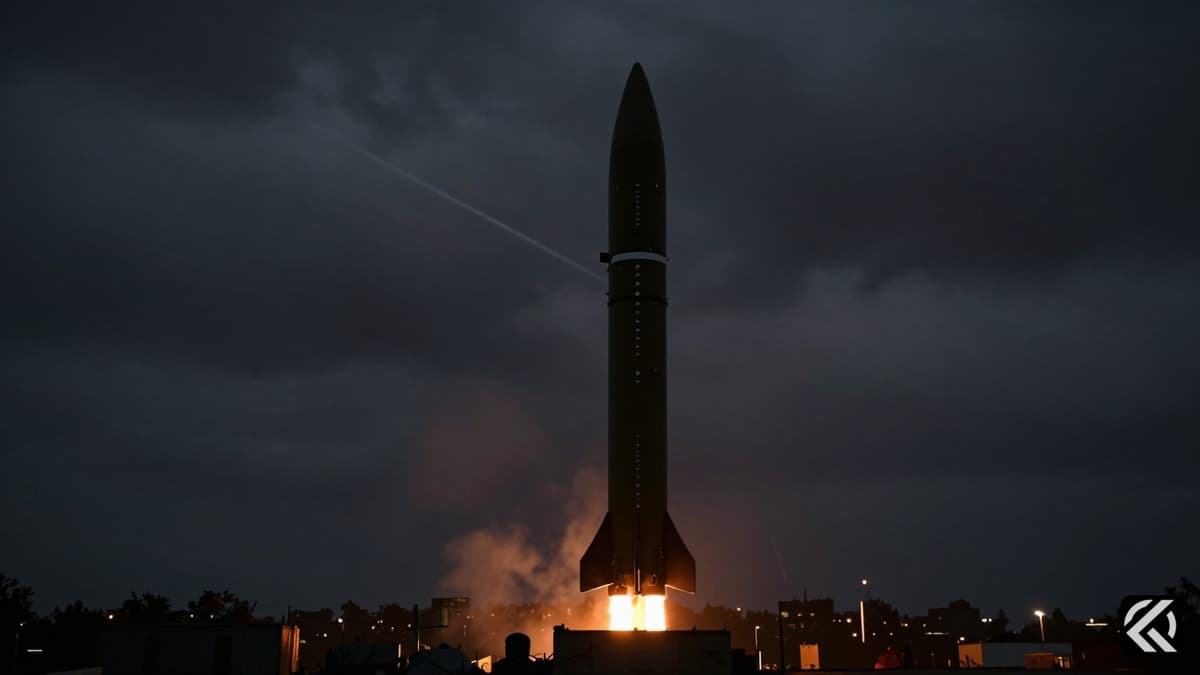
Iran's Revolutionary Guards have launched a significant missile offensive against Israel, marking the start of an intense week of retaliation following recent Israeli actions in Lebanon.
Iran’s Islamic Revolutionary Guard Corps (IRGC) has officially confirmed the launch of a major missile offensive toward Israel, declaring that its promise of retaliation has been fulfilled. This significant military escalation occurred on June 7, 2026, shortly after Israeli forces conducted airstrikes on the Lebanese capital, Beirut. The IRGC Aerospace Commander, Majid Mousavi, announced the success of the operation, signaling a shift from diplomatic threats to kinetic action. The Iranian state media, including reports from BBC Persian, highlight that this event marks a critical turning point in the ongoing regional conflict, with Tehran vowing that the current missile barrage is merely the beginning of a sustained campaign.
The initial trigger for this intensified exchange was an Israeli military operation in southern Beirut earlier in the day. According to Lebanon’s health ministry, two air strikes hit apartment buildings in Dahieh, a stronghold of Hezbollah, resulting in two deaths and at least 20 injuries, including women and children. Israeli Prime Minister Benjamin Netanyahu stated that these strikes targeted "terrorist headquarters" in response to Hezbollah’s firing at Israeli territory, a move Hezbollah later confirmed. In the wake of these Beirut attacks, the Israel Defense Forces (IDF) warned of potential incoming fire and prepared for immediate threats.
In response to the Israeli aggression, Iran’s Foreign Minister Abbas Araghchi posted images of the flags of Iran and Lebanon on social media platform X, symbolizing solidarity. Meanwhile, Senior Member of Iran's Parliament, Ebrahim Rezaei, had previously posted a warning to "watch the sky of the occupied territories," setting the stage for the current offensive. The IRGC issued a formal statement asserting that tonight’s attacks “served as a warning” against what it described as Israel's "acts of aggression." The military organization explicitly accused both the US and Israel of failing to honor their commitments under a ceasefire agreement that had come into effect in early April.
The scope of the current offensive is described by the IRGC as extensive and prolonged. Commander Mousavi confirmed that ballistic missiles were fired at the Ramat David Airbase, located to the south-east of Haifa. More ominously, the IRGC stated that “this operation is not a passing event, but rather the beginning of a full week of continuous strikes.” The military promised that “waves of missiles and drones will continue to be launched around the clock for the next seven days until the enemy is deterred and ceases its crimes.” The IRGC further threatened that any targeting of Iranian territory would be met with a “devastating and overwhelming response beyond all expectation,” and that future responses would be “broader,” encompassing all US and Israeli targets in the region.
Amid the unfolding missile exchanges, US President Donald Trump addressed the situation, urging Iran to de-escalate. A Fox News correspondent quoted Trump as saying, “You've shot your missiles. That's enough. Get back to the table and make a deal.” This diplomatic push comes as the Israeli military confirms it has intercepted a wave of Iranian missiles in northern Israel, while sirens have been sounded in several parts of the country, indicating active defense measures are in progress. The combination of sustained Iranian military threats and urgent American diplomatic intervention suggests a volatile period ahead, with the region on high alert for further developments in the coming week.
The confirmation of Iran strikes Israel via ballistic missiles and the IRGC's declaration of a week-long campaign signals a severe deterioration in the fragile ceasefire that had previously held. The direct involvement of the IRGC, coupled with the specific targeting of military infrastructure like the Ramat David Airbase, indicates a strategic shift by Tehran to enforce its deterrent capabilities. The subsequent international reaction, including calls for diplomacy from the US, underscores the global concern over a potential wider regional war. As both nations brace for continued hostilities, the immediate future points toward heightened military readiness in Israel and sustained aerial and missile activity from Iran, with the risk of miscalculation or escalation remaining critically high.
Jun 8, 2026 00:51 UTC
Trump Claims Iran Nuclear Deal Imminent Despite Diplomatic Fractures
Join 50,000+ readers getting the global briefing every morning.
No spam. Unsubscribe anytime.
Jun 8, 2026 00:47 UTC
Iran Fires Missiles at Israel After Beirut Strike
Jun 7, 2026 22:38 UTC
Congress Party Claims Unity for INDIA Bloc Delhi Meeting
Jun 7, 2026 22:00 UTC
US, Iran Peace Hops Fade 100 Days Into War
Jun 7, 2026 20:10 UTC
Congress Asserts Opposition Unity Despite INDIA Bloc Cracks