
Section
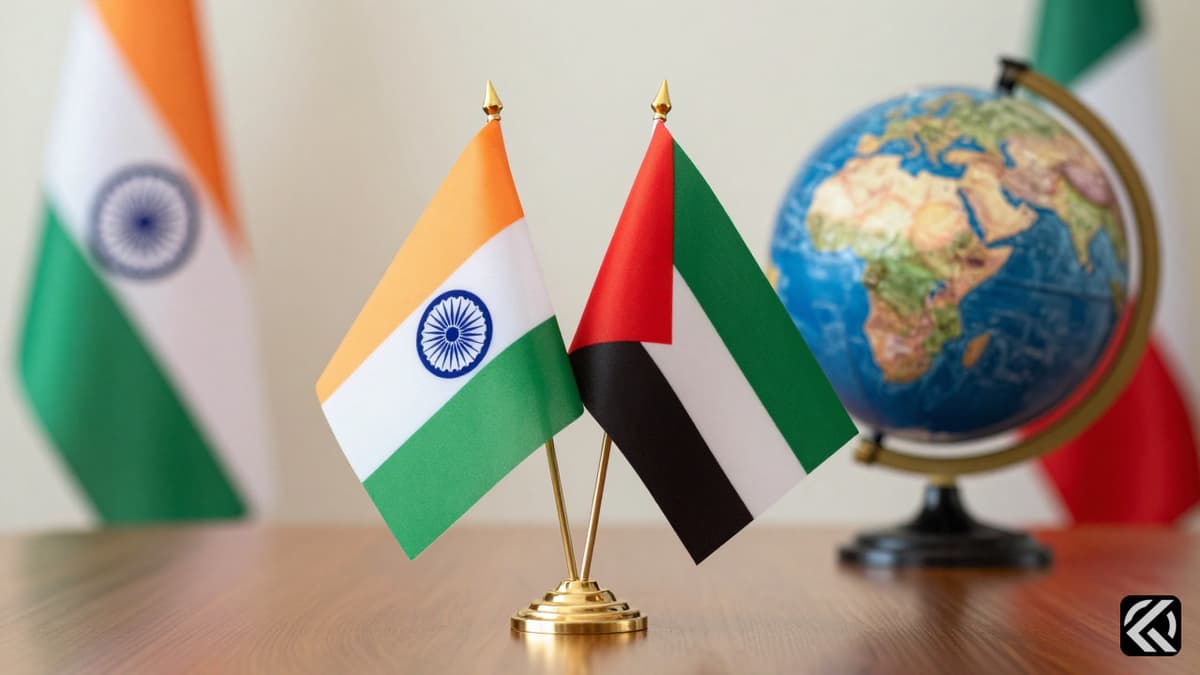
PM Modi concludes his UAE visit with major strategic pacts. Discussing global conflict impacts, he underscores India's readiness to support peace efforts while strengthening bilateral ties.
Prime Minister Narendra Modi has concluded his engagements in the United Arab Emirates, ending a visit focused on deepening bilateral ties and addressing geopolitical challenges.
During the final stages of his trip, PM Modi held critical talks with UAE President Sheikh Mohamed bin Zayed Al Nahyan. The two leaders signed significant pacts on strategic defence cooperation, petroleum reserves, and the supply of liquefied petroleum gas (LPG). These agreements were formalized on Friday, May 15, 2026, marking a tangible step in advancing the comprehensive strategic partnership between the two nations.
Prior to the conclusion of the visit, PM Modi posted on X, thanking his host for receiving him at Abu Dhabi Airport with gracious gestures. He described his eagerness to meet in person after long periods of phone conversations, stating, "I used to keep speaking to you over the phone, but I was very eager to meet you in person." The Prime Minister was accorded a guard of honour upon his arrival, with UAE F-16 jets escorting his plane into airspace, underscoring the high diplomatic importance placed on the visit.
A central theme of the discussions was the escalating crisis in West Asia. PM Modi explicitly condemned the attacks occurring amid the West Asia war, noting that "the impact of the conflict is being felt globally." He highlighted how the war has disrupted production, storage, and transport of energy products including crude oil, natural gas, and fertilizers. This disruption has led to supply chain issues and increased sectoral prices worldwide. The Prime Minister emphasized that India is ready to extend all possible support to bring peace to the region.
The visit also addressed the broader economic context. While the Russia-Ukraine war continues, the West Asia crisis has further pressured the global economy. A serious, though partial, blockade of the Strait of Hormuz has restricted the passage of crude oil and other goods. Although a temporary ceasefire has helped lower Brent crude oil prices from over $109 per barrel in early April to about $95, normalization of supply chains may take considerable time.
Strategic discussions focused heavily on energy security. The Ministry of External Affairs had noted prior to the visit that the leaders would exchange views on regional and international issues, particularly energy cooperation. The focus of Mr. Modi’s trip was explicitly to enhance India’s energy security through these new agreements.
Looking ahead, India and the UAE are expected to firm up cooperation in LPG and strategic petroleum reserves. This aligns with the UAE's recent decision to quit the Organisation of the Petroleum Exporting Countries (OPEC). Sanjay Sudhir, former Indian Ambassador to the UAE, noted that the UAE plans to expand its crude production to 5 million barrels a day by 2027. He indicated that Indian companies are likely to engage in talks with their Gulf counterparts for long-term contracts to secure this expanding supply.
The cultural and people-to-people dimensions of the relationship were also highlighted. UAE Minister Reem Al Hashimy emphasized the deep connections between the two countries, stating that every Emirati probably has "some connection with India" one way or another. She pointed to trade in clothes and spices as vital parts of the relationship and noted a shared respect for traditional medicine knowledge. "If I ask any Emirati, you will probably find that they have had some connection to India in one way or another," she said, citing family members who rely on Indian herbal knowledge for treatment.
Beyond the UAE, PM Modi is embarking on a multi-nation tour. He will visit the Netherlands, Sweden, Norway, and Italy, marking a six-day journey to deepen India’s bilateral ties amid ongoing geopolitical upheavals. The UAE stop was the first leg of this broader diplomatic effort.
In a separate but significant development announced during this period, PM Modi stated that India ‘concluded’ a ‘historic’ Free Trade Agreement (FTA) with the European Union. He announced the end of negotiations that began nearly two decades ago and were revived in 2022. Speaking with EU leaders, including European Council president Antonio Luis Santos da Costa and European Commission president Ursula Von der Leyen, Mr. Modi highlighted the ambitious FTA alongside a new Security and Defence Partnership and a system of mobility for Indians to the EU region.
Former Ambassador Sanjay Sudhir described the UAE visit as “very significant,” coming in the backdrop of events in West Asia. He noted that the visit serves as a strong symbol of support and is expected to boost India’s energy security through augmented supplies of LPG and LNG. The visit underscores the strategic imperative for India to secure stable energy sources amidst global instability, leveraging strong historical and economic ties with the Gulf nation.
The signing of strategic defence and petroleum reserve pacts, alongside the push for long-term LPG and crude oil contracts, solidifies a critical pillar of India’s foreign policy. As the UAE expands its crude production post-OPEC exit, this partnership offers India a reliable counterbalance to global supply shocks. The immediate effect is stabilized energy imports, while the long-term impact will likely see deeper integration of Indian capital and technology in Gulf energy infrastructure, ensuring sustained energy security for India amidst persistent West Asian volatility.
Jun 11, 2026 17:21 UTC
Bangladesh Opposition Mobilizes Against India-Bangladesh Border Push-Ins and BSF Killings
Join 50,000+ readers getting the global briefing every morning.
No spam. Unsubscribe anytime.
Jun 11, 2026 17:40 UTC
Boelter Pleads Guilty in Minnesota Political Assassinations
Jun 11, 2026 17:21 UTC
Bangladesh Opposition Mobilizes Against India-Bangladesh Border Push-Ins and BSF Killings
Jun 11, 2026 17:21 UTC
John Healey Quits as UK Defence Secretary Over Funding Dispute
Jun 11, 2026 16:19 UTC
UK Defence Secretary John Healey Quits Over Funding Dispute


