
Section
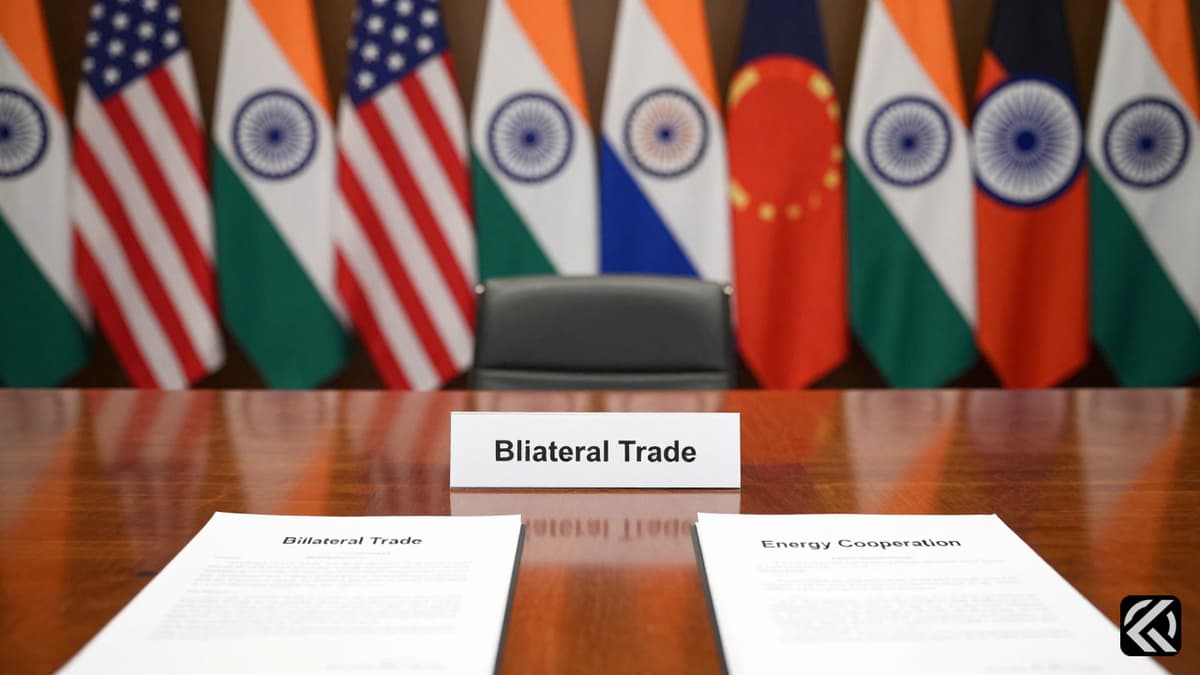
U.S. Secretary of State Marco Rubio has landed in New Delhi for a pivotal visit aimed at strengthening bilateral ties and preparing for the Quad summit.
U.S. Secretary of State Marco Rubio has arrived in New Delhi on Saturday, May 23, 2026, initiating a four-day visit designed to repair bilateral ties that have faced strain since mid-last year. The top U.S. diplomat, accompanied by his wife Jeanette D. Rubio, landed in the Indian capital following a brief stop in Kolkata. This strategic move underscores the administration’s commitment to stabilizing relations with New Delhi, a critical partner in the Indo-Pacific region.
The visit follows a series of diplomatic engagements, including a meeting at Seva Theerth in New Delhi, where Rubio held discussions with Prime Minister Narendra Modi. The meeting, which lasted over an hour, focused on enhancing cooperation across security, trade, and technology sectors. During the talks, the two leaders addressed the current situation in West Asia, with Rubio emphasizing that the United States will not allow Iran to hold the global energy market hostage. He affirmed that U.S. energy products possess the potential to diversify India’s energy supply, an issue of paramount importance given India’s reliance on energy imports.
Prior to his arrival in Delhi, Rubio landed in Kolkata and visited the Nirmala Shishu Bhavan, a network of children’s homes managed by the Missionaries of Charity. Sister Concettina, the Secretary General of the Missionaries of Charity, described the visit as a personal initiative by Rubio to receive blessings at Mother Teresa’s tomb. She noted, “It was his initiative to come to the Mother House, and it was a joy for us to welcome him because he wanted to receive blessings at Mother’s tomb. We prayed together, and that is about all. Nothing else really happened... It was just like a family get-together.”
U.S. Ambassador to India, Sergio Gor, announced on social media that Rubio, on behalf of President Donald Trump, has extended an invitation to PM Modi to visit the White House in the near future. This gesture signals a desire to elevate the strategic partnership to new heights. The U.S. State Department, via spokesman Tommy Pigott, stated that U.S.-India ties are “rooted in our shared democratic values” and economic opportunity. Pigott highlighted recent bilateral achievements, including significant investments supporting the “Mission 500” initiative, which aims to double trade between the two nations by 2030.
During his earlier remarks in Miami, Rubio criticized NATO for not supporting the U.S. war on Iran, questioning the alliance's value to U.S. security. He stated, “There are many countries in NATO that agree with us that Iran can’t have a nuclear weapon, that Iran is a threat to the world.” This stance aligns with the broader regional concerns discussed during his meeting with PM Modi, who reaffirmed the call for peaceful resolution of conflicts through dialogue and diplomacy.
The diplomatic schedule includes wide-ranging talks with External Affairs Minister S. Jaishankar, followed by attendance at the Quad Foreign Ministers conclave. India will chair the Quad Foreign Ministers’ meeting on Tuesday, May 26, 2026, just days after President Trump’s visit to China. The agenda for the Quad summit will prioritize discussions on a “free and open Indo-Pacific.” Rubio expressed deep commitment to this grouping, which includes Japan and Australia, stating, “We’re also deeply committed to the Quad... the building out of this Quad, which is something you’ll see.”
Economic ties remain a central pillar of the visit. Rubio told reporters in Miami, “Well, we want to sell them as much energy as they’ll buy. And obviously, you’ve seen I think we’re at historic levels of U.S. production, and U.S. export.” This push for energy cooperation comes amid geopolitical shifts, including the U.S.-Israeli attack on Iran and Iran’s retaliation by choking off the Strait of Hormuz, which has sent global oil prices soaring. India, which maintains historic ties with Iran and a growing relationship with Israel, is navigating a complex diplomatic landscape.
Political reactions within India have emerged regarding the extent of U.S. influence on Indian foreign policy. The Congress party questioned what else Rubio has in store, citing his recent announcements regarding the Venezuelan President’s visit to India. Jairam Ramesh, a Congress general secretary, posted a video of Rubio’s statements on X, asking, “What else does U.S. have in store for India’s foreign policy?” This inquiry reflects internal debates about the balance between aligning with U.S. interests and maintaining independent foreign policy stances.
Despite these political queries, the administration has labeled India a “great ally, great partner.” The visit also touches on sensitive topics, such as human rights. While President Trump rarely raises human rights issues, some segments of his base have expressed concerns over the treatment of Christians under PM Modi. Rubio’s choice of Kolkata as his first stop, focusing on the Missionaries of Charity, has been viewed as a symbolic gesture regarding these concerns.
The strategic importance of India is further highlighted by the re-emergence of Pakistan as a U.S. partner in the current conflict, with Pakistan’s army chief traveling to Tehran as a mediator. This development marks a shift from the Cold War era, where the U.S. prioritized relations with India against the backdrop of China’s rise. Rubio’s visit aims to solidify this historic partnership amidst these complex regional dynamics.
Secretary Rubio’s four-day itinerary in Delhi, Kolkata, Jaipur, and Agra underscores a comprehensive effort to deepen the Quad summit partnership and address immediate regional crises. By focusing on energy diversification and trade expansion through the “Mission 500” goal, the U.S. aims to mitigate the economic shocks caused by the West Asia crisis. The extension of an invitation to PM Modi for a White House visit suggests that diplomatic relations are entering a phase of renewed high-level engagement. As India chairs the upcoming Quad Foreign Ministers’ meeting, the anticipated agreements on security and trade will likely redefine the geopolitical landscape of the Indo-Pacific, balancing traditional alliances with new energy dependencies and regional stability measures.
Jun 11, 2026 17:21 UTC
Bangladesh Opposition Mobilizes Against India-Bangladesh Border Push-Ins and BSF Killings
Join 50,000+ readers getting the global briefing every morning.
No spam. Unsubscribe anytime.
Jun 11, 2026 17:40 UTC
Boelter Pleads Guilty in Minnesota Political Assassinations
Jun 11, 2026 17:21 UTC
Bangladesh Opposition Mobilizes Against India-Bangladesh Border Push-Ins and BSF Killings
Jun 11, 2026 17:21 UTC
John Healey Quits as UK Defence Secretary Over Funding Dispute
Jun 11, 2026 16:19 UTC
UK Defence Secretary John Healey Quits Over Funding Dispute


