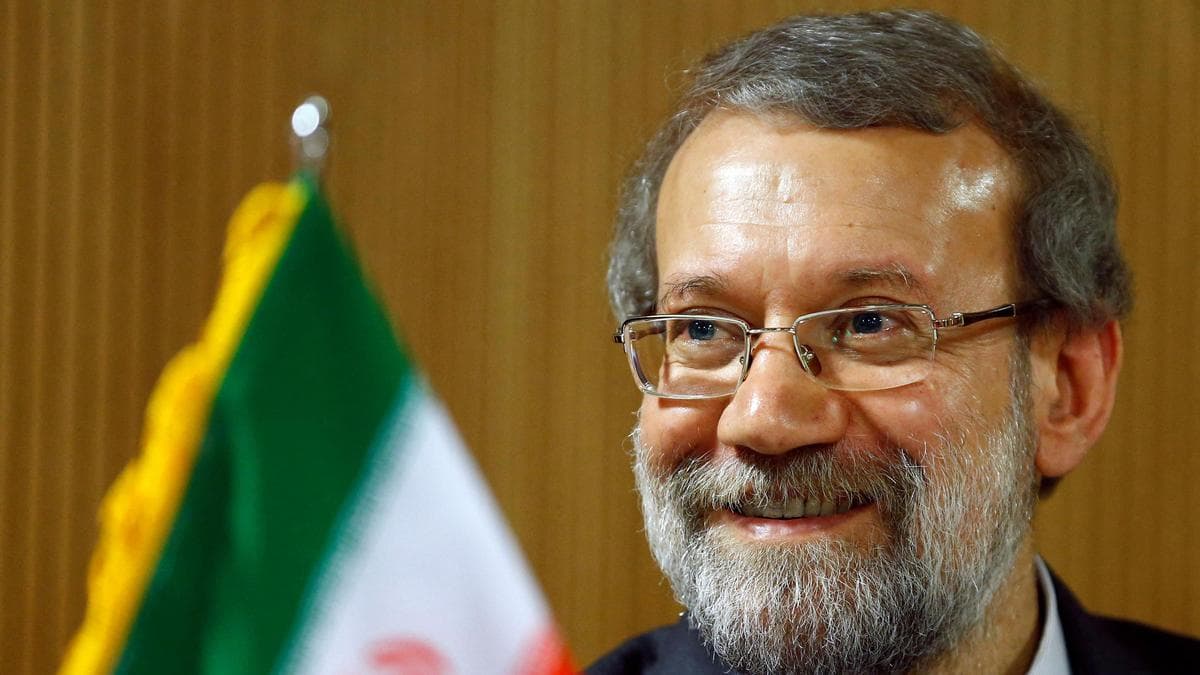
Following the Israeli strike that killed key leader Ali Larijani, Iran's Foreign Minister insists the political system remains stable despite the loss.
In the wake of a significant geopolitical event occurring in March 2026, Iran has moved to assert the resilience of its national governance following a targeted strike that claimed the life of a senior official. The assassination of Ali Larijani, a central figure in the nation's security apparatus, by Israel has triggered a complex response from Tehran. While the Islamic Revolutionary Guard Corps (IRGC) has pledged a forceful retaliation, the country's Foreign Minister, Abbas Araghchi, has taken a different diplomatic tone. Araghchi insists that the removal of such a high-profile individual will not cause the collapse of the state. This divergence between the military's vow of vengeance and the government's claim of structural stability highlights the current tension within the region. The incident marks a continued escalation following the initial outbreak of hostilities earlier in the year.
Foreign Minister Abbas Araghchi addressed the international media to clarify the government's position regarding the impact of Larijani's death. Speaking to Al Jazeera, Araghchi emphasized that the Islamic Republic possesses a robust framework designed to withstand the loss of key personnel. He questioned the strategic logic of the opposing nations, noting that the Americans and Israelis have yet to grasp the durability of the Iranian state. According to the Foreign Minister, the political, economic, and social institutions are firmly established. He argued that the presence or absence of any single individual, regardless of their influence, does not fundamentally alter the trajectory of the system.
Araghchi drew a direct comparison to the earlier events of February 28, 2026. During that strike, Supreme Leader Ayatollah Ali Khamenei and several other top leaders were killed. Despite this catastrophic loss, the Foreign Minister noted that the system continued its operations immediately by providing a replacement. He stated that even the leader himself was martyred, yet the work persisted. This precedent sets the stage for the current reaction to Larijani's killing. Araghchi maintained that if anyone else is martyred, the outcome will remain consistent with the past response. The political structure is described as a very solid entity that does not rely on a single point of failure.
While the Foreign Minister focused on institutional stability, the military wing of the regime adopted a more aggressive posture. The Islamic Revolutionary Guard Corps issued a statement expressing condolences for the fallen leaders. In this declaration, the Corps characterized the blood of the esteemed martyr as a source of strength and national alertness. They framed the event as a call to action against what they termed global arrogance and international Zionism. The statement was unequivocal in its commitment to retribution. The Guards declared that they would definitely not omit to avenge the esteemed martyr and the other martyrs of Iran’s Sacred Defence against the adversaries. This vow of revenge stands in stark contrast to the diplomatic assurances of stability provided by the Foreign Ministry.

Following the announcement of Larijani’s killing, Iran launched a new wave of military actions. These attacks included both missiles and drones directed at Israel and various kingdoms within the Persian Gulf. The IRGC provided specific details regarding the scope of their retaliatory strike. They claimed to have struck more than 100 targets located in the city of Tel Aviv. The statement indicated that the retaliation was a direct response to the martyrdom of Dr. Ali Larijani. Beyond Tel Aviv, the Guards targeted sensitive and strategic enemy objects in other locations. These targets included the holy occupied city of al-Quds and the occupied port of Haifa. Additionally, the strike reached Be’er Sheva, which the IRGC described as the regime’s technological epicenter, and the Negev Desert.
To fully understand the gravity of this event, one must look at the background provided in the reports. Abbas Araghchi served as the chief negotiator with the United States prior to the conflict. However, the diplomatic efforts ceased when America and Israel launched the war on February 28. The initial strike on that date was particularly devastating, resulting in the deaths of Supreme Leader Ayatollah Ali Khamenei and several other top leaders. In the aftermath of that attack, Ali Larijani emerged as a key figure in the political structure. He effectively became a wartime leader following the loss of the Supreme Leader. The recent strike also claimed the lives of Larijani’s son, Mortaza, and his deputy, Alireza Bayat. In a separate attack, Gholamreza Soleimani, who commanded the Basij paramilitary forces, was also killed.
The assassination of Ali Larijani has intensified the conflict between Iran and Israel, yet the Iranian government maintains a stance of institutional resilience. While the IRGC promises military retribution through strikes on strategic targets across Israel and the region, Foreign Minister Araghchi emphasizes that the political system is designed to endure such losses. The events follow a pattern established after the February 28 strike, where the leadership structure adapted to the loss of the Supreme Leader. As missile and drone attacks continue, the focus remains on whether the promised revenge will alter the strategic landscape or if the system will continue to function as claimed by its officials.
May 2, 2026 17:04 UTC
Germany Prepares for Trump-Linked US Troop Withdrawal
Join 50,000+ readers getting the global briefing every morning.
No spam. Unsubscribe anytime.
May 2, 2026 17:38 UTC
Ten Dead in Bargi Dam Tragedy as Family Shares Final Call
May 2, 2026 17:04 UTC
Germany Prepares for Trump-Linked US Troop Withdrawal
May 2, 2026 15:16 UTC
Mamata Banerjee Denounces Exit Poll Manipulation in West Bengal
May 2, 2026 13:20 UTC
India Launches Cell Broadcast Disaster Alert System Trial