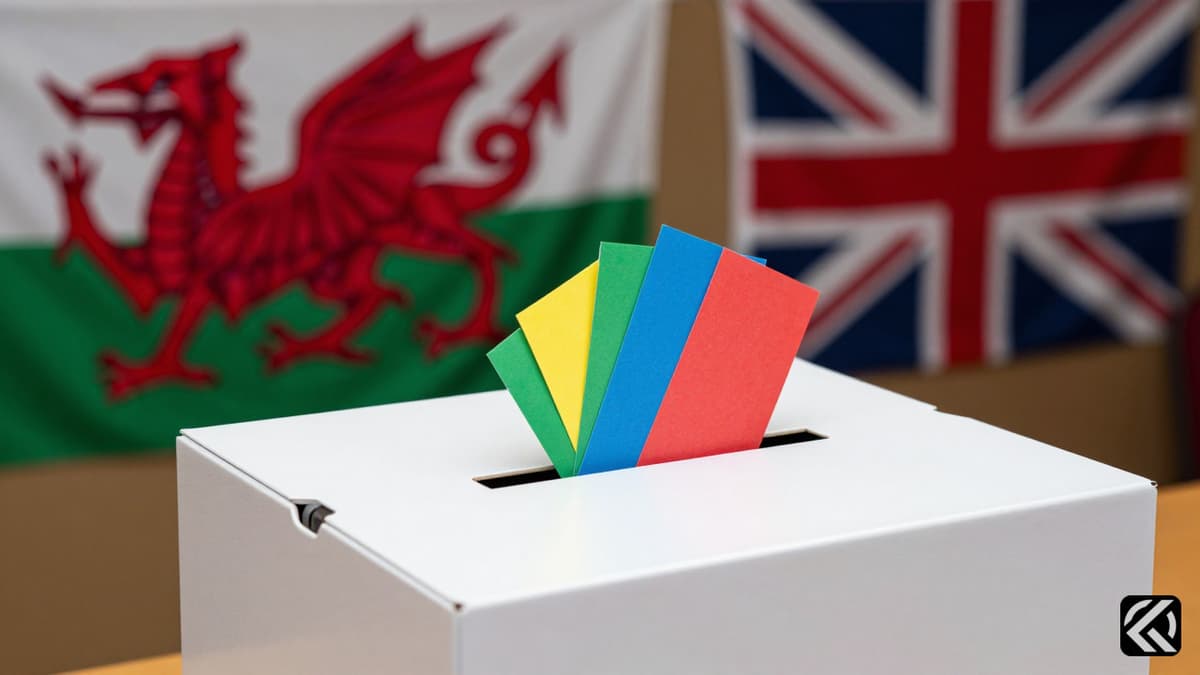
Welsh voters are poised to end Labour’s 27-year rule in the Senedd election, while Reform UK achieves historic council gains across England, reshaping the national political landscape.
The Senedd election results in Wales mark a historic turning point, with Labour expected to lose control for the first time in nearly three decades. Simultaneously, Reform UK is securing its most significant local victories to date, taking control of Havering and making substantial gains across England.
Counting in Wales and Scotland began at 09:00 BST, introducing a new voting system and 16 new constituencies. While results are still rolling in, early data indicates a dramatic shift in voter sentiment. Opinion polls had previously suggested that Plaid Cymru and Reform UK were vying for the top spot, but the early results confirm a broader decline for the incumbent government.
Prime Minister Keir Starmer has taken responsibility for the "tough" night for his party but insisted he is "not going to walk away." Despite this vow, disillusionment within the Labour party is growing. Some MPs are quietly looking toward Greater Manchester Mayor Andy Burnham as a potential future leader, though he faces significant procedural hurdles, including the need to secure a winnable parliamentary seat.
Meanwhile, Nigel Farage hailed a "historic shift" in British politics. Reform UK’s success in wards that voted heavily for Brexit in 2016 underscores the party's growing influence. Farage predicts continued pressure on Starmer’s leadership, suggesting the Prime Minister may not survive until the summer. The political mood remains volatile as counts continue in Scotland and Wales, with the Scottish National Party also hoping for an overall majority in Holyrood.
The Senedd election results in Wales are being described as unlike any seen before. Labour has won both Westminster and Cardiff Bay elections in the country for more than a century, making this potential loss a historic anomaly. The election featured 16 new constituencies and an increase in elected members to 96, utilizing a new voting system that adds complexity to the results process.
Counting only began at 09:00 BST, delaying the delivery of winners to reporters and the public. This timing meant that, unlike previous elections where votes were largely counted by morning, the full picture is still emerging. However, the trajectory is clear: Labour is expected to lose the Senedd for the first time, ending its long-standing dominance in Welsh politics.
In England, the narrative is defined by the rise of Reform UK. Nigel Farage declared that his party had taken control of Havering, marking its first London borough council win. Early results also showed gains in Newcastle-under-Lyme and hundreds of seats taken from Labour. Farage stated that Starmer’s party is being "wiped out by Reform in many of their most traditional areas."
Professor Sir John Curtice, a polling expert, analyzed the overnight local election results, confirming that electoral politics in Britain has become "highly fragmented." Reform UK secured the most seats among those declared, with 30% of seats won and an average vote share of 26%. The party’s support was highest in areas where more than 60% voted for Brexit in 2016, averaging 41% support in those wards. In contrast, Reform won on average just 10% in areas where less than 49% backed Brexit.
The Greens also performed well, averaging 16% of the vote in declared wards. This represents a seven-point increase on their performance in the 2022 local elections, suggesting their best-ever local election performance. However, they have only secured a net gain of 25 seats, with relatively few first-place finishes despite many second and third places.
The Conservatives also faced a "tough night," losing many seats to Reform UK. However, they managed to gain control of Westminster City Council from Labour, providing a minor bright spot for the party. Shadow housing secretary James Cleverly acknowledged the difficult results for his party.
Behind the public declarations of resilience, significant turmoil exists within the Labour party. Some Labour MPs are disillusioned with Keir Starmer’s leadership and would like Greater Manchester Mayor Andy Burnham to succeed him. However, Burnham faces substantial obstacles. He was blocked from standing in the Gorton and Denton by-election earlier this year by Labour’s National Executive Committee, and sources suggest they would be willing to block him again.
To contest a leadership election, Burnham would need to be selected for a winnable seat and win the resulting by-election, likely requiring a current Labour MP to stand down. Over results from Greater Manchester show big Reform UK gains in Wigan and Tameside, complicating this path. One Labour figure noted that the "only winnable seats for the King of the North could be in London."
Even if Burnham wins a seat, it does not guarantee he would win a leadership contest. A significant number of "soft left" MPs prefer him to former deputy prime minister Angela Rayner, believing Burnham would be more popular with voters. Some former Blairites say they could "live with" him, indicating a broadening of potential support should a leadership contest occur.
Labour leader in Hull, Daren Hale, admitted that the issue for Labour "wasn’t really the party." He reported that voters repeatedly mentioned Keir Starmer as the reason for turning away. "The person who came up on the doorstep again and again and again was the leader of the Labour Party, Keir Starmer," Hale said, noting that voters felt they had to get messages to the leader through their local representative.
The immediate aftermath of this election cycle reveals a deeply fractured political environment. The Senedd election results in Wales signal a potential end to Labour's decades-long hold on power in Cardiff Bay. This shift is mirrored in England, where Reform UK’s ability to win in London and traditional strongholds suggests a long-term realignment of voter loyalty.
The fragmentation of the vote, highlighted by the strong performances of both Reform UK and the Greens, indicates that the traditional two-party dominance is eroding. For the Labour party, the challenge is not just electoral but existential. The consensus among some MPs is that the Prime Minister cannot lead them into the next generation of politics.
As counts continue in Scotland and Wales, the Scottish National Party hopes for an overall majority, which would further challenge the UK-wide narrative of Labour’s recovery. The Lib Dems, with deputy leader Daisy Cooper noting their best results were "to come later," may also capitalize on the split in the anti-Labour vote.
The pressure on Keir Starmer is immediate. While he claims he is "not remotely interested" in an orderly transition, the lack of public calls for his resignation may be a strategic pause rather than a sign of stability. With the mood remaining volatile and support for Reform UK entrenched in Brexit-leaning areas, the political landscape is poised for prolonged uncertainty and potential leadership challenges within the major parties in the coming months.
The election results confirm a decisive break from historical norms, with Labour facing its first Senedd loss and Reform UK establishing itself as a formidable national force. The intense dissatisfaction with Starmer’s leadership, particularly in door-to-door engagements, suggests that internal reforms will be urgent. As Scotland and Wales complete their counts, the full scale of this political realignment will become clear, potentially forcing major parties to redefine their strategies for the next general election.
May 8, 2026 19:28 UTC
Iran Transforms Destroyed B1 Bridge Into Symbol of Resistance
Join 50,000+ readers getting the global briefing every morning.
No spam. Unsubscribe anytime.
May 9, 2026 01:12 UTC
Suvendu Adhikari to Assume Office as Bengal's 9th Chief Minister
May 8, 2026 21:27 UTC
Trump Orders Pentagon to Release First UFO Files
May 8, 2026 21:20 UTC
Trump Issues Veiled Nuclear Threat Amid US-Iran Tensions
May 8, 2026 19:28 UTC
Iran Transforms Destroyed B1 Bridge Into Symbol of Resistance