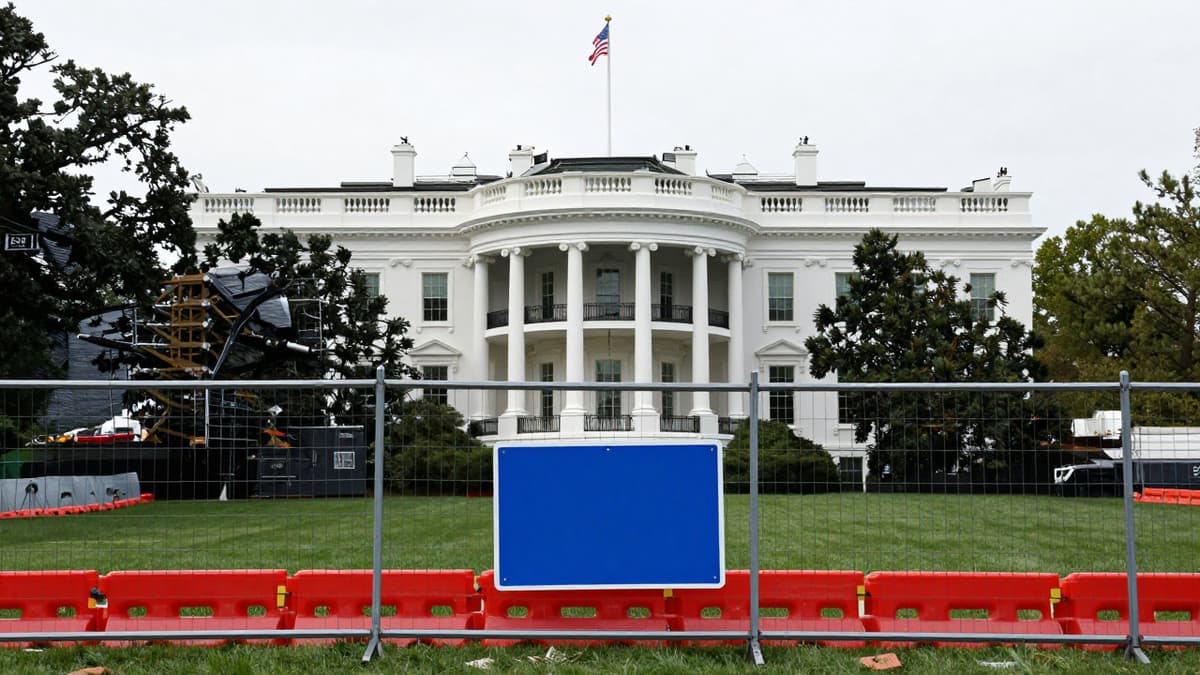
A federal judge has halted construction on President Trump's new $400m ballroom, ruling that the project requires congressional approval before proceeding.
A federal judge has ruled that US President Donald Trump cannot proceed with his planned $400m ballroom on the site of the White House's demolished East Wing without approval from Congress. District Judge Richard Leon granted a request for a preliminary injunction on Tuesday, halting the massive construction project. This legal decision came following a lawsuit filed by preservationists who alleged that the President had exceeded his constitutional limits.
The controversy began after the President raze the historic East Wing and launched construction on the new building. The National Trust for Historic Preservation initiated the legal action, arguing that the administration had no statutory basis for the destruction and subsequent construction. In his written ruling, Judge Leon emphasized the constitutional role of the Executive branch regarding the White House. He stated that the President is the steward of the property for future generations but explicitly noted that he is not the owner. Leon concluded that the preservation group was likely to succeed on the merits because no statute grants the President the claimed power.
"Unless and until Congress blesses this project through statutory authorization, construction has to stop!" the judge declared in his opinion. Leon, an appointee of former Republican President George W Bush, made it clear that the separation of powers requires legislative approval for such a significant alteration. The ruling keeps the 90,000 square-foot project on hold while the lawsuit continues its course through the court system. While the injunction pauses the main construction efforts, the judge clarified that the order does not affect work necessary to ensure the safety and security of the White House.
Leon initially paused his order for 14 days to allow the Trump administration time to appeal. Hours after this pause was announced, the Justice Department filed an appeal at the US Court of Appeals for the District of Columbia Circuit. This immediate legal challenge suggests a fierce battle ahead regarding the scope of executive power in modifying historic government structures.
Carol Quillen, president and CEO of the National Trust for Historic Preservation, welcomed the ruling as a significant victory. In a statement, Quillen described the decision as "a win for the American people on a project that forever impacts one of the most beloved and iconic places in our nation." Her comments highlighted the organization's commitment to preserving the historical integrity of the White House and its grounds against unauthorized expansion.
In contrast, President Trump took to social media to defend his vision for the site. He characterized the National Trust for Historic Preservation as a group of left-wing "lunatics" and dismissed their legal arguments. Trump asserted that his ballroom is "under budget, ahead of schedule, being built at no cost to the Taxpayer, and will be the finest Building of its kind anywhere in the World." The Republican leader has championed the Trump White House ballroom as a defining addition to the executive residence and a lasting symbol of his presidency. Despite the judge's order, Trump maintains that the project represents a historic achievement that will serve as a final legacy of his time in office.
The legal standoff centers on the fundamental question of who holds the power to alter the physical layout of the executive mansion. The judge's ruling reinforces the principle that the President cannot unilaterally decide to raze historic structures or build massive new additions without the consent of the legislative branch. This decision sets a precedent that future executive actions regarding the White House must adhere to statutory authorization.
This ruling marks a pivotal moment for the legal and political landscape surrounding the White House's physical evolution. As the Justice Department pushes for an appeal, the outcome will likely determine the limits of Donald Trump authority over historic properties. If the appeal fails, the project remains indefinitely stalled, potentially forcing a redesign or abandonment. Conversely, an appeal victory could validate the President's unilateral action, setting a controversial precedent for future administrations. The prolonged legal battle ensures that the Trump White House ballroom remains a flashpoint in the ongoing debate over executive overreach and historic preservation, with the final decision resting on the interpretation of statutory limits by the federal courts.
Jun 8, 2026 02:17 UTC
Magnitude 7.8 Quake Shakes Philippines, Urging Immediate Evacuations
Jun 8, 2026 00:51 UTC
Trump Claims Iran Nuclear Deal Imminent Despite Diplomatic Fractures
Jun 8, 2026 00:47 UTC
Iran Fires Missiles at Israel After Beirut Strike
Jun 7, 2026 22:00 UTC
US, Iran Peace Hops Fade 100 Days Into War
Jun 8, 2026 04:15 UTC
Trump Urges Netanyahu to Halt Iran Strike for Peace


