Section
Live at the All-In conference, Jensen Huang fielded a call from President Trump, sparking discussions on AI safety perceptions and the strategic implications for Nvidia’s market position.
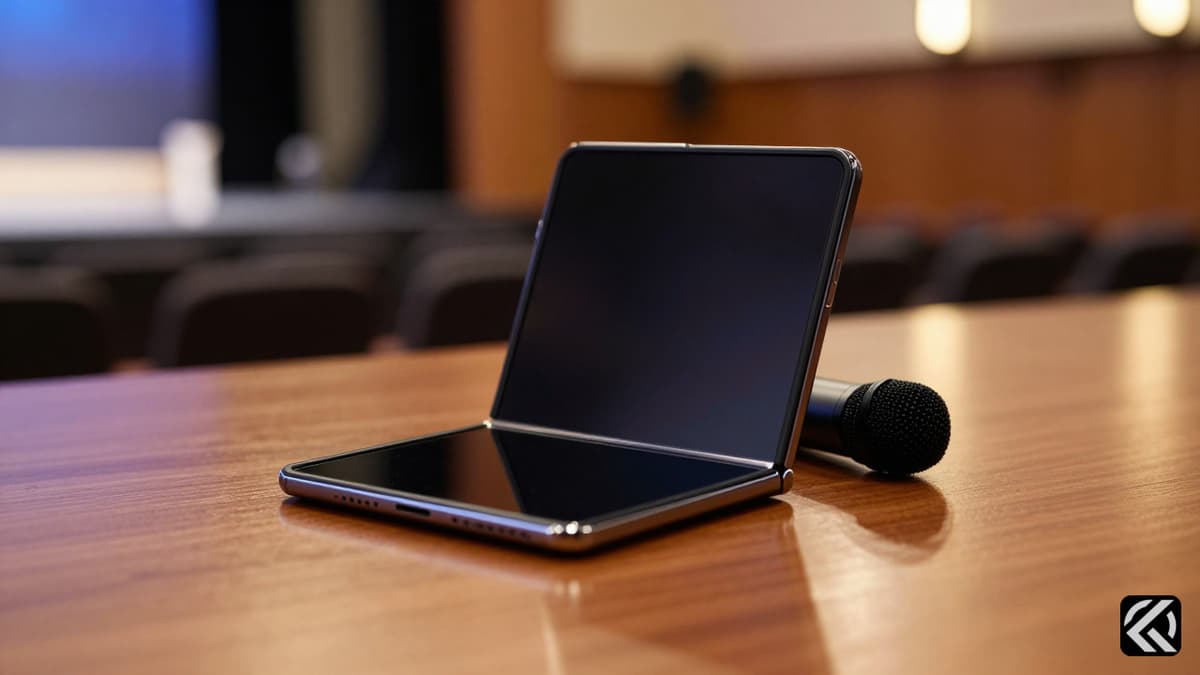
At the All-In conference in Los Angeles on Monday, NVIDIA CEO Jensen Huang became the center of attention when President Trump called him live from the stage. During the unexpected interaction, Huang was handed a foldable phone to answer the call, a detail that quickly drew media scrutiny after earlier reports incorrectly identified the device as an Apple iPhone Duo. Once the connection was established and the conversation moved to speaker mode, the dialogue shifted toward the contentious topic of artificial intelligence safety. President Trump argued that widespread anxieties regarding AI are essentially a "hoax," suggesting that the true beneficiaries of this panic are China and various political actors. He further characterized the technology as being too significant to halt, describing it as "bigger than the internet" and arguing that progress should not be slowed by fear. During this exchange, Huang acknowledged the audience's reaction, noting to the President that thousands of people were clapping in response to the comments. While Huang appeared to agree with the President's perspective during the live exchange, it remains unclear whether he personally shares this view or is constrained by his corporate role. Given that Nvidia's business model relies heavily on AI laboratories purchasing advanced chips, downplaying existential risks is a logical strategic move to protect the company's share price, which has risen 33% over the past year despite a slight dip on the day of the event.
The incident at the All-In conference highlights the complex intersection of technology leadership, political influence, and public perception in the AI sector. The initial confusion over the type of phone used-specifically the correction regarding the iPhone Duo-underscores the intense scrutiny placed on every detail of high-profile tech leaders' interactions. However, the core of the event revolved around the narrative of AI development. Trump’s assertion that AI fears are a hoax intended to benefit geopolitical rivals presents a significant rhetorical challenge to the cautionary tales often promoted by AI researchers and safety advocates. For Huang, participating in this narrative serves a dual purpose: it aligns him with a powerful political figure and reinforces the argument that AI advancement is unstoppable and beneficial. The applause from the audience suggests that this message resonated with attendees, likely consisting of tech investors, entrepreneurs, and developers who prioritize growth over regulation.
The dynamics of this conversation also reflect the broader tensions within the tech industry. On one hand, there is a push for responsible AI development, with concerns about safety and existential risk. On the other hand, there is immense pressure to maintain the pace of innovation, driven by competitive pressures and shareholder expectations. Huang’s position as CEO of Nvidia places him at the epicenter of this debate. Nvidia’s financial success is inextricably linked to the continued expansion of AI capabilities, meaning that any narrative suggesting AI is too dangerous to pursue could negatively impact demand for the company’s products. Therefore, aligning with the viewpoint that AI fears are exaggerated is not just a political stance but a business necessity. This alignment does not necessarily imply that Huang does not care about AI safety, but rather that his public messaging must support the ecosystem in which his company thrives.
The role of technology in political discourse is becoming increasingly pronounced. When a tech CEO interacts directly with a sitting President on a public stage, the lines between corporate strategy and political policy blur. The choice of a foldable phone as the medium for this high-stakes conversation also adds a layer of symbolism. It represents the cutting-edge nature of the technology being discussed, even as the content of the conversation dismisses the risks associated with it. The correction of the initial report about the phone model serves as a reminder of the importance of accuracy in tech journalism, but it also highlights the fascination with the tools used by industry leaders. As AI continues to evolve, the narratives surrounding its development will likely remain contested, with figures like Huang and Trump shaping public opinion on its future.
The interaction between Huang and Trump at the All-In conference illustrates the delicate balance tech leaders must maintain between innovation advocacy and political alignment. By agreeing with Trump’s dismissal of AI fears, Huang reinforces the narrative of unchecked progress, which supports Nvidia’s market dominance. As the AI landscape matures, we can expect continued alignment between tech executives and political leaders who prioritize rapid development. This trend may lead to less public scrutiny of AI risks in the near term, further accelerating adoption but potentially delaying robust safety frameworks. The long-term impact could be a market environment where growth is prioritized over governance, solidifying the position of companies like Nvidia while leaving broader societal concerns to be addressed later.
Oct 3, 2026 04:08 UTC
FlyDubai Co-Pilot Banned in Oman Over Extremism Concerns
Oct 3, 2026 00:50 UTC
Israel-Mumbai Campaign Honors Captain Smit After Flydubai Incident
Oct 2, 2026 18:13 UTC
Captain Smit Machchhar’s Courage Saves Flydubai Flight FZ1073 From Disaster
Oct 2, 2026 16:45 UTC
Captain Smit Machchhar Saves Plane Mid-Fall
Sep 23, 2026 04:49 UTC
Macron Warns Against Jungle Law, Pushes Open-Source AI at UN