
Section
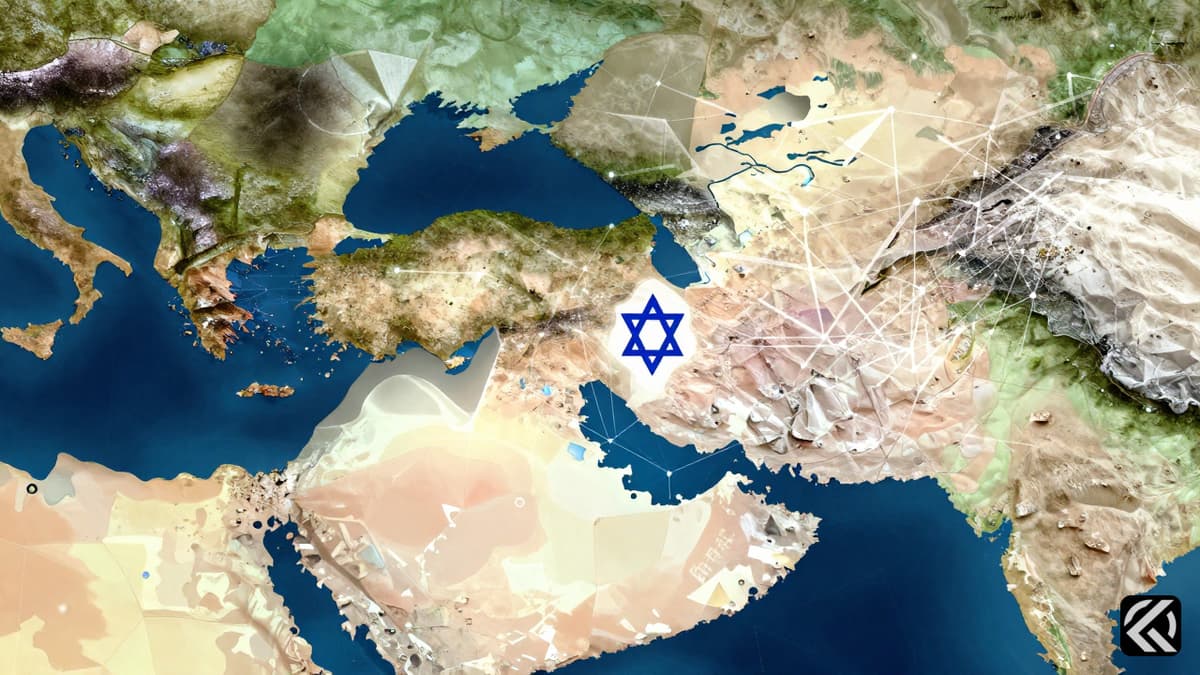
Exclusive reports confirm Israel secretly stationed military and intelligence personnel in Azerbaijan, establishing a critical forward base for operations against Tehran during the recent conflict.
In a significant revelation regarding the recent geopolitical conflict, sources familiar with the matter confirm that Israel secretly deployed elite military and intelligence units to Azerbaijan during its war with Iran. This covert deployment was part of a broader network of covert sites across the Middle East designed to facilitate operations against Tehran, highlighting the critical role neighboring countries played in the conflict.
The forces operated out of several locations in southern Azerbaijan, two sources said, positioning them adjacent to Iran’s northern border. At its closest point, these installations were only about 60 miles from the Iranian city of Tabriz, which Israel struck during the war. This proximity provided a valuable perch for monitoring Iranian activities.
Special commando units were also deployed to the location, carrying out intelligence-gathering missions and drone operations. These activities gave Israel a strategic advantage, allowing it to see into northern Iran with unprecedented clarity. The secret deployment, first reported by CNN, was one of several military positions Israel maintained across the region.
The locations in Azerbaijan were among numerous covert military sites and bases in multiple countries, including Iraq, the United Arab Emirates, and Somaliland. Initially planned as potential rescue teams in the event of an emergency, these forces expanded in scope to become military and intelligence gathering positions.
Together, these deployments placed Israeli forces along Iran’s southern, western, and northern periphery during the war. This extension of range by hundreds of miles deep into Iranian territory helped Israel sustain repeated waves of strikes against targets across the country.
The Azerbaijan operation consisted of several dozen troops, including members of Israel’s special operations forces, its elite heliborne combat and rescue force, and Mossad personnel. The strategic importance of this positioning was evident in the planning phases, which began weeks before the opening strikes of the war.
In mid-January, as Iran crushed wide-scale protests with the mass killing of demonstrators, Israel prepared a covert mission along the Azerbaijan-Iran border. Sources described this as a preliminary operation laying the groundwork for additional steps by installing listening devices and intelligence equipment in the area.
Israel was planning to execute the operation under cover of what were to be the opening strikes of the war in mid-January. However, US President Donald Trump called off the strikes at the last minute, stating that Iran had agreed to stop the killing of demonstrators. Israel proceeded on its own, utilizing stealth jets and special forces to install the devices.
The intelligence-gathering site became another means by which Israel could collect information on Iranian military movements and facilities, as well as potentially providing early warning of missile launches. This move underscored Israel’s political leadership’s belief that negotiations between the US and Iran were doomed to fail.
Less than two weeks later, Israeli Foreign Minister Gideon Saar visited Baku, meeting with the Azerbaijani president and other top officials. In May 2025, Azerbaijan also secretly hosted rare direct talks between Israel and Syria, further cementing its role as a diplomatic bridge.
One of the key operations launched from Azerbaijan was the killing on March 4 of Rahman Moghaddam, who led the Islamic Revolutionary Guard Corps’ (IRGC) intelligence division. Israel said Moghaddam was responsible for planning an assassination attempt against Trump in 2024. One day later, drones struck an airport in Azerbaijan’s enclave of Nakhchivan, damaging a terminal building and wounding several people.
President Ilham Aliyev blamed Iran, calling the incident “an act of terror” that was “ugly, cowardly and shameless.” Iran denied launching the drones. On March 6, Azerbaijan’s State Security Service announced that it had broken up an IRGC plot to attack critical infrastructure, as well as Israeli and Jewish targets. Weeks later, Israel publicly acknowledged that it was a joint operation, involving the Mossad, Israeli military, and Shin Bet security service.
The military presence in Azerbaijan gave Israel another base from which to conduct aerial rescue missions in case of downed pilots, as well as positions from which to spy on Iran. Israel has long viewed Azerbaijan as a strategic partner in its fight against Iran. The relationship is built on close ties around commercial and military interests, with Baku providing Israel with a large share of its oil.
In return, Israel sells Azerbaijan advanced weaponry, some of which were used in the Nagorno-Karabakh conflicts in 2016 and 2020 against Armenia. Azerbaijan was also the first foreign country to purchase Israel’s Iron Dome aerial defense system in 2016. This deep interdependence suggests that the covert military cooperation was a logical extension of existing bilateral relations.
A spokesperson for the Azerbaijani embassy in the United States firmly rejected unfounded claims regarding the alleged use of Azerbaijan’s territory for operations against third countries. Meanwhile, the breakaway republic of Somaliland on the Horn of Africa provided Israel with an additional military position, allowing Israeli aircraft a point to potentially stop on long-range flights to Iran. Israel became the first country to formally recognize Somaliland in December, a move that further complicated regional dynamics.
The Israeli military also maintained two secret facilities in Iraq during part of the war with Iran, providing forward bases for logistics support. In a statement, Iraq’s military said there were no “unauthorized bases or forces” in the country as of early March. Israel also quietly deployed an Iron Dome aerial defense battery to the UAE during the war, prompting a strong denial of visits from the UAE government.
Experts note that Israel’s strategy in Azerbaijan remains deliberately low-profile, relying on arms transfers, intelligence cooperation, and long-term technological interdependence. Joshua Kucera, a senior analyst for the Crisis Group, noted that the relationship gives Azerbaijan access to a critical diplomatic resource: Israel’s lobby in Washington, DC. “Azerbaijan is increasingly trying to position itself as a regional power,” Kucera said, adding that if Israel is a tool in helping Azerbaijan combat IRGC destabilization efforts, “it’s very secret.” As the dust settles on the conflict, the extent of this covert network may reshape how neighboring states perceive their security partnerships, potentially leading to more hidden military collaborations across the Middle East as nations seek asymmetric advantages without direct confrontation.
Jun 11, 2026 17:21 UTC
Bangladesh Opposition Mobilizes Against India-Bangladesh Border Push-Ins and BSF Killings
Join 50,000+ readers getting the global briefing every morning.
No spam. Unsubscribe anytime.
Jun 11, 2026 17:40 UTC
Boelter Pleads Guilty in Minnesota Political Assassinations
Jun 11, 2026 17:21 UTC
Bangladesh Opposition Mobilizes Against India-Bangladesh Border Push-Ins and BSF Killings
Jun 11, 2026 17:21 UTC
John Healey Quits as UK Defence Secretary Over Funding Dispute
Jun 11, 2026 16:19 UTC
UK Defence Secretary John Healey Quits Over Funding Dispute


