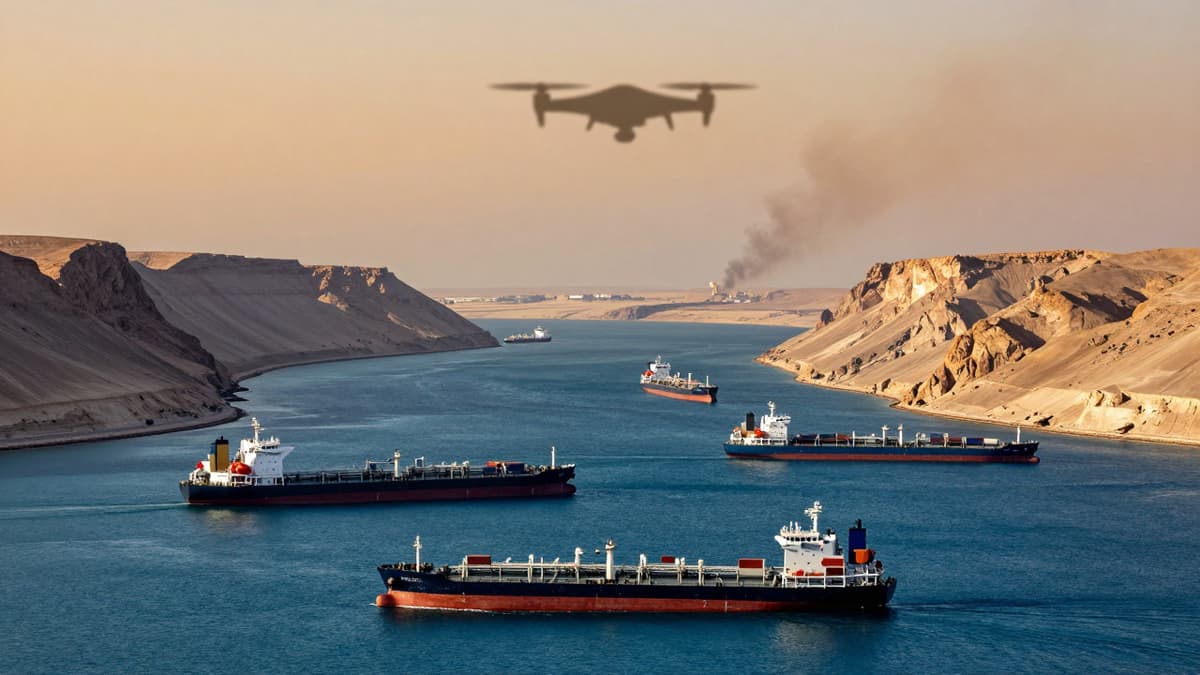
Israel claims responsibility for killing the Iranian naval chief behind the near-total Strait of Hormuz blockade, marking a dramatic escalation in regional hostilities and war strategy.
Israel has officially confirmed the killing of Alireza Tangsiri, the head of the Islamic Revolutionary Guards Corps (IRGC) navy, who was directly overseeing the near-total blockade of the Strait of Hormuz. According to Israel's defense minister, Israel Katz, Tangsiri was "blown up" and was "directly responsible for the terrorist act of bombing and blocking the Strait of Hormuz." Alongside the navy chief, several other "senior Navy command officials" have also been killed in the operation. Iran has not yet issued an official comment regarding these events. The incident marks a significant escalation in the conflict that began on February 28, during which Israel has already assassinated Supreme Leader Ayatollah Ali Khamenei and security chief Ali Larijani.
The strategic impact of Tangsiri's death is immediate and severe. Since the start of the war, the blockade has become a central pillar of Iran's military strategy, resulting in a 95% reduction in daily traffic through the critical waterway as of last week. The Strait of Hormuz, a narrow passage between Iran, the UAE, and Oman, normally handles around 20% of the world's oil and liquefied natural gas. The disruption has caused global oil prices to shoot up, directly impacting consumers in the US, Israel, and worldwide. Tangsiri, who had led the navy since 2018 after serving as deputy commander since 2010, had been a vocal proponent of the blockade. An X account attributed to him frequently posted that no vessel associated with "aggressors against Iran has the right to pass through."
In response to the operation, Israeli Prime Minister Benjamin Netanyahu described Tangsiri as an individual with "a great deal of blood on his hands," framing the strike as a successful collaboration with the United States. This narrative aligns with statements from US Central Command, which declared that Tangsiri's death "makes the region safer" and characterized the IRGC Navy as being on an "irreversible decline." The US command further issued a call to serving members of the IRGC to abandon their posts and return home to avoid further injury or death. This psychological warfare element suggests an intent to destabilize Iranian naval operations from within.
The specific operational details provided by Israel's military confirm the elimination of high-ranking intelligence figures as well. In a statement posted on the social media platform X, the Israeli military identified Behnam Rezaei, the head of the IRGC Navy's intelligence directorate, as having been "eliminated" alongside Tangsiri. This targeted approach indicates a shift in tactics, moving from broad defensive postures to precise strikes against the command structure responsible for the Strait of Hormuz blockade. The removal of both the operational commander and the intelligence chief likely cripples the immediate ability of the IRGC to coordinate further blocking actions in the region.
The timeline of these events places the assassination within a broader context of Israel assassinations targeting the highest levels of Iranian leadership. With the Supreme Leader and security chief already removed, the removal of the navy chief strikes at the logistical and economic lifeline Iran hoped to weaponize. The US Treasury had previously sanctioned Tangsiri in 2019 following an incident where Iran shot down a US surveillance drone near the strait, highlighting a long-standing adversarial relationship. The current conflict has transformed this historical friction into direct kinetic action with global economic consequences.
The removal of Alireza Tangsiri and Behnam Rezaei represents a critical turning point in the ongoing war, potentially altering the strategic calculus for both Israel and Iran. With the primary architect of the blockade eliminated and the US Central Command actively encouraging IRGC personnel to defect, the immediate future of the Strait of Hormuz blockade appears precarious. If the US prediction of an "irreversible decline" in the navy materializes, oil traffic may resume, causing global fuel prices to stabilize. However, the loss of life at the highest levels of command may also provoke a retaliatory surge from remaining Iranian leadership, potentially widening the conflict into a more direct regional confrontation. The war's trajectory now hinges on whether the remaining Iranian command can reorganize its naval operations or if the leadership vacuum will lead to a rapid de-escalation of the blockade strategy.
Jun 8, 2026 02:17 UTC
Magnitude 7.8 Quake Shakes Philippines, Urging Immediate Evacuations
Jun 8, 2026 00:51 UTC
Trump Claims Iran Nuclear Deal Imminent Despite Diplomatic Fractures
Jun 8, 2026 00:47 UTC
Iran Fires Missiles at Israel After Beirut Strike
Jun 7, 2026 22:00 UTC
US, Iran Peace Hops Fade 100 Days Into War
Jun 8, 2026 04:15 UTC
Trump Urges Netanyahu to Halt Iran Strike for Peace


