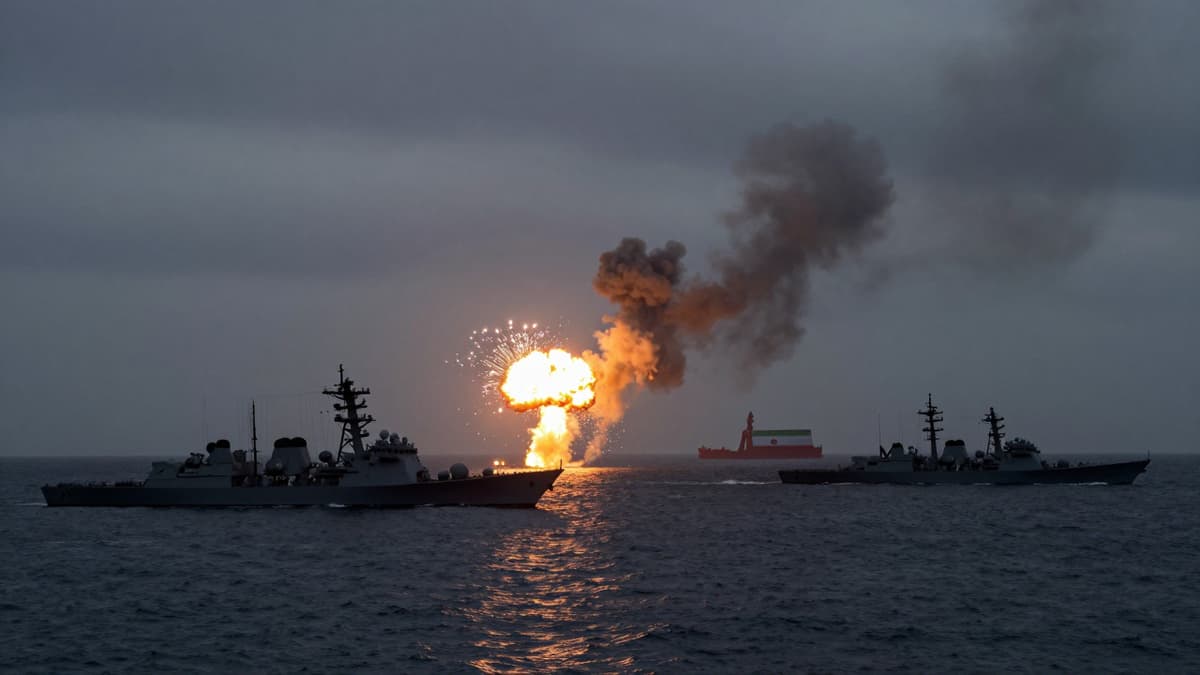
In a major escalation, Israel claims to have killed the top Iranian naval official overseeing critical Strait operations, while Tehran remains silent on the incident.
Israel claimed on Thursday, March 26, 2026, that it killed Commodore Alireza Tangsiri, the head of the Iranian Revolutionary Guard's navy. The key official was described by Israeli authorities as the person overseeing the closure of the strategic strait. This announcement marks a significant development in the ongoing military confrontation between the two nations.
Israeli Defence Minister Israel Katz stated that Tangsiri had been killed along with other senior naval commanders in a strike that occurred overnight. The timing of the event has not been detailed beyond the "overnight" descriptor, but the implication of a joint operation is clear. Iran did not immediately acknowledge Tangsiri's killing in response to the claims, leaving the status of the high-ranking official unconfirmed by Tehran. This silence contrasts with the rapid and detailed claims issued by the Israeli side regarding the casualty.
Since the commencement of the joint U.S.-Israeli attacks on Iran on February 28, the conflict has escalated rapidly. Israel has announced the killing of several top Iranian officials, creating a pattern of high-value target elimination. These announcements include the death of Supreme Leader Ali Khamenei and the Islamic Republic's powerful security chief, Ali Larijani. The inclusion of Tangsiri in this list of casualties suggests a systematic approach to degrading Iran's command structure.
In recent days, Israeli forces have carried out several strikes specifically targeting the naval assets of Iran. The operational focus appears to be on the maritime capabilities of the Revolutionary Guard. Last week, Israeli airstrikes hit several Iranian naval ships located in the Caspian Sea. These targeted vessels were described as being equipped with missile systems, support vessels, and patrol craft. The specific mention of the Caspian Sea indicates that the conflict has extended into specific regional waters where these assets are based.
The death of Alireza Tangsiri is particularly significant given his role in overseeing the closure of the strait. As the head of the navy, his command would have been central to any strategy involving the blockade or control of critical waterways. The removal of a commander responsible for such a strategic operation suggests an intent to disrupt Iran's ability to control maritime routes or respond to naval blockades.
The lack of immediate acknowledgment from Iran regarding Tangsiri's death could be interpreted in several ways. It may indicate a period of internal verification before confirming the loss of a high-ranking official. Alternatively, it could signal a strategic decision to withhold information while assessing the broader implications of the strike. The silence stands in contrast to the immediate and specific nature of the Israeli claims provided by Defence Minister Katz.
The sequence of events since late February points toward a sustained campaign aimed at decapitating the leadership of the Islamic Republic. The targeting of the Supreme Leader, the security chief, and now the navy commander represents a multi-layered assault on the country's military and political hierarchy. Each announcement of a killing serves to escalate the pressure on the remaining leadership structure.
The strikes in the Caspian Sea highlight the geographical scope of the recent military operations. By targeting ships equipped with missile systems and support vessels in this specific body of water, Israel is striking at the logistical and offensive naval capabilities of Iran. The destruction of patrol craft and missile systems reduces the operational range and effectiveness of the Iranian navy in the region.
The narrative of these events is one of rapid escalation and high-stakes retaliation. The joint nature of the U.S.-Israeli attacks implies a coordinated effort to achieve strategic objectives that exceed the capacity of a single nation. The targeting of such specific and high-value individuals suggests that the military campaign is focused on neutralizing the decision-making and command layers of the enemy forces.
The confirmation of Commodore Alireza Tangsiri's death by Israeli authorities, while unacknowledged by Tehran, suggests a period of critical uncertainty regarding the chain of command within the Iranian Revolutionary Guard. The targeted nature of these strikes, which have moved from land-based leadership figures to top naval commanders and assets in the Caspian Sea, indicates a strategy aimed at paralyzing the operational capabilities of Iran's defense forces. Given the recent announcements regarding the deaths of Supreme Leader Ali Khamenei and security chief Ali Larijani, the elimination of a navy commander responsible for the strait's closure signals a potential collapse in coordinated naval resistance. If the pattern of unchecked Israeli claims continues without immediate Iranian rebuttal or confirmation, the long-term impact could be a significant degradation of Iran's ability to project power in critical waterways, potentially altering the regional balance of naval dominance in the near future.
Jun 8, 2026 04:15 UTC
Trump Urges Netanyahu to Halt Iran Strike for Peace
Join 50,000+ readers getting the global briefing every morning.
No spam. Unsubscribe anytime.
Jun 8, 2026 02:28 UTC
Trump Walks Out of Meet the Press After Rejecting Evidence Demands
Jun 8, 2026 02:17 UTC
Magnitude 7.8 Quake Shakes Philippines, Urging Immediate Evacuations
Jun 8, 2026 00:51 UTC
Trump Claims Iran Nuclear Deal Imminent Despite Diplomatic Fractures
Jun 8, 2026 00:47 UTC
Iran Fires Missiles at Israel After Beirut Strike


