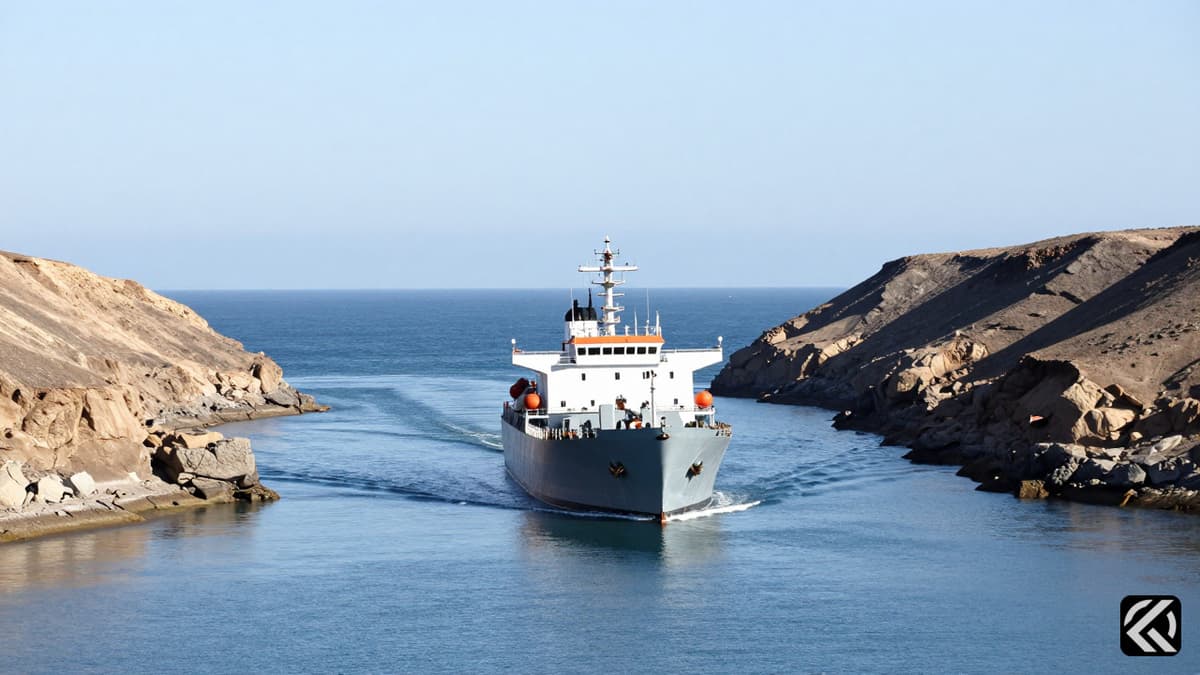
A tense confrontation erupts in the Strait of Hormuz as the Iranian Revolutionary Guard Navy forces two Indian tankers to reverse course amid escalating regional tensions.
The Strait of Hormuz, a critical global waterway through which one-fifth of the world's oil and gas passes, witnessed a significant escalation on Saturday when the Iranian Revolutionary Guard Navy intervened against commercial traffic. An Indian-flagged vessel, the Bhagya Lakshmi, was explicitly denied passage and ordered to turn around immediately after Iran announced a closure of the narrow waterway. Simultaneously, a second Indian tanker, the crude oil carrier Sanmar Herald, issued a frantic distress call claiming it had been cleared to proceed before being fired upon, though sources later confirmed no injuries or damage occurred.
The incident unfolded against a backdrop of rising regional tensions involving the US, Israel, and Iran, creating immediate confusion and safety concerns for international maritime operations. According to a video shared by an Iranian journalist on X, crew members of the Bhagya Lakshmi were heard attempting to communicate with Iranian naval authorities, stating, "Iranian Navy, this is Bhagya Lakshmi. I read you loud and clear," only to receive the directive to reverse course. The Sanmar Herald crew echoed these fears, with a sailor shouting, "Sepah Navy. Sepah Navy. This is motor tanker Sanmar Herald. You gave me clearance to go. My name is second on your list. You are firing now. Let me turn back." Despite the chaotic exchanges and reports of gunfire, the vessels complied with the orders to leave the area without sustaining damage.
India has since raised formal diplomatic concerns regarding the safety of merchant shipping and sailors in the region. The Ministry of External Affairs highlighted the gravity of the situation, noting that while Iran had previously facilitated safe passage for several India-bound ships, the recent firing on commercial vessels has disrupted these operations. Foreign Secretary Vikram Misri met with the Iranian ambassador, urgently urging the envoy to convey New Delhi's concerns to Tehran and to restore the process of facilitating safe passage for Indian ships at the earliest possible moment. The ambassador responded by assuring that India's concerns would be communicated to the Iranian authorities.
In response to the shooting incident, Iran addressed the situation through its top representative in India, Dr. Abdul Majid Hakeem Ilahi, a representative of Iran's Supreme Leader. Ilahi emphasized the strength of the bilateral relationship, stating, "The relationship between Iran and India is very strong and I don't know anything about this event which you mentioned and we hope that it will be okay and it will be solved." He called for peace and expressed confidence that the situation would be resolved, despite the apparent contradiction with the actions of the naval forces on the water.
The Islamic Revolutionary Guard Corps (IRGC) issued a stark warning via the Tasnim news agency, cautioning that any vessels approaching the strait could be deemed to be acting in support of hostile forces and could be targeted accordingly. The IRGC's stance reflects a shift towards aggressive deterrence in the strategic waterway. Meanwhile, Iran's joint military command later confirmed that control over the Strait of Hormuz had been returned to "strict management" by the armed forces, signaling a continued tightening of the blockade.
Reuters reports indicate that vessels attempting to cross the strait on Saturday received radio messages forbidding passage, while at least two ships reported being hit by gunfire. This marks a significant shift from earlier notices to mariners, which had suggested that passage was allowed but restricted to lanes deemed safe by Iran. The inconsistency between prior notices and the subsequent denial of passage has contributed to the confusion that now plagues the region's maritime traffic.
Iranian officials initially claimed ignorance of the specific incident involving the firing on Indian tankers, despite the IRGC's broader warnings about hostile support. While Dr. Abdul Majid Hakeem Ilahi stressed the strong diplomatic ties and expressed hope for a resolution, the operational reality involves a reassertion of control by the Iranian Revolutionary Guard Navy. Given the IRGC's explicit threat to target vessels supporting hostile forces and the return of the strait to "strict management," the immediate future suggests a continued period of high alert and restricted navigation. If the current trajectory of tensions involving the US and Israel continues, the risk of further incidents affecting global oil supplies and shipping routes through the Strait of Hormuz remains significantly elevated, potentially impacting international energy prices and trade stability.
Jun 8, 2026 02:17 UTC
Magnitude 7.8 Quake Shakes Philippines, Urging Immediate Evacuations
Jun 8, 2026 00:51 UTC
Trump Claims Iran Nuclear Deal Imminent Despite Diplomatic Fractures
Jun 8, 2026 00:47 UTC
Iran Fires Missiles at Israel After Beirut Strike
Jun 7, 2026 22:00 UTC
US, Iran Peace Hops Fade 100 Days Into War
Jun 8, 2026 04:15 UTC
Trump Urges Netanyahu to Halt Iran Strike for Peace


