President Trump is set to deliver a public Bible reading from the Oval Office this week, marking a continued integration of faith into government affairs despite recent controversies.
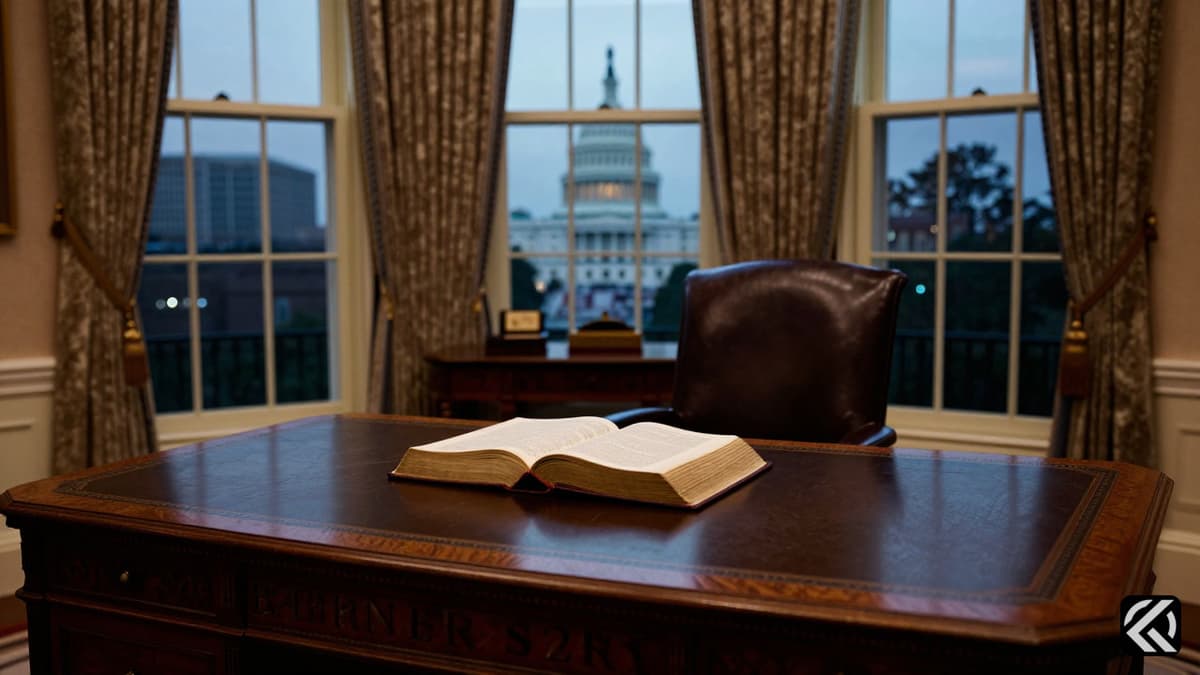
President Donald Trump is scheduled to read Scripture via a video message from the Oval Office on the evening of April 21 as the administration continues to weave religious themes into official government business. This event, titled "America Reads The Bible," comes during a week of intense scrutiny regarding the intersection of faith and state authority.
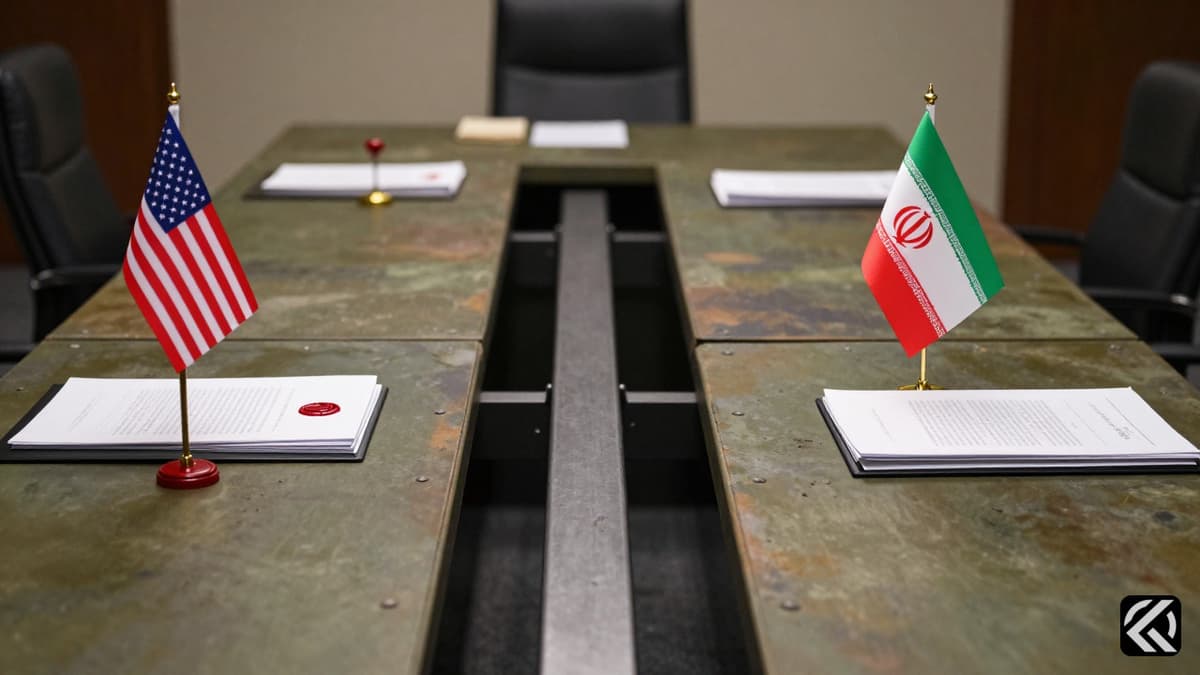
The president's participation is particularly notable given his recent public disputes with Pope Leo over the Iran conflict and the backlash following the posting and subsequent deletion of an AI-generated image depicting Trump as Jesus. Organizers state that Trump will read a specific passage from 2 Chronicles 7:11-22, a text that includes the frequently cited verse 14. This verse, which speaks of the nation healing if its people humble themselves, has historical ties to the January 6, 2021, US Capitol riot, having been recited by Couy Griffin of "Cowboys for Trump" in prayers that addressed the crowd.
The specific passage chosen for this reading has deep roots in the administration's narrative. According to the Christian Post, evangelical leader Anne Graham Lotz, daughter of evangelist Billy Graham, identified this verse as a sign of answered prayer shortly after Trump's 2016 victory. Bunni Pounds, founder of Christians Engaged, told Fox News that the organizers specifically set aside the passage from Second Chronicles, chapter seven, for Trump to read because they "needed someone special" for the role.
The event features a significant gathering of high-level officials. The press release indicates that Secretary of State Marco Rubio, Defense Secretary Pete Hegseth, and Chief of Staff Susie Wiles will join the president. Hegseth, who has been a vocal proponent of infusing religion into Pentagon operations, notably invited a pastor with controversial views to lead a service earlier this year. Douglas Wilson, the pastor in question, advocates for the repeal of women's voting rights, views homosexuality as a crime, and calls for a Christian theocracy.

Despite the administration's recent invocation of Christian language, experts caution against the shift from personal conviction to national mandate. Margaret Susan Thompson, a professor of history and political science at Syracuse University, told CNN that while leaders from Jimmy Carter to George W. Bush integrated their faith into their goals, they did not make it a requirement. Thompson noted that the issue arises when religious doctrine is prescribed as "normative or as mandatory" for the entire nation.
The timing of the reading coincides with a volatile week for the president regarding religious matters. The conflict began with a feud with Pope Leo, who had spoken out against the war with Iran. Trump criticized the pontiff, stating to reporters, "We don't like a pope that's going to say that it's OK to have a nuclear weapon," and adding, "I'm not a fan of Pope Leo." The Pope responded by asserting he has "no fear of the Trump administration."
Compounding the diplomatic friction, the president faced internal criticism after posting an AI image of himself as Jesus. Trump later attempted to clarify the incident to reporters outside the West Wing, claiming he believed the image depicted him as a doctor associated with the Red Cross. "It's supposed to be me as a doctor making people better. And I do make people better," Trump stated.
Since returning to office last year, the administration has systematically reduced the separation between church and state. The White House has encouraged Americans to pray for an hour weekly, and official government social media accounts have frequently displayed Bible verses and Christian imagery. Furthermore, federal agencies have begun hosting prayer services, marking a distinct shift in how religious expression is managed within the executive branch.
This integration of faith into official affairs signals a potential long-term transformation in the administration's approach to governance. As Secretary Hegseth continues to invite figures with radical religious views to lead official prayers, and as the President personally engages in high-profile scripture readings, the precedent set by past leaders who kept faith personal rather than mandatory may be eroding. The administration's actions suggest a move toward establishing religious doctrine as a normative part of national life. If this trend continues, it could lead to further polarization, as religious policies increasingly become central to federal decision-making, distinguishing this administration's style from the more nuanced integration seen under previous presidents like Carter or Bush.
Jun 8, 2026 02:17 UTC
Magnitude 7.8 Quake Shakes Philippines, Urging Immediate Evacuations
Join 50,000+ readers getting the global briefing every morning.
No spam. Unsubscribe anytime.
Jun 8, 2026 02:17 UTC
Magnitude 7.8 Quake Shakes Philippines, Urging Immediate Evacuations
Jun 8, 2026 00:51 UTC
Trump Claims Iran Nuclear Deal Imminent Despite Diplomatic Fractures
Jun 8, 2026 00:47 UTC
Iran Fires Missiles at Israel After Beirut Strike
Jun 7, 2026 22:38 UTC
Congress Party Claims Unity for INDIA Bloc Delhi Meeting