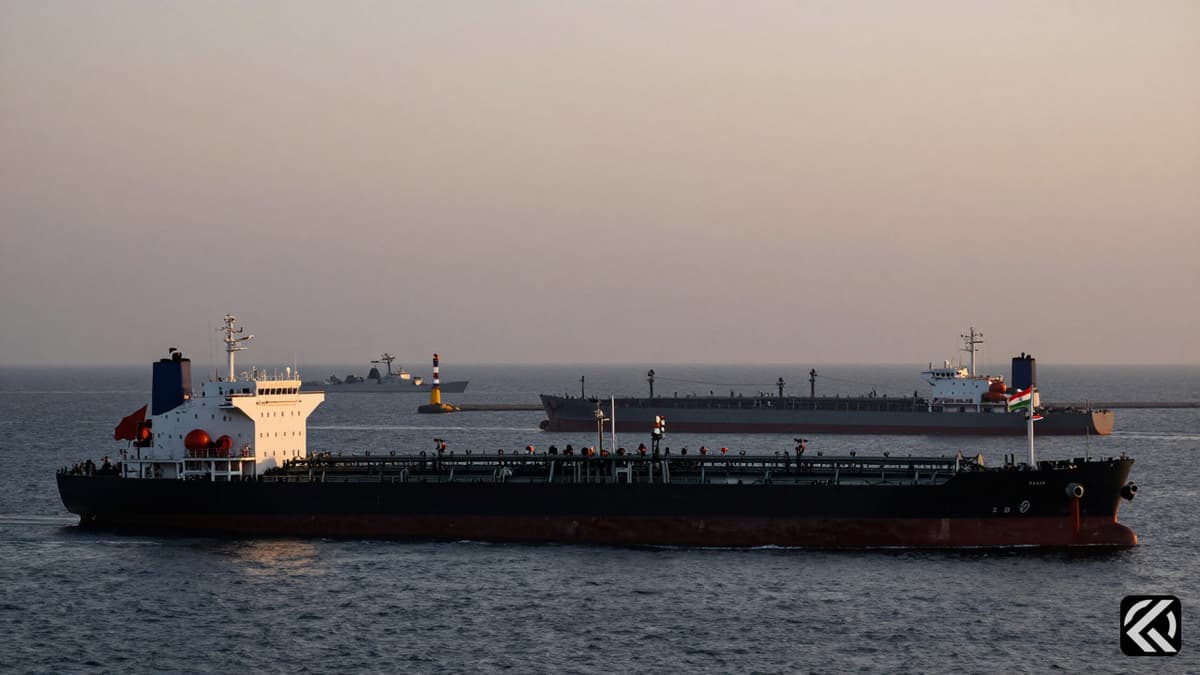
Tensions spike as India formally conveys deep concern to Tehran regarding the unprecedented halt of energy vessels in the critical waterway during the ongoing truce.
Foreign Secretary Vikram Misri convened a diplomatic meeting with Iran's ambassador to India, Mohammad Fathali, on Saturday, April 18, 2026, to address a significant disruption in global energy logistics. The central topic of this high-level discussion was India's "deep concern" regarding the recent actions of Iranian naval forces in the Persian Gulf. The urgency of the conversation stemmed from the fact that two India-bound energy-carrying vessels were unexpectedly prevented from transiting the critical waterway known as the Strait of Hormuz.
The blockade was executed by naval guards belonging to the Islamic Revolutionary Guard Corps (IRGC) of Iran. This specific incident marks a stark deviation from recent diplomatic assurances and the prevailing atmosphere of de-escalation. It is the very first time that energy carriers bound for India have been halted by these naval units. Crucially, this event occurred while a fortnight-long ceasefire between the United States and Iran remains in effect. This truce, which was designed to stabilize the region, came into force on April 8, just ten days prior to the incident.
The timing of the blockade creates a notable contradiction with public statements made by Iranian leadership. Just one day before the incident on April 17, Iran's Foreign Minister, Seyed Abbas Araghchi, had explicitly stated that the Strait of Hormuz was "completely open" for the duration of the ceasefire. The Foreign Secretary's meeting with the ambassador serves as India's formal channel to address this discrepancy and convey the gravity of the situation. The fact that the IRGC chose to halt the vessels during the active truce period has raised immediate questions regarding the operational status of the peace agreement and the safety of commercial shipping routes.
The presence of the two India-bound ships being stopped underscores the vulnerability of India energy carriers even during periods of declared peace. These vessels, essential for the nation's energy security, were denied passage by the Islamic Revolutionary Guard Corps. The IRGC, which is a powerful military branch within the Islamic Republic of Iran, is traditionally responsible for securing the country's borders and interests in the region. Their involvement in blocking these specific vessels highlights a sharp divergence between the diplomatic narrative of openness and the on-the-ground reality for commercial traffic.
The incident took place within the context of the ongoing U.S.-Iran ceasefire. The truce was intended to reduce hostilities and allow for the free movement of goods and vessels in the volatile region. However, the actions of the naval guards suggest a potential gap in the coordination or understanding of the ceasefire terms. The Foreign Secretary's decision to bring the issue directly to the Iranian ambassador's desk indicates that India views this blockade not as a minor traffic delay, but as a serious diplomatic breach that warrants immediate and high-level attention.
The meeting on Saturday, April 18, represents a crucial step in India's diplomatic response. By conveying "deep concern" directly to Mohammad Fathali, the Indian government is signaling that such disruptions will not be ignored, even amidst broader regional peace efforts. The specificity of the action-targeting India-bound energy carriers during a ceasefire-suggests a targeted move rather than a general operational glitch. This has placed the issue of the Strait of Hormuz back at the center of international diplomatic discourse.
The contradiction between the Foreign Minister's assurance of an "open" Strait and the reality of the blockade is particularly significant. Seyed Abbas Araghchi's statement of April 17 provided a clear assurance to the international community that the waterway remained accessible. The subsequent actions of the IRGC naval units immediately following this statement challenge the reliability of public assurances during this fragile truce period. This discrepancy adds a layer of complexity to the ongoing diplomatic efforts aimed at maintaining stability in the region.
The interruption of these two India-bound vessels serves as a critical test for the resilience of the U.S.-Iran ceasefire mechanism. The event highlights the potential for isolated military actions to undermine broader diplomatic agreements. If the IRGC naval units are operating with autonomy that contradicts the Ministry of Foreign Affairs' public statements, it suggests a fragmentation in the chain of command or a deliberate escalation strategy not yet acknowledged by Tehran's diplomatic leadership. The deep concern expressed by India signals a potential shift in bilateral relations, with New Delhi likely to demand clearer guarantees regarding the safety of its maritime interests.
Looking forward, the immediate impact will likely be an intensification of diplomatic pressure on Tehran to ensure the waterway remains open. The contradiction between the Foreign Minister's statements and the naval guards' actions will force a re-evaluation of the ceasefire's operational parameters. Should similar incidents occur, it could erode trust in the truce and potentially lead to a broader reassessment of the geopolitical landscape in the Persian Gulf. The ability of India to navigate this challenge through diplomatic channels, as demonstrated by the meeting with Ambassador Fathali, will be a key indicator of how the region's major players manage crises during this fragile period of peace. The focus now shifts to whether the diplomatic assurances can be backed by consistent operational reality to restore confidence in the open status of the Strait of Hormuz.
Jun 8, 2026 02:17 UTC
Magnitude 7.8 Quake Shakes Philippines, Urging Immediate Evacuations
Jun 8, 2026 00:51 UTC
Trump Claims Iran Nuclear Deal Imminent Despite Diplomatic Fractures
Jun 8, 2026 00:47 UTC
Iran Fires Missiles at Israel After Beirut Strike
Jun 7, 2026 22:00 UTC
US, Iran Peace Hops Fade 100 Days Into War
Jun 8, 2026 04:15 UTC
Trump Urges Netanyahu to Halt Iran Strike for Peace


