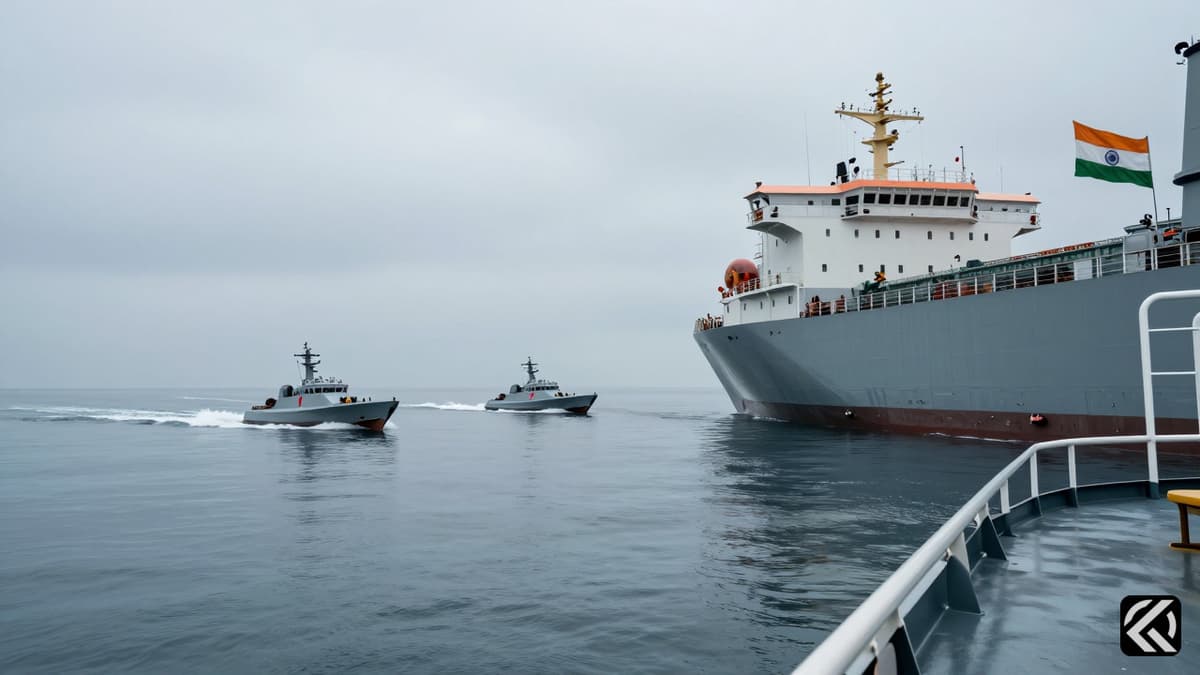
Tension spikes in the Persian Gulf as Iranian forces target maritime traffic, yet the tenth Indian vessel successfully transits the blockaded zone.
NEW DELHI: Amidst intense firing by Iranian gunboats, the tenth Indian-flagged vessel successfully navigated the Strait of Hormuz on Saturday. While two other Indian ships were forced to turn back after coming under fire, the tanker Desh Garima continued its journey to Mumbai port carrying crude oil. This event marks a significant, albeit sporadic, movement through the waterway, which has been a flashpoint since the block began last month.
The crossing occurred during a period of heightened volatility as Iran continues to restrict passage through the key energy strait. This confrontation unfolded in the context of an ongoing war between Iran and the US and Israel, which officially began on February 28. Despite the blockade, Iranian authorities have sporadically permitted Indian vessels to sail through, creating a dangerous and unpredictable environment for maritime traffic. Official data tracked by Maritime Traffic reveals that several Indian- and foreign-flagged ships destined for Indian ports are currently waiting to cross the Hormuz.
The situation has prompted urgent evacuations and monitoring by Indian ministries. According to the petroleum ministry, 17 vessels have been identified for evacuation. This list includes four LPG carriers, three LNG carriers, and 10 crude oil tankers. Of these 17 identified vessels, only three are Indian-flagged ships, while the remaining 14 are foreign-flagged vessels. Furthermore, the chemicals and fertilisers ministry has compiled a separate list of another 16 ships requiring evacuation. This group includes one specific Indian-flagged vessel, the Jag Arnav, which was reported to have been attacked by the IRGC on Saturday.
The human cost of the conflict is substantial. As of Saturday, there are 499 Indian seafarers still aboard Indian-flagged vessels in the Persian Gulf region. A breakdown of their locations shows that 343 seafarers are stationed to the west of the Strait of Hormuz, while 156 remain in the Gulf of Oman. In response to the escalating danger, various shipping companies have already managed to evacuate 2,487 seafarers from the region.
Reports indicate that the atmosphere on the water is hostile. According to Reuters, vessels attempting to cross the Strait of Hormuz on Saturday received radio messages from the Iranian navy explicitly stating they were not allowed to pass. Two ships reported being hit by gunfire during these attempts. Despite a notice to mariners issued the day before suggesting that passage was allowed but restricted to specific lanes deemed safe by Iran, several commercial vessels attempted the transit. However, the reality on the ground has proven far more volatile than the notice suggested, with two Indian-flagged tankers specifically forced to retreat due to Iran naval gunfire.
The presence of the Strait of Hormuz as a critical choke point for global energy supplies has turned this maritime corridor into a battleground. The sporadic nature of the Iranian allowance for passage contrasts sharply with the aggressive actions taken against specific vessels. The fact that the tenth Indian vessel managed to cross while others were forced back highlights the inconsistent and hazardous conditions faced by commercial shipping. The Indian-flagged tankers continue to face significant risks as they navigate these waters, with the Desh Garima being a rare instance of successful transit amidst the chaos.
The ongoing conflict has created a complex logistical challenge for India. With 499 seafarers still in the region and a significant number of ships identified for evacuation, the government and shipping companies are engaged in a massive logistical operation. The distinction between the 13 vessels in the Persian Gulf, the six in the Gulf of Oman, the one in the Gulf of Aden, and the three in the Red Sea underscores the widespread dispersion of Indian maritime assets in the affected areas.
The incident involving the Jag Arnav and the reports of ships being hit by gunfire illustrate the immediate physical threats posed by the blockade. The ability of Iran to restrict passage at will, despite sporadic announcements of allowed lanes, demonstrates the fragility of the situation. As the war with the US and Israel continues to influence the region, the safety of commercial shipping remains in grave doubt. The evacuation efforts, while partially successful, cannot fully mitigate the risks until the strategic blockade is lifted or a stable通行 protocol is established.
The evacuation of vessels and seafarers remains a top priority as the maritime situation in the Persian Gulf continues to deteriorate. With 17 vessels identified for evacuation by the petroleum ministry and an additional 16 by the chemicals and fertilisers ministry, the scope of the operation is vast. The fact that 2,487 seafarers have already been evacuated offers some relief, but the remaining 499 still on board in the region face an uncertain future. The ongoing sporadic firing by Iranian gunboats and the explicit radio warnings from the navy suggest that the blockade is unlikely to lift in the immediate future. Consequently, the number of waiting vessels may increase, and the risk of further accidents or forced turnbacks is high. The strategic importance of the Strait of Hormuz means that any disruption here has global energy implications, making the resolution of this standoff a critical international concern. The trajectory suggests that without a significant de-escalation in the broader war involving Iran, the US, and Israel, the maritime blockade and associated violence will likely persist, continuing to test the resolve and safety measures of the Indian maritime sector.
Jun 8, 2026 00:51 UTC
Trump Claims Iran Nuclear Deal Imminent Despite Diplomatic Fractures
Jun 8, 2026 00:47 UTC
Iran Fires Missiles at Israel After Beirut Strike
Jun 7, 2026 22:00 UTC
US, Iran Peace Hops Fade 100 Days Into War
Jun 7, 2026 20:57 UTC
Iran Strikes Israel: IRGC Promises Week of Continuous Offensive
Jun 8, 2026 02:28 UTC
Trump Walks Out of Meet the Press After Rejecting Evidence Demands


