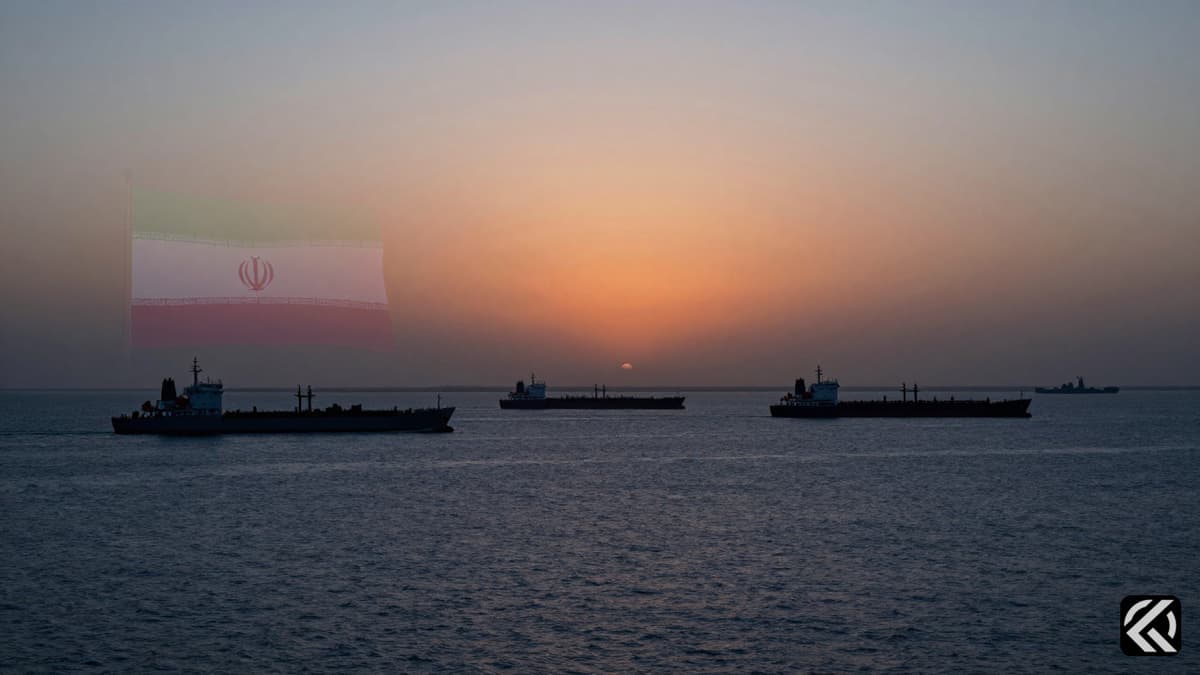
Global shipping faces renewed danger as Iran shuts the strategic waterway, citing a US blockade and recent attacks on commercial vessels as justification for the closure.
Iran has officially re-imposed a closure on the Strait of Hormuz to commercial vessels, declaring that any ship attempting to approach the critical waterway will be targeted. This decision follows reports of multiple vessels, including a tanker, being attacked in the region on Saturday. The Islamic Revolution Guard Corps (IRGC) issued a stern warning, stating that "no vessel is to move from its anchorage in the Persian Gulf or the Sea of Oman" until the US blockade is lifted. The closure comes a mere day after Iran's foreign minister announced the key global shipping channel had been temporarily reopened, marking a volatile swing in the ongoing conflict.
The Islamic Revolutionary Guard Corps (IRGC) Navy issued a formal statement on Saturday outlining the severity of the new order. They confirmed that while a number of vessels had passed through the strait under their management since Friday night, the channel would remain shut until the United States ceased its blockade of Iranian ports. The military wing of the government explicitly warned that "approaching the Strait of Hormuz will be considered co-operation with the enemy, and the offending vessel will be targeted." This aggressive posture directly counters the previous diplomatic efforts that briefly opened the channel to international traffic.
US President Donald Trump responded firmly to the renewed threats, stating that Iran cannot "blackmail" the United States regarding the waterway. He emphasized that the naval blockade of Iranian ports would continue in place until a comprehensive peace deal is agreed upon between the two nations. The President noted that a two-week ceasefire, currently active, is scheduled to expire on April 22. The US government reported that it had successfully turned away 23 ships since enforcing the blockade on April 13. Iran's Supreme National Security Council (SNSC) characterized these US actions as a violation of the ceasefire agreement, asserting that the strait would remain closed while the blockade persists.
On the matter of diplomacy, the SNSC noted that new proposals had been presented by the US, which Tehran is "currently reviewing and has not yet responded to." This follows peace talks held earlier in the month that concluded without an agreement. Despite the tensions on the ground, President Trump told reporters on Saturday that "very good conversations" regarding the state of negotiations were ongoing and that the situation was "working out very well." However, the physical reality of the conflict suggests a deepening crisis rather than a de-escalation.
Violence has escalated alongside the diplomatic deadlock, with several reports confirming active attacks on commercial shipping. The UK Maritime Trade Operations (UKMTO) reported that two Iranian gunboats opened fire on a tanker located within the strait. In a separate incident, a container ship was struck by "an unknown projectile" off the north-eastern coast of Oman, resulting in damage to its containers. Furthermore, sources speaking to the news agency Reuters confirmed that at least two merchant vessels were hit by gunfire as they attempted to navigate the strait. The UK Maritime Trade Operations data confirms that the threat is not theoretical but actively endangering civilian assets.
In response to the shooting incidents, India's foreign ministry summoned the Iranian ambassador to convey "deep concern" regarding the safety of two Indian-flagged ships involved in the earlier shooting. The incident has highlighted the global stakes of the conflict, given that approximately 20% of the world's oil and liquefied natural gas (LNG) is typically transported through this narrow passage. However, data from tracking site MarineTraffic indicates that the number of ships making the journey has dramatically decreased during the recent conflict, which began when the US and Israel attacked Iran on February 28. While some vessels managed to pass through during the brief window of reopening, others were forced to alter their routes or wait after the IRGC denied them access. The Strait of Hormuz remains a focal point of geopolitical tension, with global energy prices soaring as the uncertainty continues.
The re-imposition of the closure on the Strait of Hormuz signals a significant shift in Iran's tactical approach, prioritizing direct military enforcement over the temporary diplomatic concessions offered just days prior. As the IRGC continues to enforce the blockade and targets vessels deemed as cooperating with the US, the likelihood of further maritime incidents involving commercial shipping appears high. Given the US stance that the blockade will only lift upon a signed peace deal, and the expiration of the current ceasefire on April 22, the region faces a critical period where military escalation could overshadow negotiation efforts. If the US does not withdraw the blockade or if the review of new proposals fails to yield a result, the Strait of Hormuz will likely remain a restricted war zone, potentially causing sustained global energy price volatility and forcing major shipping corridors to reroute for months to come.
Jun 8, 2026 02:17 UTC
Magnitude 7.8 Quake Shakes Philippines, Urging Immediate Evacuations
Jun 8, 2026 00:51 UTC
Trump Claims Iran Nuclear Deal Imminent Despite Diplomatic Fractures
Jun 8, 2026 00:47 UTC
Iran Fires Missiles at Israel After Beirut Strike
Jun 7, 2026 22:00 UTC
US, Iran Peace Hops Fade 100 Days Into War
Jun 8, 2026 04:15 UTC
Trump Urges Netanyahu to Halt Iran Strike for Peace


