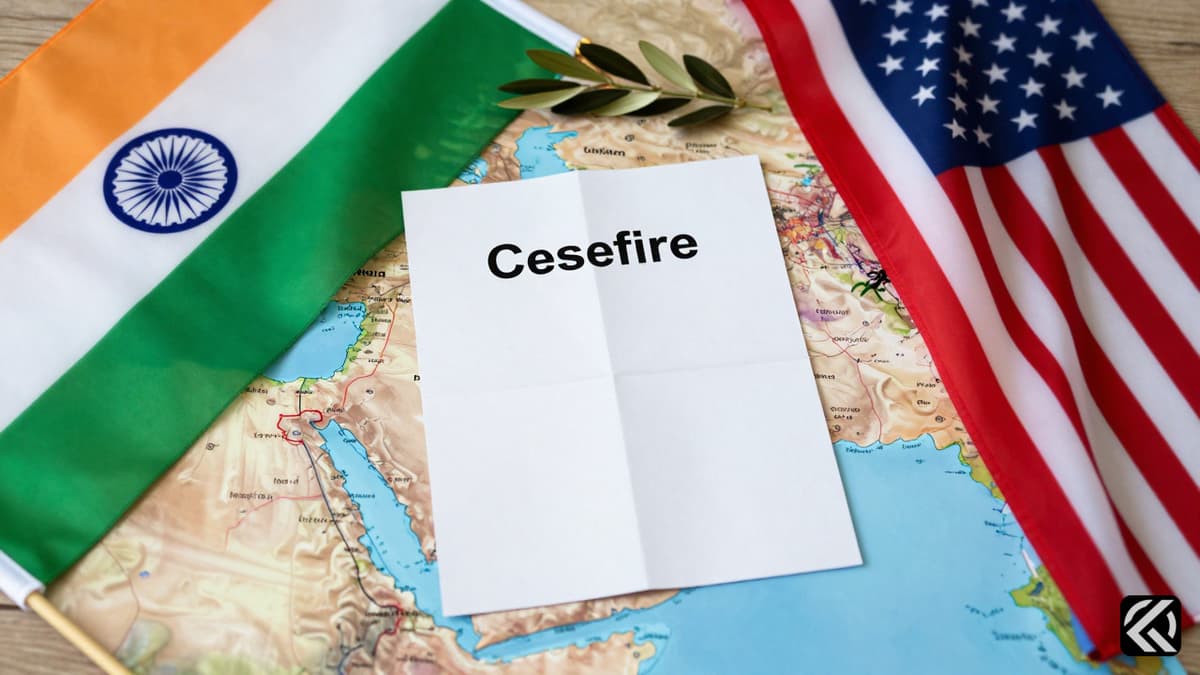
On April 17, 2026, India expressed formal backing for a new 10-day Israel-Lebanon ceasefire. The United States President Donald Trump announced the deal to end hostilities in the West Asian region.
On Friday, April 17, 2026, the Indian government officially expressed its formal support for a newly announced 10-day ceasefire in the Israel-Lebanon conflict. This diplomatic development follows a direct announcement by U.S. President Donald Trump made just one day prior. The Ministry of External Affairs conveyed this position through a spokesperson during their standard weekly press briefing, signaling a unified international stance toward peace. The primary objective highlighted by New Delhi is the immediate cessation of hostilities within the West Asian theater, aiming to stabilize a region long plagued by unrest.
The context for this announcement emerged from the immediate actions of the White House. President Donald Trump utilized his recent authority to declare a temporary halt in fighting, specifically targeting a 10-day duration. This move was designed to create a window for humanitarian aid and diplomatic negotiations. The Indian response was swift and unequivocal, indicating that New Delhi views this specific initiative as a critical step forward. By endorsing the deal, India aligns itself with the international community's desire to reduce violence in the Middle East. The Ministry's communication clarified that their support extends beyond just this specific agreement to any broader efforts that could lead to lasting stability.
During the briefing, Ministry of External Affairs spokesperson Randhir Jaiswal articulated the nation's position with clarity. He stated that India favors "any step" that will ultimately end hostilities in the West Asian region. This phrasing underscores a consistent diplomatic policy prioritizing conflict reduction regardless of the specific framework. Jaiswal elaborated on this sentiment by saying, "We welcome the ceasefire and not just that, any step that moves in the direction of peace is welcomed by us." This statement reinforces the idea that India's foreign policy in this instance is not limited to a single agreement but is open to a continuum of peaceful resolutions. The spokesperson's tone was one of cautious optimism, reflecting the hope that this 10-day pause will serve as a foundation for longer-term diplomatic success.
The timing of this announcement is significant. The press briefing took place on the day following the U.S. President's declaration, suggesting a rapid diplomatic coordination. The fact that the Ministry chose to speak so soon after the India government's stance was formalized indicates the high priority placed on de-escalation. The spokesperson's remarks were delivered without caveats, presenting a straightforward endorsement of the U.S. initiative. This suggests that the diplomatic channels between New Delhi and Washington are currently functioning at a high level regarding Middle East security. The focus remains strictly on the cessation of violence, with no mention of political posturing or conditional acceptance in the public record provided.
The implications of this Israel-Lebanon ceasefire extend beyond the immediate cessation of fire. For the West Asian region, a 10-day pause offers a critical breathing room for civilians caught in the crossfire and for diplomats to negotiate further. India's vocal support adds weight to the international pressure for compliance with the ceasefire terms. The Ministry's emphasis on "any step" suggests that while the 10-day agreement is welcomed, it is viewed as part of a larger, ongoing process toward a comprehensive resolution. The geopolitical landscape in the Middle East is often volatile, and such external endorsements can play a pivotal role in ensuring that ceasefire terms are honored by all parties involved.
The announcement also highlights the specific role of U.S. leadership in the region. By having President Donald Trump announce the deal, the initiative carries the weight of the world's leading power. The Indian response validates this approach, signaling that the U.S. strategy for de-escalation is being viewed favorably by key global partners. The brevity of the U.S. announcement-limited to a 10-day window-suggests a tactical approach to halt violence temporarily rather than a permanent solution. However, India's willingness to welcome "any step" indicates a belief that even temporary measures are vital precursors to a more durable peace. The Ministry's language avoids over-commitment to a permanent outcome but firmly supports the immediate reduction of violence.
The immediate future of this situation hinges on the adherence to the 10-day timeline announced by President Trump. If the terms are respected, the groundwork laid by this initial pause could lead to further negotiations. However, history in the region suggests that such ceasefires can be fragile. The Indian government's cautious language, emphasizing support for "any step" rather than guaranteeing a permanent fix, reflects a realistic assessment of the challenges ahead. As the week progresses, the international community will likely watch closely to see if the 10-day period results in a significant reduction in casualties and a reopening of diplomatic channels. The support from New Delhi stands as a testament to the global consensus that peace is the only viable path forward for the West Asian region, regardless of the specific mechanisms used to achieve it.
Jun 8, 2026 00:51 UTC
Trump Claims Iran Nuclear Deal Imminent Despite Diplomatic Fractures
Jun 8, 2026 00:47 UTC
Iran Fires Missiles at Israel After Beirut Strike
Jun 7, 2026 22:00 UTC
US, Iran Peace Hops Fade 100 Days Into War
Jun 7, 2026 20:57 UTC
Iran Strikes Israel: IRGC Promises Week of Continuous Offensive
Jun 8, 2026 02:28 UTC
Trump Walks Out of Meet the Press After Rejecting Evidence Demands


