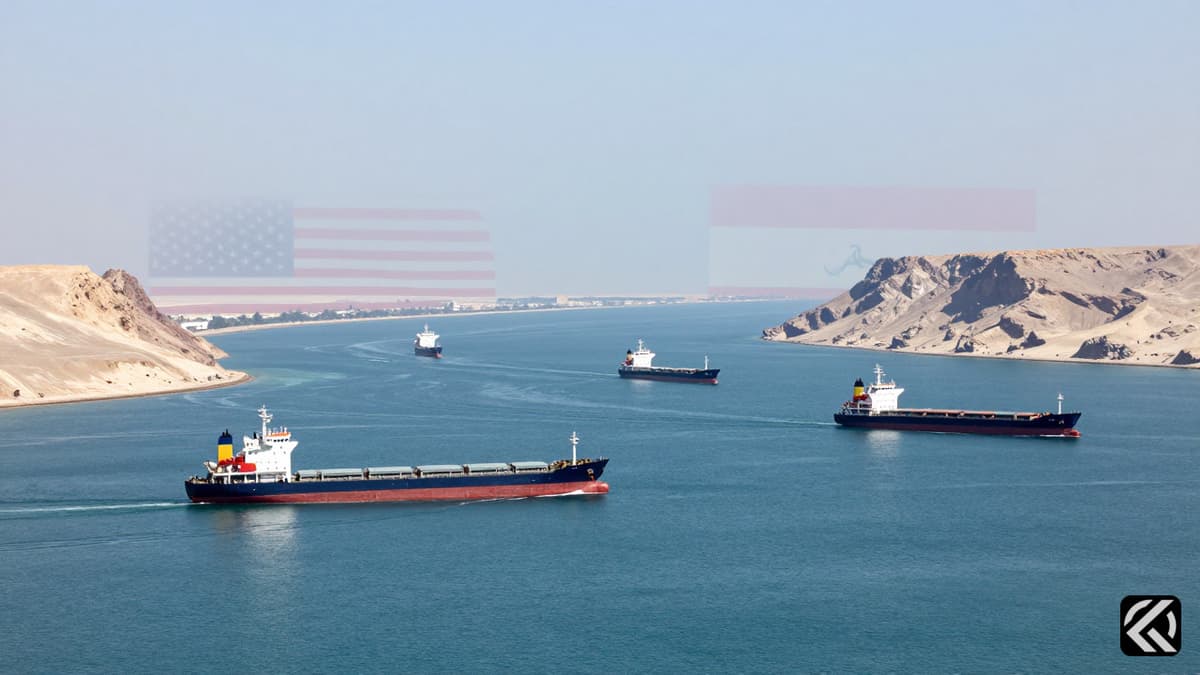
The Strait of Hormuz, once choked by threat, is now open following a pivotal deal between the US and Iran, ending a global energy crisis.
The Hormuz horror that was choking energy supplies to much of the world is officially ending. This shift follows a significant deal between Washington and Tehran, with US President Donald Trump declaring the agreement imminent. The contours of the Iran US deal are still described as sketchy, yet the immediate impact is clear: both Washington and Tehran have signaled that the Strait is now open.
In a barrage of social media posts highlighting his penchant for public diplomacy, President Trump seized upon an announcement by the Iranian foreign minister, Abbas Araghchi. Trump stated, "the Strait of Iran is fully open and ready for full passage," asserting that Iran has agreed to never close the Strait of Hormuz again. He claimed the waterway will no longer be used as a weapon against the world. While the exact phrasing of "Strait of Iran" was noted by observers, the US President went beyond Tehran's own announcement in his bold claims of a permanent shift.
Araghchi had previously posted that in line with the ceasefire in Lebanon, the passage for all commercial vessels through the Strait of Hormuz is declared completely open for the remaining period of the ceasefire. He specified that this follows a coordinated route already announced by the Ports and Maritime Organisation of the Islamic Republic of Iran. It remained unclear whether Araghchi was referring strictly to the Lebanon ceasefire or a broader ceasefire between the US, Israel, and Iran, yet both sides appeared to be drawing close to a comprehensive deal. Trump celebrated the moment, calling it a "great and brilliant day for the world."
The details surrounding the physical removal of threats from the waterway have also emerged. Trump asserted that Iran, with the help of the USA, "has removed, or is removing, all sea mines." This claim seemed to have some basis, given Araghchi's reference to a specific "coordinated route" for safe passage. The removal of mines, combined with the declaration of open passage, suggests a tangible de-escalation in the region.
The deal reportedly involves Iran giving up its enriched uranium in return for unspecified rewards, which include financial incentives. While the full text of the agreement remains unrevealed, the signals sent by both capitals indicate a rapid de-escalation. The fear of the Strait of Hormuz being closed as a geopolitical leverage point appears to have been alleviated by these joint announcements.
The involvement of the US President in directly addressing the status of the strait underscores the high stakes of the situation. By claiming that the waterway is "fully open and ready for full passage," Trump effectively validated the Iranian foreign minister's announcement while adding his own layer of commitment to the safety of global shipping lanes. This public diplomacy approach, characterized by grandstanding, successfully broadcasted the end of the immediate crisis to a global audience.
The connection between the Lebanon ceasefire and the status of the strait remains a point of ambiguity. Araghchi's statement linked the open passage for commercial vessels to the "remaining period of ceasefire" in Lebanon. This linkage implies that the security of the strait might be tied to the broader geopolitical stability in the region. However, the speed with which the situation was resolved and the subsequent declaration of permanent openness by the US President suggests a breakthrough that transcends temporary ceasefires.
The immediate removal of sea mines and the declaration of open passage mark a significant turning point for global energy security. The crisis that was choking supplies to much of the world has been averted through diplomatic channels. The specific condition of Iran giving up enriched uranium in exchange for financial incentives represents a substantive concession that may define the long-term trajectory of the Iran US deal.
As the world processes these announcements, the focus now shifts to the implementation of the unspecified rewards and the long-term commitment to keeping the waterway open. The bold claims made by both sides indicate a desire to stabilize the region, but the lack of detailed specifics leaves room for ongoing diplomatic negotiation. The success of this initiative will depend on the continued cooperation between the two nations and the enforcement of the new status quo.
The announcement that the Strait of Hormuz is fully open marks a critical transition from a period of heightened tension to potential stability. Based on the source material, the immediate future suggests a normalization of trade flows, as the removal of sea mines and the declaration of a coordinated route are now in effect. However, the ambiguity regarding the specific rewards for Iran and the exact scope of the "never close" agreement implies that diplomatic efforts will be required to sustain this peace. If the financial incentives are delivered and the ceasefire conditions are honored, the region could see a lasting reduction in the weaponization of critical waterways, fundamentally altering the economic and political landscape of the Persian Gulf.
Jun 8, 2026 04:15 UTC
Trump Urges Netanyahu to Halt Iran Strike for Peace
Join 50,000+ readers getting the global briefing every morning.
No spam. Unsubscribe anytime.
Jun 8, 2026 02:28 UTC
Trump Walks Out of Meet the Press After Rejecting Evidence Demands
Jun 8, 2026 02:17 UTC
Magnitude 7.8 Quake Shakes Philippines, Urging Immediate Evacuations
Jun 8, 2026 00:51 UTC
Trump Claims Iran Nuclear Deal Imminent Despite Diplomatic Fractures
Jun 8, 2026 00:47 UTC
Iran Fires Missiles at Israel After Beirut Strike


