New data on Lok Sabha seat reallocation reveals the Hindi belt lost more parliamentary power since 1951 than the South, challenging common narratives of regional disparity.
The debate surrounding the upcoming Lok Sabha seat reallocation in the Delimitation Bill 2026 is often framed as a zero-sum game where northern states might gain at the expense of the South. However, a deep dive into historical records from 1951 to 1977 presents a far more complex reality. Contrary to popular belief, the Hindi belt witnessed a steeper decline in its parliamentary presence compared to southern states during the periods when seats were reallocated following census exercises.
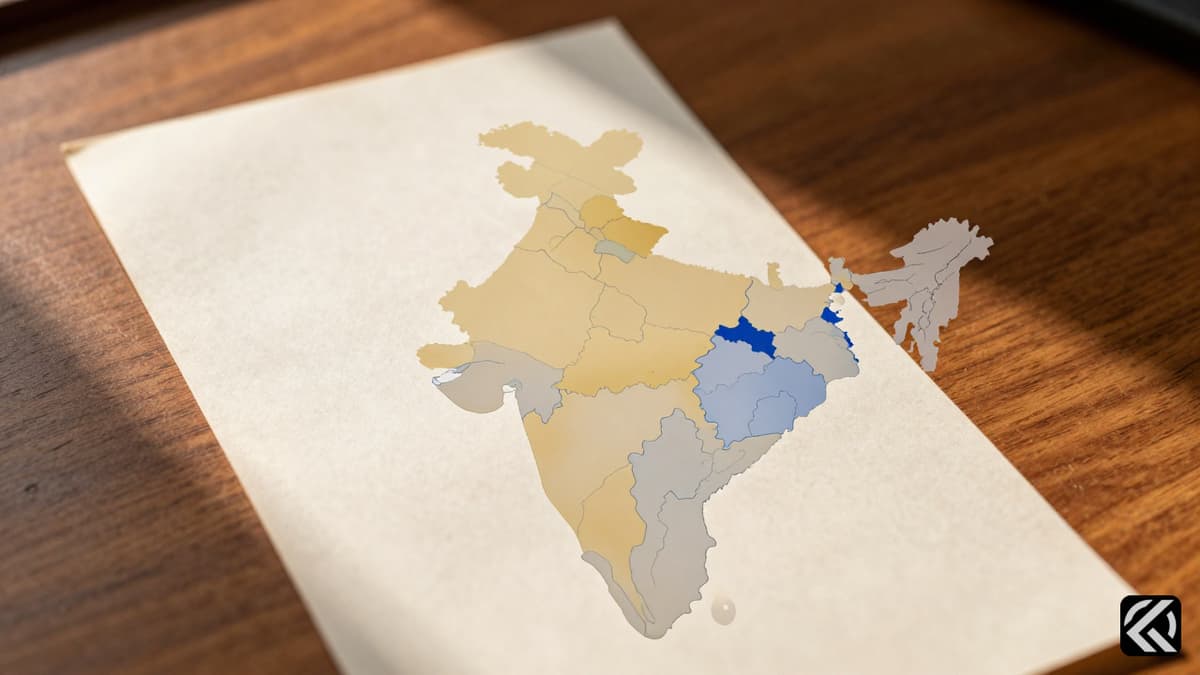
This historical analysis reveals that between 1951 and 1977, while both regions saw their share of Lok Sabha seats fall, the drop was significantly sharper in the Hindi belt. The data indicates a 3.1 percentage point decline for the Hindi belt, whereas the southern states experienced a more modest 1.2 percentage point decrease. This trend suggests that the North-South seat share dynamics were not driven by one region explicitly gaining at the direct cost of the other, but by broader structural shifts in India's federal representation.
The primary driver behind these changing figures was not a direct trade-off between the North and South. Instead, the data points to the growing representation of Union Territories and the rising parliamentary share of western and eastern states as the culprits for the reduced percentage for both the Hindi belt and the South. Furthermore, this comparison requires careful interpretation because the political map of India in 1951 was drastically different from today, particularly before the linguistic reorganization of states. By 1956, states were largely settled in their present form, yet several Union Territories had little to no Lok Sabha representation at that time, a factor that continues to influence the mathematical landscape of parliamentary seats.
To fully understand the implications of the Union Territories representation in the current debate, one must look at the specific historical conditions of the era. The 1951 election took place before the linguistic reorganization of states, meaning the state boundaries and the definition of regions were entirely different from the current configuration. After the 1956 reorganization, states were broadly in their current form, but the landscape of Union Territories (UTs) was evolving. In the 1977 election, the last election analyzed in this specific dataset, Daman & Diu did not yet exist as a separate Union Territory, further complicating the baseline for comparison.
When analyzing the data, it is crucial to note that the figures track the share of total Lok Sabha seats rather than the voter population per Member of Parliament or the specific size of constituencies. For the years 1951 and 1957, the statistics refer specifically to seats rather than constituencies, as some constituencies during that era were designed to elect two members simultaneously. This distinction is vital for accurately interpreting the statistical drop in the Hindi belt.
The recurring narrative often suggests that the South is currently underrepresented relative to the Hindi belt or that future reallocations will heavily favor the North. The historical record, however, complicates this. The fall in share was driven partly by the growing representation of UTs and by gains made by western and eastern states. This suggests that the distribution of seats is a reflection of a changing federal map involving new territories and emerging regional powers, rather than a static battle between North and South.
The data shows that changes in parliamentary representation were shaped not just by the North-South balance, but also by state reorganization, UT representation, and the evolving federal map of India. As the country looks toward future reallocations, the historical precedent suggests that any shift in the Lok Sabha seat reallocation will likely be influenced by these same structural factors: the inclusion of new territories and the shifting demographics of western and eastern regions, rather than a simple realignment of northern versus southern power.
The comparison also needs to be read with caution regarding the definition of the regions themselves. In 1951, the Hindi belt and the South were defined by different administrative boundaries than they are today. The linguistic reorganization of states fundamentally altered the map, meaning that the 1951 data point represents a very different political geography. This historical context is essential for any future analysis of the Delimitation Bill, as it highlights that the decline in the Hindi belt's share was a result of the expanding political map, not necessarily a loss relative to the South.
Delimitation Bill 2026 Will Pay A Price For A Long Time The historical analysis of the Delimitation Bill 2026 indicates that the assumption of a North-South conflict over seat allocation is historically unfounded. The data proves that the Hindi belt's share fell more sharply than the South's, driven largely by the expanding role of Union Territories and the rise of western and eastern states. Future reallocations will likely continue to reflect these structural shifts, with the Union Territories representation becoming an increasingly significant factor in the parliamentary landscape. As the federal map continues to evolve, the North-South seat share will remain a secondary factor compared to the integration of new territories and the changing demographic weight of India's eastern and western regions, suggesting that any future reallocation will be defined by the complexity of India's evolving federal identity.
Jun 8, 2026 00:51 UTC
Trump Claims Iran Nuclear Deal Imminent Despite Diplomatic Fractures
Jun 8, 2026 00:47 UTC
Iran Fires Missiles at Israel After Beirut Strike
Jun 7, 2026 22:00 UTC
US, Iran Peace Hops Fade 100 Days Into War
Jun 7, 2026 20:57 UTC
Iran Strikes Israel: IRGC Promises Week of Continuous Offensive
Jun 8, 2026 02:28 UTC
Trump Walks Out of Meet the Press After Rejecting Evidence Demands