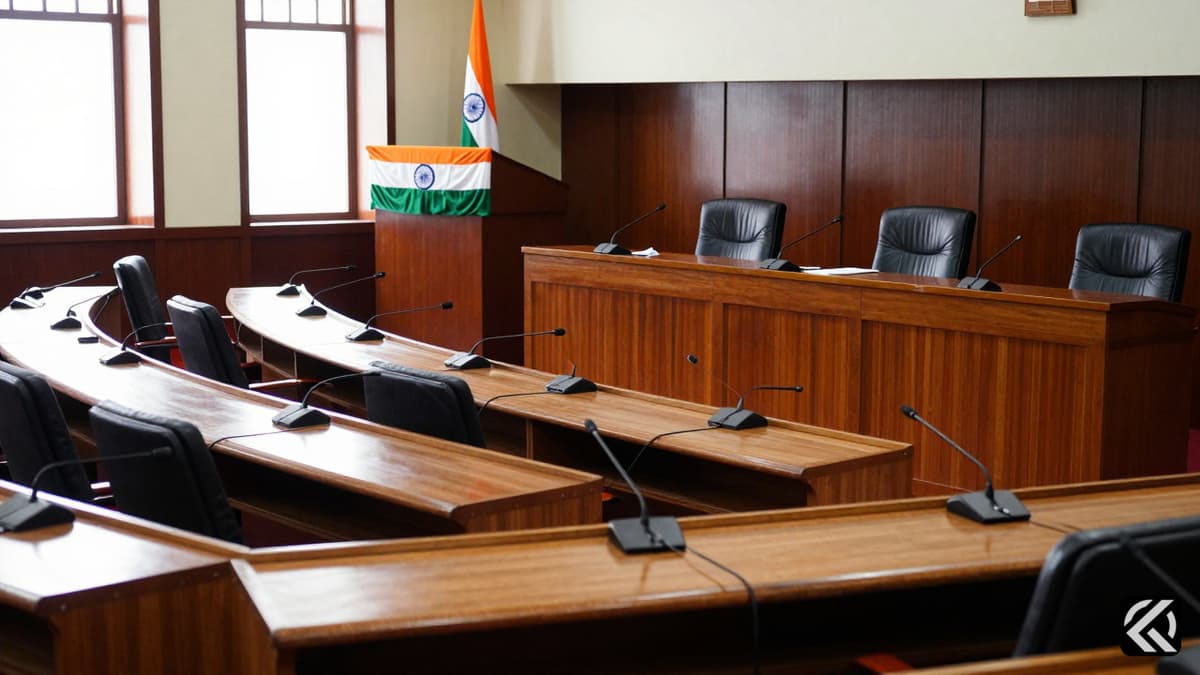
A fierce parliamentary clash erupted as Amit Shah offered a seat increase amendment, only to be rebuffed by Akhilesh Yadav who questioned the BJP's trustworthiness.
The Union Home Minister, Amit Shah, initiated a significant procedural move on Friday during Lok Sabha proceedings, suggesting a one-hour pause to introduce a formal amendment. This proposal aimed to address the core contention of the Delimitation Bill by ensuring a 50% increase in the number of parliamentary seats allocated to states. Shah explicitly stated that if the opposition's primary objection was the lack of a 50% reservation guarantee, the house should halt temporarily while he prepared the official text. He further challenged the opposition to promise the bill's passage before the amendment could be tabled, asserting that no state would be at a loss under this new allocation framework.
Shah's proposal immediately triggered a sharp rebuttal from Samajwadi Party chief Akhilesh Yadav, who dismissed the Prime Minister's offer with a scathing critique of the ruling party's history. Yadav argued that even a written assurance regarding a woman prime minister would not instill trust in the opposition, citing nearly 11 years of BJP rule since 2014 as the basis for their skepticism. This exchange highlighted the deepening rift over the Delimitation Bill, where the opposition views the move as "dangerous" due to potential shifts in political representation. The core of the opposition's argument rests on the fear that allocating seats based on population growth, specifically using the older 2011 Census, would disproportionately benefit more populous states while diminishing the weight of southern, north-western, and north-eastern regions.
The debate has also brought the issue of Women reservation to the forefront, with opposition parties demanding the immediate implementation of the 33% quota. They contend that the current 543-seat strength should be the baseline for applying the quota, as mandated by Article 334A passed in 2023. The opposition argues that the provision linking the quota to the post-delimitation phase based on the 2027 Census creates an unnecessary delay. Instead, they propose that the exercise could be completed using fresh census data available well before the 2029 general elections. This stance underscores their belief that the government's reliance on the 2011 Census for the delimitation process is a tactic to postpone gender representation.

Union Home Minister Amit Shah attempted to allay fears regarding the demographic shift in parliamentary representation by providing specific data projections. He highlighted that the combined strength of five southern states-Karnataka, Andhra Pradesh, Telangana, Tamil Nadu, and Kerala-currently stands at 129 seats, representing 23.76% of the total 543 parliamentary seats. Under his proposed amendment, which includes a 50% increase in total seats to approximately 816, the allocation for these five states would rise to 195 seats. Shah emphasized that this increase would result in a representation share of 23.87%, effectively stating that the southern states would not lose any relative political weight.
The opposition, however, remains unconvinced by these figures, maintaining that the shift from 543 to around 850 total seats poses a systemic risk. They argue that the mechanism of seat allocation, which relies on population growth to determine representation, inherently favors states with higher growth rates. States that have successfully controlled their population growth, often found in the south and north-east, are expected to see a reduction in their relative parliamentary power. The opposition insists that this dynamic could fundamentally alter the political balance of the country, favoring more populous regions at the expense of those that have achieved population stability.
Furthermore, the timing of the census data used in the process has become a central point of contention. The government's current plan relies on the 2011 Census, which the opposition views as outdated. They point out that the Delimitation exercise is scheduled to occur before the 2029 general elections, a timeline that they believe allows for the use of more recent data. By pushing for a delay or a different approach, the opposition aims to ensure that the 33% quota for women is not contingent on a future census that might further dilute their influence. The clash represents a fundamental disagreement over how population metrics should translate into political power and how long-standing promises regarding gender equality should be executed within this new framework.
The ongoing debate surrounding the Delimitation Bill highlights a critical juncture for Indian politics, where demographic shifts and historical grievances intersect. As the government pushes to amend the bill to include a 50% increase in seats, the opposition's refusal to trust the ruling party's assurances suggests that procedural changes alone may not resolve the underlying political friction. The demand for immediate implementation of the Women reservation quota, regardless of the delimitation outcome, signals a growing insistence on prioritizing gender equality over the contentious population-based seat reallocation. If the government proceeds with the 2011 Census data, the perceived imbalance in representation could intensify the polarization between populous and less populous states. Conversely, an acceptance of the opposition's demand for immediate quota implementation could reshape the parliamentary landscape before the next election cycle. The ultimate outcome will depend on whether the ruling party can secure the opposition's commitment to the bill or if the deadlock regarding trust and representation persists until the 2027 Census.
Jun 8, 2026 02:17 UTC
Magnitude 7.8 Quake Shakes Philippines, Urging Immediate Evacuations
Join 50,000+ readers getting the global briefing every morning.
No spam. Unsubscribe anytime.
Jun 8, 2026 02:17 UTC
Magnitude 7.8 Quake Shakes Philippines, Urging Immediate Evacuations
Jun 8, 2026 00:51 UTC
Trump Claims Iran Nuclear Deal Imminent Despite Diplomatic Fractures
Jun 8, 2026 00:47 UTC
Iran Fires Missiles at Israel After Beirut Strike
Jun 7, 2026 22:38 UTC
Congress Party Claims Unity for INDIA Bloc Delhi Meeting