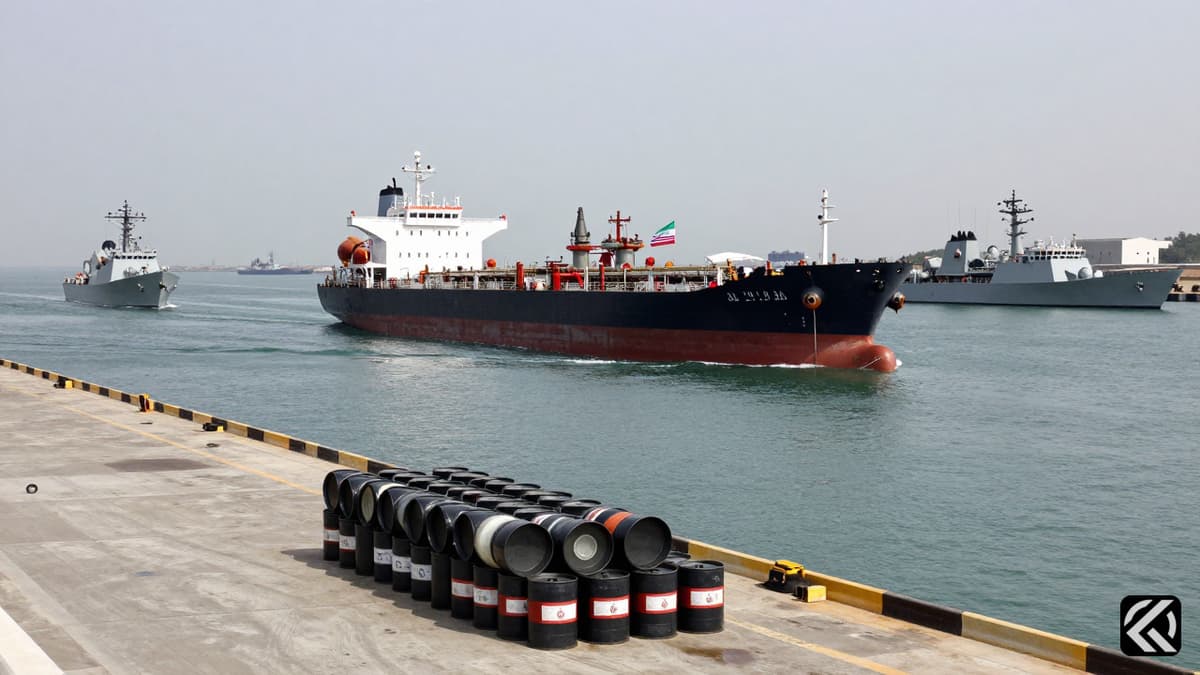
The ongoing Iran war has triggered a severe jet fuel shortage as the Strait of Hormuz blockade disrupts global supply chains, impacting markets worldwide.
The war with Iran has escalated into a global energy crisis, with the Strait of Hormuz blockade severely disrupting oil and natural gas markets. As tensions mount, the International Energy Agency warns that global recovery could take two years. Meanwhile, displaced civilians in southern Lebanon begin returning as a ceasefire takes effect, and President Donald Trump asserts confidence in a forthcoming diplomatic resolution with Tehran.
British counter-terrorism officers are currently investigating a drone threat near the Israeli embassy in London, following a claim by an unnamed group regarding dangerous substances. While the Metropolitan Police confirmed the embassy has not been attacked, they are examining items found in Kensington Gardens and reviewing an online video. This investigation occurs alongside separate inquiries into recent arson attacks targeting Jewish community ambulances, a synagogue, and a Persian language media organization in London. The war's impact, however, extends far beyond the UK's capital, threatening to reshape the global energy landscape for years.
Fatih Birol, head of the International Energy Agency, stated that the speed of market recovery will vary by country, with Iraq taking significantly longer than Saudi Arabia to rebuild. Despite oil prices settling below $100 a barrel, Birol warned that investors are understating the consequences of a continued closure of the Strait of Hormuz. He noted that while several tankers en route before the war have arrived, no new tankers were loaded in March, leaving a growing gap in deliveries to Asia. If the waterway remains closed, significantly higher energy prices are inevitable.
A rare sight emerged on Thursday as a Pakistani-flagged tanker, the Shalamar, exited the Gulf through the blockade. Marine Traffic data confirmed the vessel, which had turned off its transponder for security reasons, was carrying approximately 440,000 barrels of crude. A senior Pakistani shipping source confirmed the ship had transited before and that both Iranian and American forces were aware of the movement. However, the US Central Command insists the blockade is fully implemented, having forced 14 vessels to turn around in the last 72 hours.
The geopolitical response is led by US President Donald Trump, who declared on Thursday that a deal with Iran is imminent. "We're going to have victory. Very shortly," Trump claimed, though he offered no specific details. This approach contrasts sharply with the 2015 JCPOA, which required 20 months of intense technical negotiation. Trump's current team, including special envoy Steve Witkoff and Jared Kushner, lacks the nuclear expertise of previous administrations, focusing instead on a quick headline deal. Despite the lack of technical depth, this strategy has previously yielded results, such as the Gaza ceasefire.
The economic toll is already visible in the aviation sector. A consortium of over 300 aviation companies warned that airports may need to ration fuel if the situation persists. The International Energy Agency reported that Europe has only about six weeks of jet fuel remaining. With roughly 20% of the world's jet fuel traveling through the Iran-US blockade zone, and 69% of that going to Europe, the strain is critical. The price of jet fuel has already roughly doubled during the conflict, forcing airlines like United to cancel summer flights in anticipation of further rises.
Amidst the global tension, the situation in southern Lebanon is shifting following a ceasefire between Israeli forces and Lebanon. Video footage shows residents of Nabatieh returning to their homes and crossing the repaired Qasmiyeh bridge over the Litani River. This bridge was previously destroyed by Israeli air strikes, isolating tens of thousands of residents. While Human Rights Watch noted that this was the last operational crossing before its destruction, the repair has allowed displaced people to resume travel.
Despite the ceasefire, the Israeli military has warned residents not to move south of the river, citing ongoing deployments in the area. Similarly, Lebanese Parliament Speaker Nabih Berri has urged patience, advising citizens to delay their return until the situation stabilizes. Hezbollah, which holds a stronghold in the region, remains a central factor in the area's stability. The visual of vehicles lining up to cross the bridge suggests a fragile hope for normalization, yet the military presence indicates that the conflict's resolution is not yet final.
The convergence of the jet fuel shortage and the diplomatic standoff presents a volatile scenario for the coming months. If the Strait of Hormuz remains blocked beyond the two-year recovery timeline predicted by the IEA, the global economy faces sustained inflation in energy costs. The aviation industry's warning of potential rationing suggests that immediate action is required to mitigate the risk of widespread flight cancellations. Diplomatically, the Trump administration's reliance on a rapid deal without extensive technical groundwork carries the risk of a collapse, potentially escalating the blockade further. If the current diplomatic efforts fail to reopen the waterway or secure a stable ceasefire in Lebanon, the displacement of civilians and the economic strain on the aviation and energy sectors will likely intensify, creating a prolonged period of instability in the Middle East and Europe.
Jun 8, 2026 04:15 UTC
Trump Urges Netanyahu to Halt Iran Strike for Peace
Join 50,000+ readers getting the global briefing every morning.
No spam. Unsubscribe anytime.
Jun 8, 2026 02:28 UTC
Trump Walks Out of Meet the Press After Rejecting Evidence Demands
Jun 8, 2026 02:17 UTC
Magnitude 7.8 Quake Shakes Philippines, Urging Immediate Evacuations
Jun 8, 2026 00:51 UTC
Trump Claims Iran Nuclear Deal Imminent Despite Diplomatic Fractures
Jun 8, 2026 00:47 UTC
Iran Fires Missiles at Israel After Beirut Strike


