Section
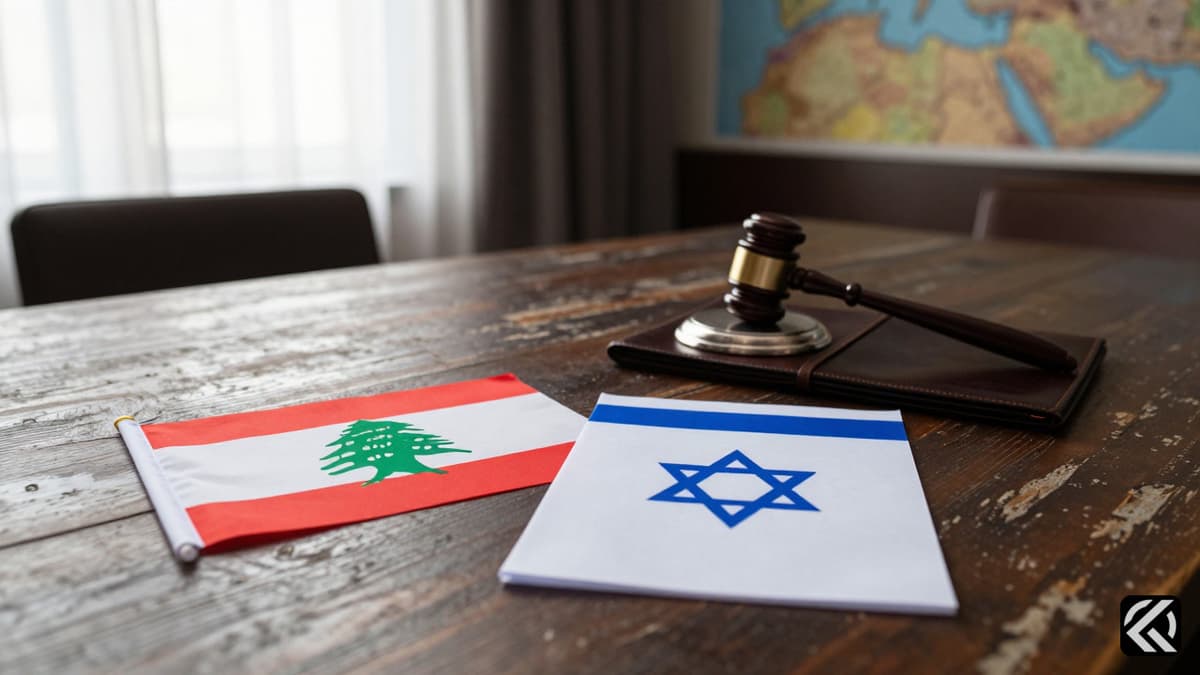
President Donald Trump has announced a new Israel-Lebanon ceasefire, offering a tentative pause in hostilities while leaders gather for critical peace discussions in Washington.
President Donald Trump has officially announced that leaders of Israel and Lebanon have agreed to a 10-day ceasefire. This agreement took effect at 17:00 EST on April 16, following direct calls between the US president and the two heads of state. The initial announcement did not explicitly name Hezbollah, the Iran-backed militant group responsible for recent exchanges of fire, but the US president later addressed the group directly on social media.
Following the announcement, the White House invited Israeli Prime Minister Benjamin Netanyahu and Lebanese President Joseph Aoun to the US capital. These leaders have welcomed the truce as a historic opportunity for peace, though the terms reveal a complex arrangement regarding security responsibilities and future negotiations.
According to details released by the US State Department, the truce includes specific provisions allowing Israel to retain its right to take "necessary measures in self-defence" against any planned, imminent, or ongoing attacks. Simultaneously, Lebanon is required to take "meaningful steps" to prevent Hezbollah and other "rogue non-state armed groups" from launching attacks against Israeli targets. The agreement also acknowledges that Lebanon's security forces hold exclusive responsibility for national security.
The statement framed the truce as a "gesture of goodwill" intended to facilitate "good-faith negotiations" aimed at resolving all remaining issues and reaching a permanent security agreement. However, the practical implications on the ground remain contentious. Israeli Defence Minister Israel Katz previously stated that the occupied area could extend up to the Litani River, approximately 30km from the border, and that all houses in Lebanese villages near the border would be demolished.
Hezbollah has signaled a willingness to participate in the ceasefire but has attached conditions, including a "comprehensive halt to attacks" across Lebanon and ensuring "no freedom of movement for Israeli forces." This group, deeply embedded in Lebanese society but separate from the government's security apparatus, was not part of the initial US-led talks, though the president later urged them to "act nicely and well during this important period of time."
Despite the agreement, Prime Minister Netanyahu confirmed that Israeli troops would remain stationed 10km deep into southern Lebanon. The region has suffered heavily; UN figures indicate that more than 1.2 million people have been displaced, primarily from the south. Research by BBC Verify found that over 1,400 buildings have been destroyed in the area since the war began on March 2.
Lebanon's Defence Minister, Maj Gen Michel Menassa, criticized Israel's remarks as a clear intention to impose a new occupation. European nations, Canada, and the UN have also voiced strong criticism regarding the continued presence of Israeli forces. The situation on the ground remains volatile, with the Israeli military recently destroying the last bridge linking the south to the rest of the country, raising fears of long-term occupation.
Negotiations took place in Washington earlier this week, involving rare direct talks between Israel and Lebanon to ease the war. While Trump described the deal as the result of "excellent conversations" with Aoun and Netanyahu, the process included internal surprises. Reports suggest Netanyahu convened a security cabinet meeting with only five minutes' notice, where ministers allegedly were not given a vote on the ceasefire before the announcement was made public.
The current truce follows a period of intense escalation linked to wider regional hostilities. The conflict began on March 2, following strikes by Hezbollah and subsequent Israeli counter-strikes. This escalation occurred after the US and Israel launched attacks on Iran, prompting retaliation from Tehran and its proxies, including the militant group in Lebanon. When the ceasefire with Iran was announced, conflicting reports emerged regarding Lebanon's inclusion; while Iranian and Pakistani officials confirmed the link, Israeli officials and US press secretary Karoline Leavitt stated otherwise.
The human cost has been severe. Since March 2, more than 2,100 people have been killed and 7,000 others wounded in Israel's attacks on Lebanon. This figure includes at least 260 women and 172 children. Additionally, 91 health professionals have been killed, and over 120 Israeli attacks have been recorded on ambulances and medical facilities. On the Israeli side, two civilians and 13 soldiers have been killed during the same period.
While UN Secretary-General António Guterres and EU officials have commended the US role and called for full respect of international law and sovereignty, the path to a lasting peace remains uncertain. The current agreement is merely a 10-day pause, subject to extension by mutual agreement if negotiations show progress. As leaders prepare for talks in Washington, the immediate priority remains halting the violence that has already devastated southern Lebanon and strained regional stability.
Oct 3, 2026 00:50 UTC
Israel-Mumbai Campaign Honors Captain Smit After Flydubai Incident
Oct 2, 2026 18:13 UTC
Captain Smit Machchhar’s Courage Saves Flydubai Flight FZ1073 From Disaster
Oct 2, 2026 16:45 UTC
Captain Smit Machchhar Saves Plane Mid-Fall
Oct 2, 2026 12:13 UTC
PM Modi Lauds Captain Smit Machchhar for Averting Tragedy on Flydubai Flight
Oct 3, 2026 08:23 UTC
Flydubai Co-Pilot Terrorist Act: Axe Attack on Dubai Flight