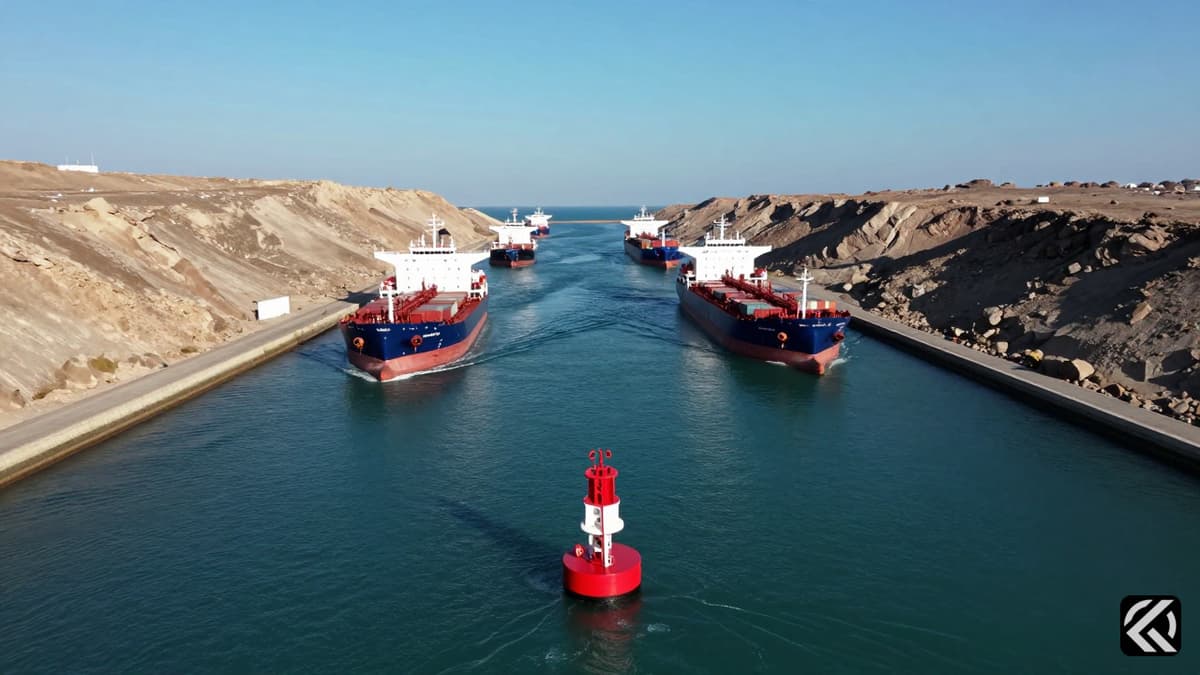
Iran announces the Strait of Hormuz is open for commercial vessels, triggering a sharp drop in oil prices and a surge in global stock markets.
The global energy landscape shifted dramatically on Friday as Iran declared the Strait of Hormuz completely open to commercial ships for the remainder of a ceasefire. This pivotal announcement triggered an immediate and sharp decline in Brent crude, which dropped from highs above $98 to $88 per barrel. The resolution to the blockade, which had effectively shut down the vital waterway since late February, sent shockwaves through global markets, resulting in a robust rally across major stock indices in the US, Europe, and Asia.
The closure of the narrow waterway, which typically transports a fifth of the world's oil and liquified natural gas, had previously caused prices to spike above $119 per barrel in March. With the passage now restored by Iranian Foreign Minister Abbas Araghchi, who stated, "The passage for all commercial vessels through Strait of Hormuz is declared completely open for the remaining period of ceasefire," the immediate scarcity fears began to dissipate. The impact was felt instantly in the trading floors of the world, where the S&P 500 rose by 0.8%, while the Nasdaq and Dow Jones Industrial Average climbed by more than 1% in early trading.
European markets responded with equal vigor, as the Cac index in Paris and the Dax in Frankfurt both climbed by more than 2%, and London's FTSE 100 rose by around 0.5%. The relief was particularly palpable for consumers and industries reliant on stable energy supplies. Before the conflict began, Brent crude was trading at under $70 per barrel. The subsequent spike had pushed up prices for petrol and diesel, sparked concerns over jet fuel supplies potentially forcing airlines to ground flights, and threatened to drive up food costs by cutting off a major supply line of fertiliser, of which a third of the world's key chemicals pass through the blocked channel.
Hours before the minister's statement, motoring group the RAC had already noted that petrol and diesel prices in the UK were falling slightly for the first time since the war began, though costs remained significantly higher than in February. The reopening follows a ceasefire agreement between Israel and Lebanon, creating a geopolitical opening that US President Donald Trump was quick to embrace. Writing on Truth Social, Trump stated, "IRAN HAS JUST ANNOUNCED THAT THE STRAIT OF IRAN IS FULLY OPEN AND READY FOR FULL PASSAGE. THANK YOU!" He further added that Iran had agreed "to never close the Strait of Hormuz again... it will no longer be used as a weapon against the world."
However, the situation remains complex. In a follow-up post, Trump clarified that a naval blockade of Iran would remain "in full force and effect" until a permanent deal ending the US-Israel war with the country is agreed upon. This dual approach suggests a fragile peace where trade flows are restored, but military pressure is maintained. Despite the official reopening, not all shipping operators were ready to immediately resume full transit. One unnamed operator stated, "We don't feel like we need to be taking unnecessary risks and our company approach is that we won't be the first to go through the Strait," highlighting lingering caution among the industry.
The reopening of the Strait of Hormuz marks a critical turning point, yet the immediate market volatility suggests that a return to pre-conflict stability may take time. While Brent crude has already retreated from its peak, the lingering threat of a naval blockade and the lack of a permanent diplomatic resolution imply that supply chains will remain sensitive to geopolitical shocks. The historical context of the blockade demonstrates that the region is a flashpoint where military actions can instantly disrupt global energy flows, causing prices to spike beyond $100 and affecting everything from consumer fuel to agricultural output. As negotiations continue, the international community will be watching closely to see if the current ceasefire holds, which could determine whether the recent price drop is a temporary correction or a sustained new normal for global energy markets.
Jun 8, 2026 02:17 UTC
Magnitude 7.8 Quake Shakes Philippines, Urging Immediate Evacuations
Join 50,000+ readers getting the global briefing every morning.
No spam. Unsubscribe anytime.
Jun 8, 2026 02:17 UTC
Magnitude 7.8 Quake Shakes Philippines, Urging Immediate Evacuations
Jun 8, 2026 00:51 UTC
Trump Claims Iran Nuclear Deal Imminent Despite Diplomatic Fractures
Jun 8, 2026 00:47 UTC
Iran Fires Missiles at Israel After Beirut Strike
Jun 7, 2026 22:38 UTC
Congress Party Claims Unity for INDIA Bloc Delhi Meeting


