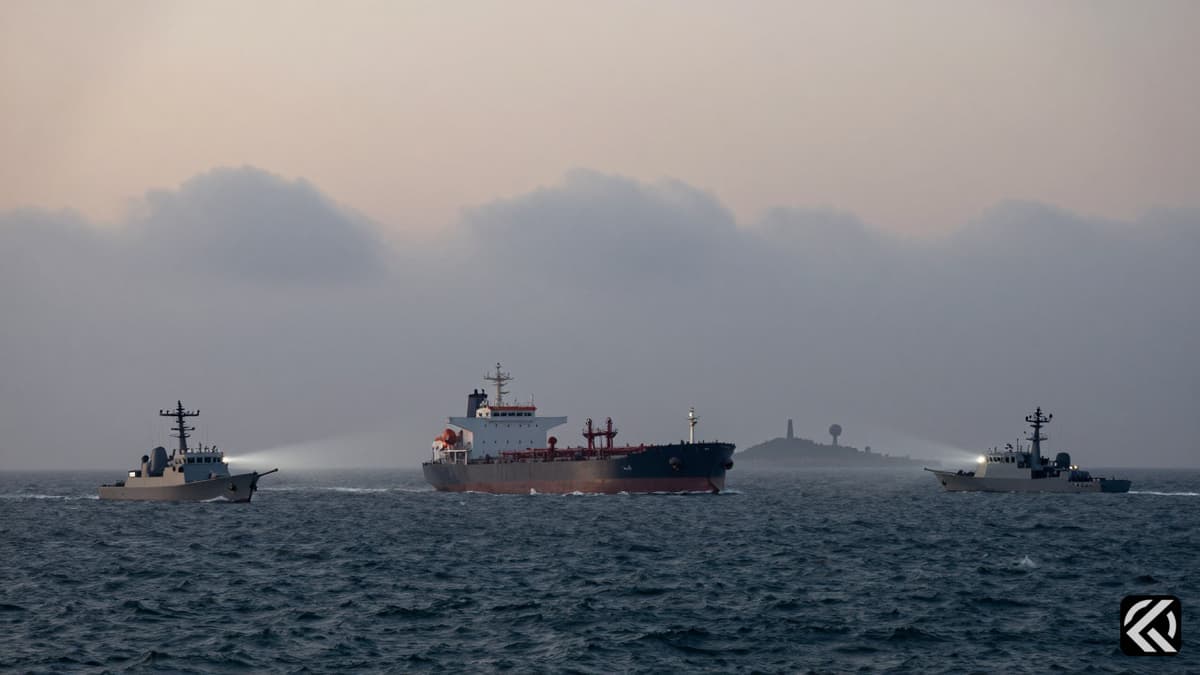
Iran has sealed the strategic waterway again, calling US port blockades acts of piracy. Tensions spike after Indian ships were targeted, while the region faces renewed uncertainty.
Iran has once again closed the strategic Strait of Hormuz, a critical global waterway where 20 percent of the world's traded oil transits. The Islamic Revolutionary Guard Corps (IRGC) announced on Saturday that control of the waterway has "returned to its previous state" as a direct countermeasure to a continued blockade of Iranian ports by the United States. This sudden closure follows a brief reopening of less than a day prior, marking a volatile escalation in the ongoing tensions.
The decision to seal the waterway was precipitated by Iran's characterization of the US blockade as "acts of piracy and maritime theft." In a statement cited by Iranian state media, the military asserted that the control over the strait is now under the "strict management and control of the armed forces." The situation became immediately volatile when reports emerged of Iranian gunboats firing at a merchant vessel attempting to cross the channel. By 10:30 GMT, while at least eight oil and gas tankers had successfully passed, the IRGC's stance forced at least as many ships to turn back after they had begun exiting the Gulf.
The volatility of the situation has drawn immediate diplomatic attention from major energy consumers. Later on Saturday, India summoned the Iranian ambassador to lodge a formal protest against a "shooting incident" involving two Indian-flagged merchant vessels. India's Ministry of External Affairs confirmed that Secretary Vikram Misri conveyed the nation's "deep concern" regarding the safety of its citizens and assets. The ministry explicitly urged Iran to "resume at the earliest the process of facilitating India-bound ships across the Strait," a request the envoy agreed to convey to Iranian authorities. While India has previously been labeled a "friendly" nation by Tehran, with several Indian-flagged vessels allowed to pass, the recent hostile actions toward Indian ships highlight the widening scope of the crisis.
This erratic fluctuation between closure and reopening casts significant doubt on the optimism expressed by US President Donald Trump the day before. Trump had celebrated the Friday reopening of the strait, noting that a deal to end the US-Israel war on Iran was "very close." However, the subsequent Iranian response contradicts this sentiment. Trump warned on board Air Force One that the temporary ceasefire could be short-lived, stating, "Maybe I won't extend it. So you'll have a blockade, and unfortunately we'll have to start dropping bombs again."
When asked about the feasibility of reaching a deal within such a compressed timeframe, Trump maintained confidence, saying, "I think it's going to happen." The proposed deal reportedly includes terms regarding Iran's nuclear program. Yet, Iranian officials reject the premise of imminent resolution. Tehran states that no date has been agreed upon for another round of peace talks, with accusations of the US "betraying" diplomacy in all negotiations. This fundamental disagreement has fueled a state of confusion that maritime experts say is deterring vessels from making the dangerous transit.
John-Paul Rodrigue, a maritime shipping specialist at Texas A&M University, explained that the conflicting and changing reports regarding the strait are causing hesitation among ship operators. "Ships have been attempting transit since the announcement, but it looks like many of them are heading back because the situation is unclear," Rodrigue told Al Jazeera. He noted the presence of "contradictory information being issued by all parties," creating a dangerous environment for navigation.
Reporting from Tehran, Al Jazeera's Tohid Asadi described the current atmosphere as one where "uncertainty is the name of the game." He detailed the complex demands Iran has placed on the table for a comprehensive resolution. "Iran is looking for a comprehensive end to the war across the region, security assurances, sanctions relief, the unfreezing of frozen assets, regional relations - and on top of all of that - the nuclear dossier and Iran's stockpile of highly enriched uranium," Asadi said. The current fragility of the situation makes discussing successful negotiations difficult, as the immediate focus remains on survival and immediate de-escalation of the India shipping protest and the broader blockade.
While some nations like Malaysia, China, Egypt, and South Korea have also been permitted to transit the strait, the Strait of Hormuz remains a flashpoint where diplomatic posturing translates directly into physical threats to global commerce. The IRGC insists that until the US restores full freedom of navigation for vessels traveling from Iran to their destinations and back, the status of the waterway will remain tightly controlled. This rigid stance, combined with the US's threat of resumed bombing if a deal is not struck, creates a precarious balance where a single misstep could lead to a wider US-Iran conflict.
The current impasse suggests a dangerous trajectory for global energy markets, driven by a cycle of blockades and threats that neither side seems willing to break. Iran's demand for the unfreezing of assets and sanctions relief, coupled with security assurances against regional war, stands in stark contrast to the US condition of agreeing to a deal on Iran's nuclear program. If the US continues its port blockade as a primary leverage tactic, the likelihood of further India shipping protest actions and similar incidents involving other nations increases. Maritime experts warn that without a clear, mutually agreed-upon path forward, vessels will continue to avoid the region, exacerbating price volatility and supply chain disruptions. The temporary nature of the ceasefire offers little reassurance, as President Trump's admission that he might not extend it indicates a high probability of resumed hostilities, potentially deepening the US-Iran conflict and threatening the stability of the entire region for the foreseeable future.
Jun 8, 2026 02:17 UTC
Magnitude 7.8 Quake Shakes Philippines, Urging Immediate Evacuations
Jun 8, 2026 00:51 UTC
Trump Claims Iran Nuclear Deal Imminent Despite Diplomatic Fractures
Jun 8, 2026 00:47 UTC
Iran Fires Missiles at Israel After Beirut Strike
Jun 7, 2026 22:00 UTC
US, Iran Peace Hops Fade 100 Days Into War
Jun 8, 2026 04:15 UTC
Trump Urges Netanyahu to Halt Iran Strike for Peace


