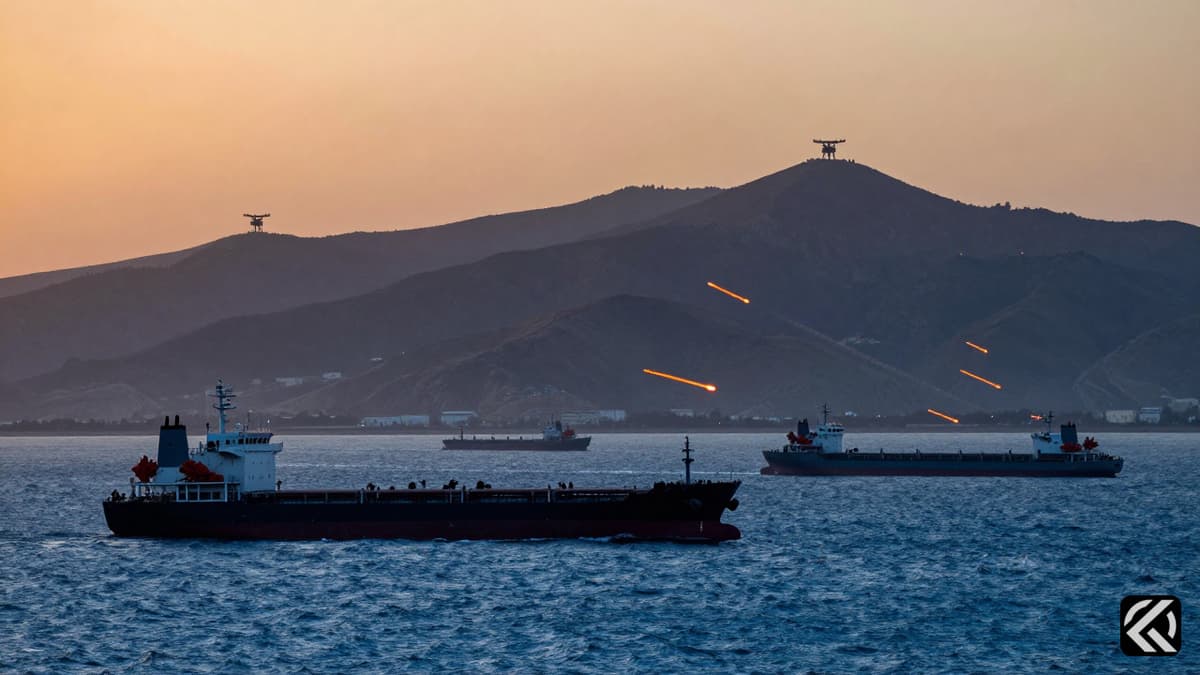
Tensions skyrocket as Iran reverses its reopening of the crucial waterway, firing on vessels to enforce a total closure following the U.S. port blockade.
On Saturday, April 18, 2026, a significant geopolitical standoff escalated as Iran reversed its decision to reopen the crucial Strait of Hormuz. This strategic waterway was shut down entirely, and vessels attempting to pass were met with fire. The action serves as a direct retaliation following the United States pressing ahead with its specific U.S. port blockade of Iranian locations.
The tension has led to a complete shutdown of navigation, with Iran's Revolutionary Guard navy issuing a stern warning late on Saturday night. The naval command declared that the strait remains closed until the American blockade is lifted. They explicitly stated that no vessel should make any movement from its anchorage within the Persian Gulf or the Sea of Oman.
This aggressive stance establishes a de facto Iranian blockade enforced by the use of force. The Revolutionary Guard navy further clarified that any ship attempting to approach the Strait of Hormuz will be considered as cooperating with the enemy. Consequently, such approaching vessels face immediate targeting by Iranian forces. The situation marks a sharp reversal from previous movements where the waterway had been reopened, signaling a rapid deterioration in diplomatic and military relations between the two nations.
The strategic importance of this waterway cannot be overstated, as it serves as a critical artery for global energy transport. By closing the strait and firing on passing ships, Iran has effectively turned a diplomatic dispute into a kinetic naval engagement. The threat level has been elevated to its highest point, with the command center indicating that the status of the waterway is now contingent entirely on the status of the American blockade.
The immediate impact of the Saturday announcement is a freeze in maritime activity within the region. Ships currently anchored in the Persian Gulf and the Sea of Oman are ordered to remain stationary. Any attempt to leave anchorage or move toward the narrow channel is treated as an act of hostility. The naval command has made it clear that the only path to reopening the waterway is the removal of the American restrictions.
This escalation highlights the volatility of the current geopolitical climate. The United States has maintained its blockade, which Iran views as a direct provocation requiring an equally forceful response. The firing on ships attempting to pass demonstrates a willingness to disrupt international trade and potential energy supplies to enforce its political demands. The situation remains fluid, with the Revolutionary Guard navy maintaining a state of high alert.
The directive issued on Saturday night is absolute. There are no exceptions mentioned for commercial or diplomatic vessels. The language used by the naval command suggests a readiness to engage in sustained conflict if the blockade persists. The warning that approaching the Strait of Hormuz constitutes "cooperation with the enemy" reframes the conflict from a simple trade dispute to a broader military confrontation involving any party attempting to use the waterway.
The closure of the Strait of Hormuz is a significant development in the ongoing regional tension. It signals that Iran is prepared to take extreme measures to counter U.S. actions. The standoff has moved beyond verbal warnings and economic sanctions into the realm of direct naval confrontation. As long as the U.S. port blockade remains in place, the Strait of Hormuz is expected to remain closed, and any vessel entering its vicinity faces the threat of being targeted.
The standoff over the Strait of Hormuz has now solidified into a stalemate defined by reciprocal military actions. Iran has fully committed to a policy of closure, firing on ships to enforce the boundary. The United States, having pressed ahead with its blockade, continues to hold the pressure on Iranian ports. The Revolutionary Guard navy's warning regarding the Persian Gulf and the Sea of Oman underscores the regional scope of the conflict.
If the U.S. blockade is not lifted, the Strait of Hormuz will likely remain closed for an indefinite period. The risk of escalation remains high, with the potential for further engagements between naval forces. The situation serves as a stark reminder of how quickly regional conflicts can expand into broader military confrontations. The international community will likely watch closely as the situation evolves, with the safety of global shipping lanes hanging in the balance. The current trajectory suggests that without a diplomatic breakthrough or a significant shift in U.S. policy, the waterway will remain a closed zone, and the threat of military action against vessels will persist.
Jun 8, 2026 02:17 UTC
Magnitude 7.8 Quake Shakes Philippines, Urging Immediate Evacuations
Jun 8, 2026 00:51 UTC
Trump Claims Iran Nuclear Deal Imminent Despite Diplomatic Fractures
Jun 8, 2026 00:47 UTC
Iran Fires Missiles at Israel After Beirut Strike
Jun 7, 2026 22:00 UTC
US, Iran Peace Hops Fade 100 Days Into War
Jun 8, 2026 04:15 UTC
Trump Urges Netanyahu to Halt Iran Strike for Peace


