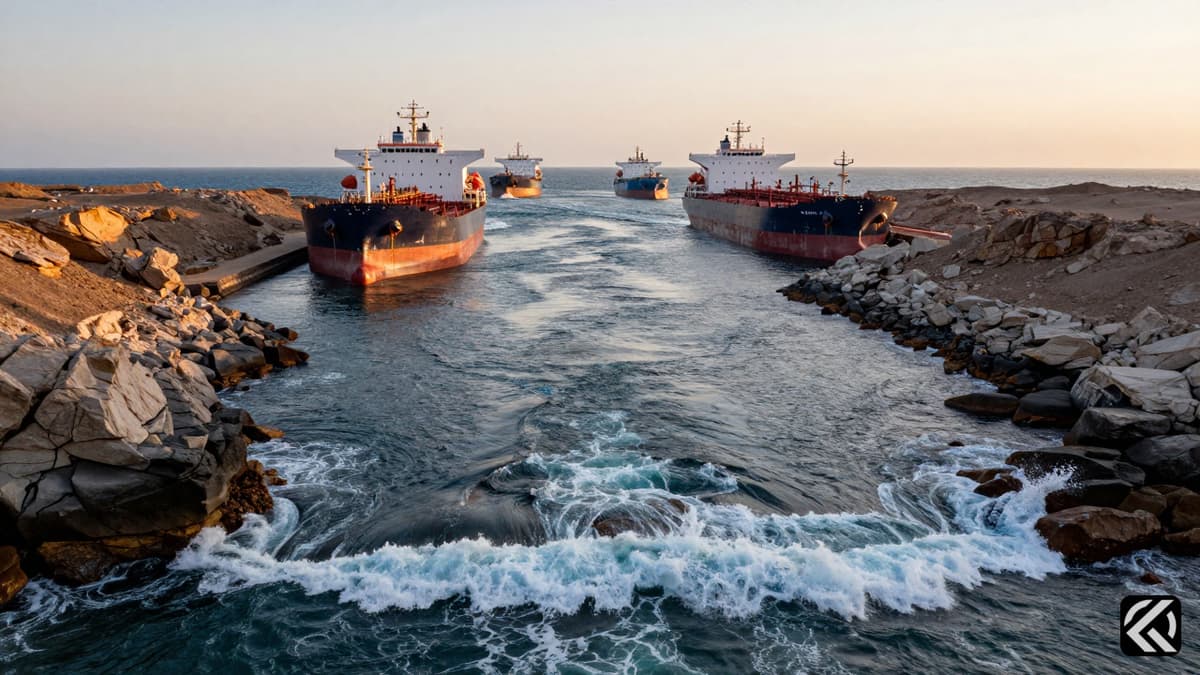
Strait of Hormuz shipping halts after Iran reimposes blockade, citing US-Iran nuclear negotiation failures and US port closures, reigniting fears of global oil supply disruption.
Shipping through the Strait of Hormuz remains paralyzed as Sunday dawns, marking a severe escalation in regional tensions. Two tankers, the Meda and the G Summer, abruptly reversed course south of Iran's Larak island, with no other vessels transiting the critical waterway in either direction. This halt follows an announcement by the Iranian Islamic Revolutionary Guard Corps (IRGC) declaring the strait closed to traffic once again, citing a failure in diplomatic efforts.
The paralysis began after reported attacks on Saturday, where Iranian gunboats fired on a tanker and a second vessel was struck by an unknown projectile. While most ships have retreated to the Gulf of Oman or deeper into the Persian Gulf for safety, the disruption has sent shockwaves through global energy markets. The incident occurred against a backdrop of stalled Strait of Hormuz negotiations, where US President Donald Trump and Tehran remain at an impasse regarding sanctions and nuclear capabilities.
Iran's parliament speaker, Mohammad Bagher Ghalibaf, stated clearly on state television that Washington and Tehran are "far from a final agreement," even as a ceasefire nears its expiry. The closure is a direct response to President Trump's insistence that the US naval blockade of Iranian ports will persist until a deal is reached. This stance contradicts earlier statements from Iranian officials suggesting they were ready to loosen restrictions. The IRGC has issued a stark warning that approaching the strait will now be considered "cooperation with the enemy" and any offending vessel will be targeted.
The strategic importance of this waterway cannot be overstated. As the main route for crude oil from Saudi Arabia and Kuwait, the channel previously handled about 20 million barrels of oil daily, roughly one-fifth of global production. The US Energy Information Administration notes that very few alternative options exist to move oil if this route remains closed. The situation has already triggered significant market volatility. On Friday, a brief announcement of the strait reopening caused crude oil prices to drop 10 percent, but the subsequent reversal has led analysts to warn that prices will likely remain elevated.
The current crisis is fueled by deep-seated disagreements over key sticking points in US-Iran nuclear negotiations. One major hurdle is the fate of Iran's uranium stockpiles. While President Trump claimed Iran agreed to ship highly enriched uranium to the US, a senior Iranian official immediately rejected this as a "non-starter." Iran possesses approximately 400 kilograms of 60% enriched uranium and has demanded the unfreezing of assets exceeding $20 billion and major sanctions relief. Proposals for a 20-year pause on enrichment were made by American negotiators last weekend, but Iran countered with a request for a five-year suspension, a demand the US has so far rejected.
Tensions have been further inflamed by the ongoing conflict in the region, which has already caused significant loss of life. According to state media, at least 3,375 people have been killed in Iran since US and Israeli strikes began. Footage released by the Iranian Red Crescent Society shows widespread destruction in civilian areas of Tehran, with buildings blown out and streets littered with rubble. The International Federation of Red Cross and Red Crescent Societies (IFRC) has expressed concern over these attacks, emphasizing the need to protect medical and relief centers.
On the Israeli side, the IDF reported that two soldiers were killed in southern Lebanon over the past two days, bringing the total troop death toll to at least 15 since the latest conflict began. The unrest, which started in early March following a Hezbollah attack, has seen Israel bombard its northern neighbor, with Lebanon reporting over 2,000 civilian deaths and 7,000 injuries in the last six weeks. A 10-day ceasefire is currently in effect, but the threat of its expiration looms large.
The diplomatic friction was palpable when French President Emmanuel Macron announced that a UN peacekeeping soldier from France was killed in Lebanon. Meanwhile, US President Trump described the Iranian leadership as having "gotten a little cute," signaling a toughening of the US stance after previously suggesting a deal was very close. The IRGC's latest threat to target any vessel approaching the strait has now transformed a diplomatic disagreement into a direct threat to global shipping lanes.
The immediate future of the Strait of Hormuz remains precarious as the blockade is firmly re-established. With the US continuing its port blockade and Iran refusing to lift the restriction, the window for a diplomatic resolution appears to be closing rapidly. The failure to agree on the duration of uranium enrichment curbs and the status of frozen assets suggests that the current deadlock will persist. Unless a compromise is reached on the immediate lifting of the port blockade and the details of the nuclear deal, the tanker attacks and subsequent traffic halts are likely to become a recurring feature of the region's daily reality. Energy analysts predict that oil and natural gas prices will stay high until the strait is definitively passable, and the absence of viable alternatives means any prolonged closure will have profound economic consequences globally. The coming days will be critical as the ceasefire approaches its expiration, determining whether the region will return to diplomacy or descend further into conflict.
Jun 8, 2026 02:17 UTC
Magnitude 7.8 Quake Shakes Philippines, Urging Immediate Evacuations
Jun 8, 2026 00:51 UTC
Trump Claims Iran Nuclear Deal Imminent Despite Diplomatic Fractures
Jun 8, 2026 00:47 UTC
Iran Fires Missiles at Israel After Beirut Strike
Jun 7, 2026 22:00 UTC
US, Iran Peace Hops Fade 100 Days Into War
Jun 8, 2026 04:15 UTC
Trump Urges Netanyahu to Halt Iran Strike for Peace


