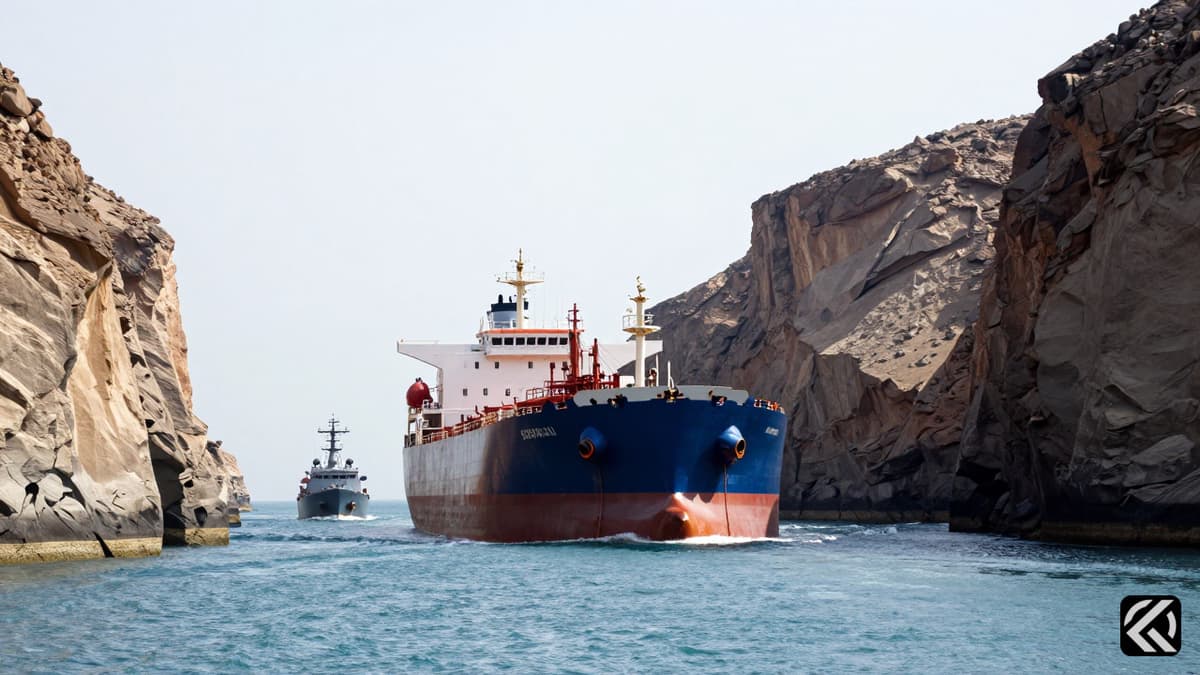
A tense standoff unfolds as Iranian gunboats force the return of the Bhagya Lakshmi and reportedly fire upon other vessels, sparking fresh global oil market anxieties.
In a tense confrontation, the Bhagya Lakshmi, an Indian-flagged tanker, was forced to turn back in the Strait of Hormuz after receiving a direct order from the Iranian Revolutionary Guard Navy. This incident occurred amidst Iran's recent announcement regarding the closure of the strategic waterway, creating immediate confusion for maritime traffic. Crew members on the vessel were recorded attempting to secure permission to cross, only to be denied access by the imposing naval force.
The situation escalated as a video, later shared by an Iranian journalist on the platform X, captured the frantic communications between the ship and the navy. A crew member identified the vessel, stating, "Iranian Navy, this is Bhagya Lakshmi. I read you loud and clear," to which the naval forces responded with an unyielding command: "turn around immediately." The crew complied with the order, but the encounter was not an isolated event. Another distress call emerged from the Sanmar Herald, a crude oil tanker, where a crew member reported being fired upon despite previously having clearance, stating, "You gave me clearance to go. My name is second on your list. You are firing now."
Two Indian-flagged tankers reportedly turned back after being fired upon by Iranian gunboats, raising the stakes in a region critical to global energy supplies. The Strait of Hormuz remains a volatile flashpoint, as one-fifth of the world's oil and gas passes through this narrow channel. Despite the alarming reports of firing, sources confirmed that no injuries were reported and the vessels sustained no damage during the exchange.
Following the reports of hostility against merchant shipping, India immediately raised concerns regarding the safety of its sailors and commercial vessels. The Ministry of External Affairs, which noted that Iran had previously assisted in ensuring safe passage for India-bound ships, sought an immediate explanation. Foreign Secretary Vikram Misri personally urged the Iranian ambassador to convey New Delhi's strong concerns to Tehran authorities. The diplomatic message was clear: restore the process of facilitating safe passage for Indian ships at the earliest possible moment. In response, the Iranian ambassador assured that India's concerns would be communicated to the relevant authorities.
The shooting incident involving the Indian-flagged vessels was addressed by Iranian officials amidst rising regional tensions involving the US, Israel, and Iran. Dr. Abdul Majid Hakeem Ilahi, a representative of Iran's Supreme Leader in India, emphasized the strength of the bilateral relationship while expressing uncertainty about the specific event. He stated, "The relationship between Iran and India is very strong and I don't know anything about this event which you mentioned and we hope that it will be okay and it will be solved." This diplomatic reassurance was paired with a military confirmation from Iran's joint military command, which declared that control over the strait had returned to "strict management" by the armed forces.
The Islamic Revolutionary Guard Corps (IRGC), speaking through the Tasnim news agency, issued a stern warning regarding vessel movement in the area. They cautioned that any vessel approaching the strait could be treated as acting in support of hostile forces and could consequently be targeted. This aggressive posture complicates the already tense environment, where commercial vessels had previously received a notice to mariners stating passage was allowed but restricted to lanes deemed safe by Iran. However, the subsequent firing and orders to turn around have shattered that assurance.
The uncertainty surrounding the safety of the waterway has potential ripple effects beyond the immediate diplomatic dispute. With the US, Israel, and Iran already engaged in regional tensions, any disruption to the flow of oil and gas through the Strait of Hormuz could have significant implications for global markets. The incident highlights the fragility of the current situation, where a single miscommunication or escalation can lead to the targeting of commercial assets. While India seeks to resolve the immediate issue through diplomatic channels, the IRGC's warning suggests that the status quo is far from stable, leaving the future of maritime transit in the region highly uncertain. The interplay between military strictness and diplomatic appeals defines the current narrative, leaving the global community to watch closely as the situation evolves.
The immediate outcome of this confrontation leaves the status of the Bhagya Lakshmi and the Sanmar Herald as a critical point of contention between New Delhi and Tehran. While the vessels were not damaged, the precedent of firing on commercial ships despite prior clearance suggests a significant shift in the operational rules of the strait. If the IRGC's warning regarding "hostile forces" is interpreted broadly, future transit attempts by Indian or other international vessels could face similar obstruction or danger. The diplomatic assurance from the Iranian ambassador may not be sufficient to override the "strict management" declared by the military command, potentially leading to prolonged disruptions in the flow of energy resources through this vital choke point until further clarification is provided by Iranian authorities.
Jun 8, 2026 02:17 UTC
Magnitude 7.8 Quake Shakes Philippines, Urging Immediate Evacuations
Jun 8, 2026 00:51 UTC
Trump Claims Iran Nuclear Deal Imminent Despite Diplomatic Fractures
Jun 8, 2026 00:47 UTC
Iran Fires Missiles at Israel After Beirut Strike
Jun 7, 2026 22:00 UTC
US, Iran Peace Hops Fade 100 Days Into War
Jun 8, 2026 04:15 UTC
Trump Urges Netanyahu to Halt Iran Strike for Peace


