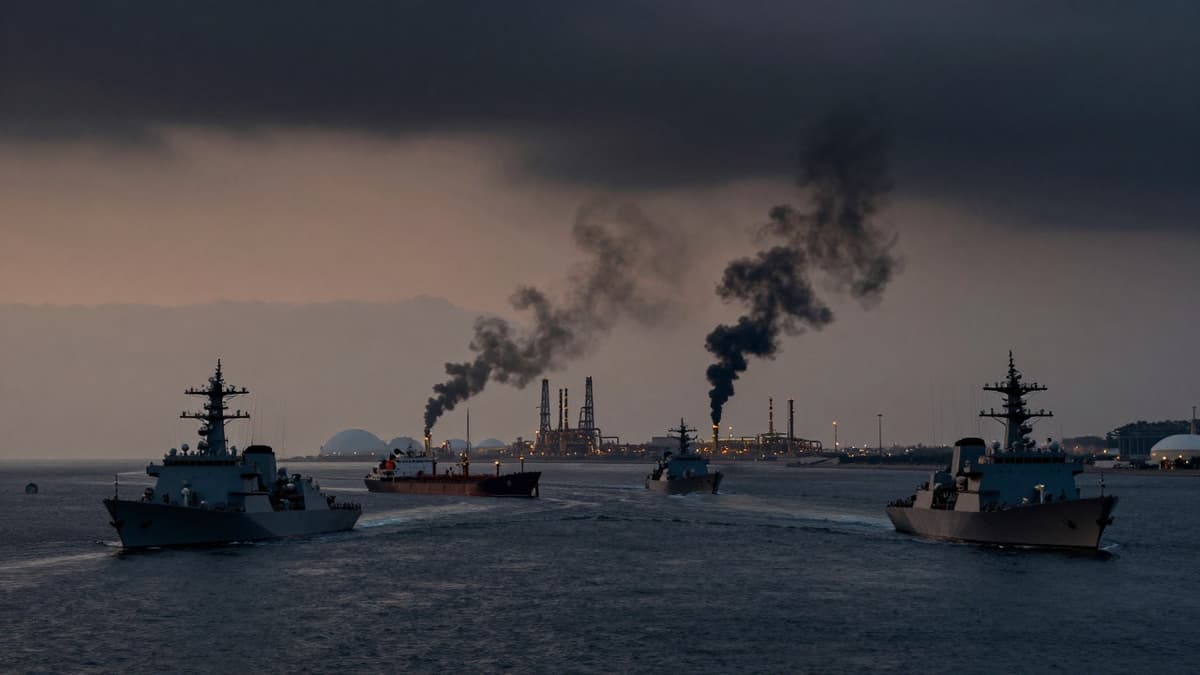
As the Iran war marks 30 days, Tehran warns Washington of devastating consequences should American forces attempt a ground invasion, targeting strategic choke points and vital infrastructure.
The Iran war has entered a critical phase thirty days into the conflict, with tensions soaring as a potential US ground attack threatens to ignite a bloodbath in the region. Senior Iranian officials have issued stark warnings that their forces are prepared to unleash a torrent of fire upon any American soldiers who attempt to land, signaling a drastic escalation from previous verbal posturing to active military preparation.
This threat comes as Washington continues to insist that diplomatic negotiations are progressing, even while simultaneously deploying thousands of additional troops to the Gulf. Among the forces gathering are 3,500 soldiers who arrived from Asia this weekend, beginning to assemble for what appears to be a coordinated push. The strategic focus of these preparations is heavily concentrated on key economic and military targets, including Kharg Island, Iran's main oil terminal, and the narrow waterway known as the Strait of Hormuz, which Iran has effectively blocked since late February.
Iranian Parliament Speaker Mohammad Bagher Ghalibaf stated that the enemy signals negotiation in public while secretly plotting a ground attack. He warned that Iranian forces are already waiting for American soldiers to enter on the ground so they can rain fire upon them. Without the element of surprise, a US ground operation could quickly turn into a massacre, especially given the risks of scattered forces that have been slowly amassed over weeks.
US military planners are reportedly considering several aggressive options. One potential scenario involves seizing coastal positions to reopen the Strait of Hormuz, a strategic energy choke-point that has been blocked, provoking an acute oil and gas supply shock reverberating through global markets. Another option involves raiding nuclear sites deep inside Iran to retrieve worrisome nuclear material amid fears it could be used to manufacture weapons. However, putting boots on the ground carries enormous risks, not least because these operations have been telegraphed by Washington for weeks.
The potential for a US ground attack extends beyond just the battlefield. The energy-rich Gulf Arab states, already suffering billions of dollars in losses and a mass exodus, are deeply concerned about the fallout. Tehran has vowed to step up attacks on regional partners forever if the war escalates. This includes broad targeting of sensitive energy installations like the Ras Laffan gas production facility in Qatar, which was struck by two Iranian ballistic missiles in mid-March. While the damage was limited, the shockwaves through international energy markets were severe.
Further complicating the situation are threats against critical infrastructure vital to the Gulf Arab states. Desalination plants, on which these arid nations almost entirely depend for fresh water supplies, could find themselves in the firing line. Although the Islamic Revolutionary Guard Corps has denied having such battle plans, stating that the US president has lied about such intentions, the threat remains a significant factor in regional security calculations.
The diplomatic landscape offers little hope for a swift resolution. Washington's 15-point plan demands an end to Iranian nuclear activities, support for regional proxies like Hezbollah, and strict limits on ballistic missile capabilities. Iranian officials view this list as a demand for unconditional surrender rather than a blueprint for talks. Ghalibaf noted that the US is pursuing what it failed to achieve in the war and that Iran would not accept "humiliation." Conversely, Iran's own five-point plan calling for war reparations, control over the Strait of Hormuz, and the removal of US bases seems equally unrealistic.
Iran's leadership has been decimated and its military degraded by withering US and Israeli attacks, yet the regime has proved resilient. The conflict has evolved from a straightforward military operation aimed at decapitating the Iranian leadership into a complex struggle where Tehran's stranglehold over the Strait of Hormuz has made a quick US victory elusive. The recent intervention of Iran's Houthi proxies in Yemen, firing missiles at Israel and threatening to block a Red Sea shipping lane, adds another layer of complication to a war that has already lasted two months.
With both sides holding inflexible positions, the current trajectory suggests a worsening humanitarian and economic crisis. The gap between Washington's demands and Tehran's requirements is so vast that compromise seems impossible in the immediate future. Unless a sudden shift occurs in the diplomatic dialogue, the region faces the prospect of prolonged warfare that could inflict severe, long-lasting economic pain through targeted strikes on energy and water infrastructure. The involvement of Houthi proxies and the potential for a ground invasion by US forces means the war could spiral into a broader regional conflict with global consequences before any de-escalation becomes possible.
Jun 8, 2026 00:51 UTC
Trump Claims Iran Nuclear Deal Imminent Despite Diplomatic Fractures
Jun 8, 2026 00:47 UTC
Iran Fires Missiles at Israel After Beirut Strike
Jun 7, 2026 22:00 UTC
US, Iran Peace Hops Fade 100 Days Into War
Jun 7, 2026 20:57 UTC
Iran Strikes Israel: IRGC Promises Week of Continuous Offensive
Jun 8, 2026 02:28 UTC
Trump Walks Out of Meet the Press After Rejecting Evidence Demands


