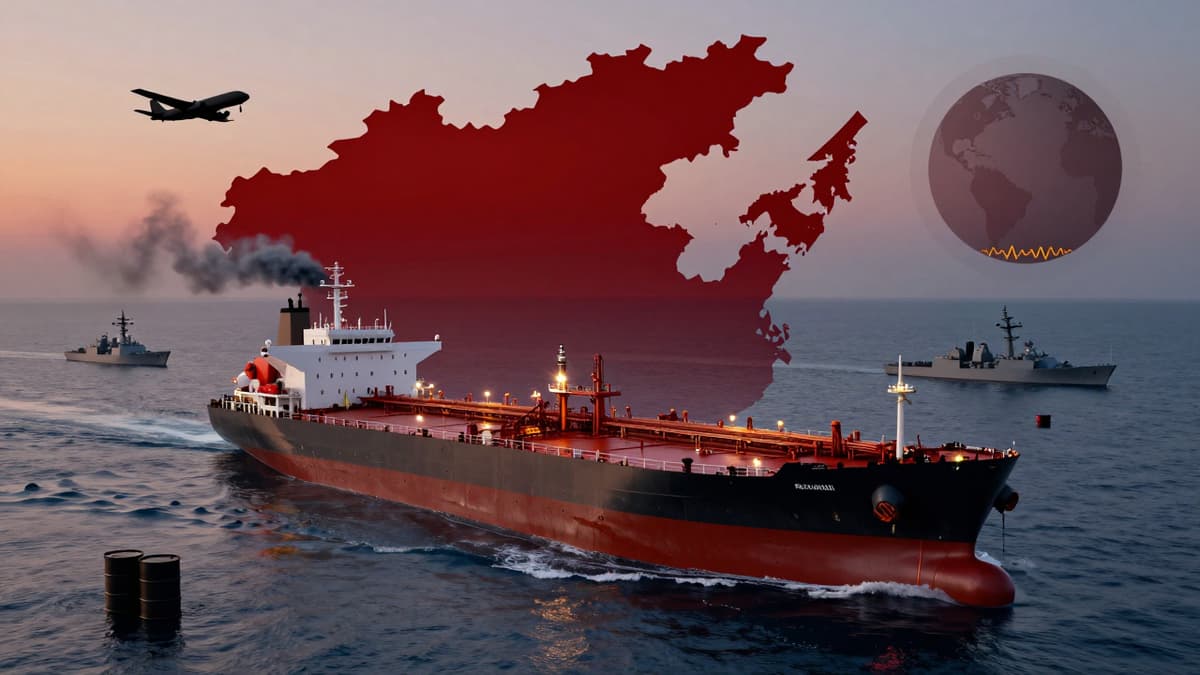
Explosions rocked Tehran in late February 2026 as Israel and the U.S. launched joint strikes, prompting Iran to block the Strait of Hormuz and ignite a severe global energy crisis.
In the early hours of February 28, 2026, a wave of explosions shattered the silence of Tehran as Israel and the United States launched a coordinated military assault targeting the nation's leadership. The joint operation marked a catastrophic escalation in the region, shattering any remaining hopes for de-escalation and triggering a rapid chain of events that would ripple across the globe within days. Israel's Defence Minister Israel Katz justified the offensive, stating the strikes were explicitly designed to "remove threats to the State of Israel," while U.S. President Donald Trump vowed that the operation would cripple Iran's military capabilities and called on the Iranian people to rise up against their Islamic republic government.
The retaliation from Tehran was swift and devastating. In response to the attacks on its capital and leadership, Iran launched strikes against U.S. bases and critical infrastructure scattered across the Gulf region. The immediate military response caused significant airspace closures and resulted in civilian casualties, setting the stage for a broader economic and humanitarian catastrophe. The situation spiraled further when Iranian forces moved to block the Strait of Hormuz, a critical maritime choke point through which approximately 20% of the world's global oil and liquefied natural gas passes. This strategic move created an immediate Strait of Hormuz blockade effect, sending shockwaves through international markets. The disruption to supply chains led to skyrocketing oil prices and severe resource shortages that were felt across the globe, affecting economies far removed from the conflict zone.
The human cost of the Iran-US-Israel war began to mount rapidly as the conflict expanded beyond military targets. The UN refugee agency officially declared the West Asian crisis a "major humanitarian emergency," highlighting the scale of displacement and suffering. Data collected by early March 2026 showed that nearly 100,000 people had been displaced within Lebanon alone, while tens of thousands of Syrian refugees who had sought shelter there fled back over the border in desperation. This mass movement of people compounded the existing instability in the region, creating a complex humanitarian crisis that stretched the capacity of local aid organizations and neighboring states.
As the conflict entered its third week, the economic implications became the defining narrative of the crisis. Fatih Birol, the chief of the International Energy Agency, issued a stark warning on March 23, 2026, cautioning that the ongoing hostilities could result in the world facing its worst energy crisis in decades. This projection was not based on speculation but on the tangible reality of the blockade and the destruction of infrastructure. The combination of halted exports and the inability to secure safe passage for energy resources signaled a long-term threat to global stability. The crisis was not merely a regional dispute but a fundamental disruption to the global economic order, threatening to alter the energy landscape for years to come.
The timeline of events from February 28 to March 28, 2026, reveals a trajectory of escalating violence and geopolitical maneuvering. Each step taken by the involved parties, from the initial joint strike to the subsequent blockade, deepened the divide and hardened the stakes. The involvement of high-level leaders like Katz and Trump underscored the gravity of the situation, as did the direct targeting of Iran's leadership. The reaction from Iran, particularly the decision to weaponize the Strait of Hormuz, demonstrated the willingness to inflict global economic pain in the pursuit of strategic objectives.
The convergence of military action, strategic blockade, and humanitarian displacement has created a volatile environment that shows no immediate signs of abating. Based on the trends observed during the first month of the conflict, the global 2026 energy crisis is likely to deepen as production disruptions continue and the physical barriers to oil and gas transport remain in place. The severe resource shortages and skyrocketing prices indicate that the economic shockwaves will persist, potentially leading to further inflationary pressures worldwide. Furthermore, the humanitarian emergency in Lebanon and Syria suggests that the conflict could fuel continued regional instability, with refugee movements becoming a permanent feature of the geopolitical landscape until a political resolution is reached. The international community now faces the daunting task of managing a crisis that has already proven capable of altering global energy dynamics and human displacement patterns on a massive scale.
Jun 8, 2026 02:17 UTC
Magnitude 7.8 Quake Shakes Philippines, Urging Immediate Evacuations
Jun 8, 2026 00:51 UTC
Trump Claims Iran Nuclear Deal Imminent Despite Diplomatic Fractures
Jun 8, 2026 00:47 UTC
Iran Fires Missiles at Israel After Beirut Strike
Jun 7, 2026 22:00 UTC
US, Iran Peace Hops Fade 100 Days Into War
Jun 8, 2026 04:15 UTC
Trump Urges Netanyahu to Halt Iran Strike for Peace


