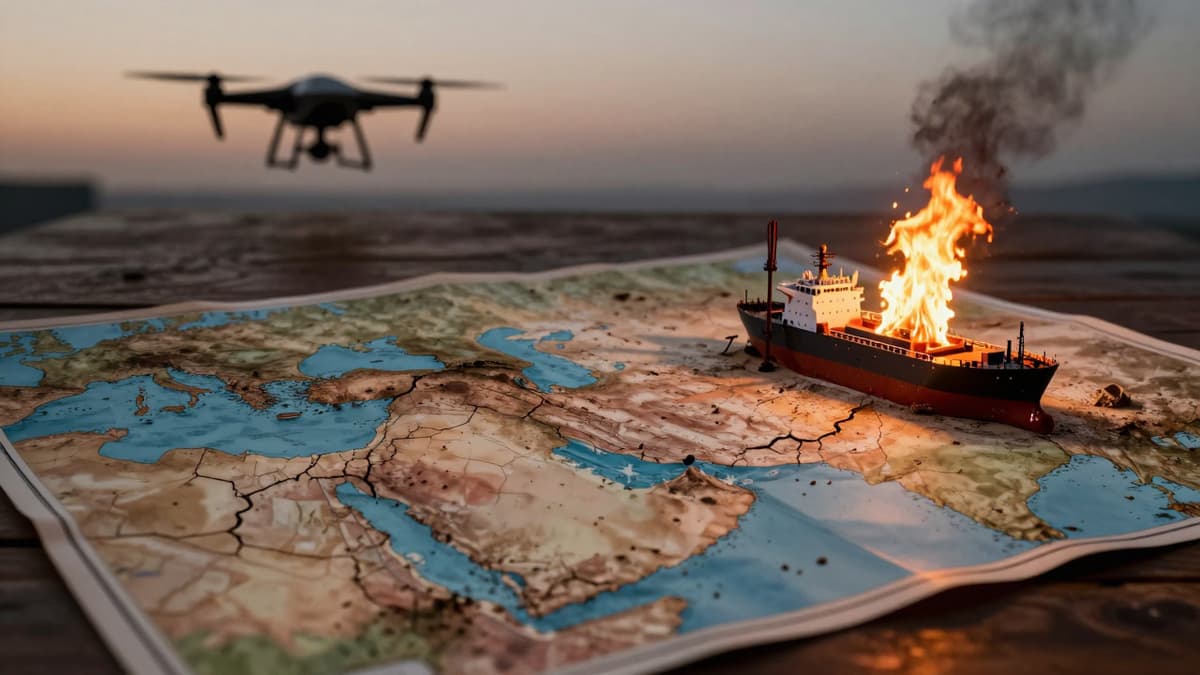
Tensions escalate as conflicting reports emerge regarding peace talks. While Trump claims a ceasefire request, Iranian officials deny negotiations, citing a rejected US plan.
The conflict between Iran and the United States has reached a volatile fever pitch, with conflicting narratives emerging from Washington and Tehran regarding the possibility of a de-escalation. On Wednesday, April 1, 2026, US President Donald Trump claimed that the Iranian President had personally requested a ceasefire, suggesting the war could end within two to three weeks. However, Iranian officials swiftly moved to refute these claims, maintaining a firm stance that no formal peace negotiations are currently underway.
Tehran's position was made clear by Foreign Minister Abbas Araghchi, who addressed the international press in an interview aired on Al Jazeera. Araghchi explicitly stated that there are "no grounds for negotiations" and confirmed that Iran has not responded to a reported 15-point proposal from Washington intended to end the hostilities. Despite this denial of formal diplomatic channels, Araghchi acknowledged that some direct messages had been exchanged between Iranian officials and US special envoy Steve Witkoff, though he did not elaborate on the content or outcome of these specific communications.
The denial from Tehran coincides with a surge in kinetic attacks across the region, underscoring the complexity of the situation. In Yemen, the Houthis publicly claimed responsibility for a missile attack targeting Israel. The group stated that the strike was executed jointly with their backer, Iran, and Lebanon's Hezbollah group. This marked the third such coordinated attack by the Houthis since they recently entered the conflict. Meanwhile, on the same day, an Iranian drone strike targeted fuel tanks at Kuwait's international airport. The attack sparked a large fire at the facility, though Kuwaiti state news agency KUNA reported that no casualties were sustained in the incident.
The threat landscape extends beyond physical attacks to the digital realm. On Tuesday, March 31, Iran's Revolutionary Guards issued a stern warning, declaring their intent to target approximately 18 leading US technology firms, including major names like Apple, Google, and Meta. This retaliation is framed as a response to "targeted assassinations" of Iranian leaders. The Guards' statement warned that the "destruction of their relevant units" would commence at 8:00 p.m. Tehran time on Wednesday, April 1, 2026. The timing of this cyber threat aligns with the heightened tensions and the conflicting reports regarding diplomatic efforts.
The situation in the Middle East has drawn the attention of other regional allies. The United Arab Emirates is reportedly preparing to assist the US and other allies in opening the strategic strait by force, according to a report by the Wall Street Journal citing Arab officials. This preparation for potential naval intervention adds another layer of urgency to the diplomatic stalemate. As the US President suggests the war may conclude in weeks, the on-the-ground reality involves simultaneous missile attacks, drone strikes, and looming cyber threats.
The divergence between Trump's public assertions and the official statements from the Iranian Foreign Ministry highlights a significant disconnect in the current narrative. While the US President paints a picture of a potential exit strategy initiated by Tehran, the Iranian leadership insists that the door to formal negotiations remains closed. The exchange of messages with Steve Witkoff suggests a backchannel exists, but it has not yet translated into a formal agreement or a response to the comprehensive peace plan.
As the week progresses, the likelihood of a swift resolution remains uncertain given the aggressive posturing from all sides. The threat of digital retaliation against major US technology companies introduces a new dimension to the conflict, one that could have far-reaching economic implications beyond the immediate physical destruction. The involvement of the UAE in potential forceful actions to secure the strait indicates that the conflict could broaden geographically. With the Houthis actively engaging in coordinated attacks alongside Hezbollah and the Revolutionary Guards threatening cyber warfare, the path to a stable ceasefire appears obscured by a cloud of mutual distrust and active hostilities. The coming weeks will be critical in determining whether the reported messages between Tehran and Washington can bridge the gap or if the region faces further escalation.
Jun 8, 2026 00:51 UTC
Trump Claims Iran Nuclear Deal Imminent Despite Diplomatic Fractures
Jun 8, 2026 00:47 UTC
Iran Fires Missiles at Israel After Beirut Strike
Jun 7, 2026 22:00 UTC
US, Iran Peace Hops Fade 100 Days Into War
Jun 7, 2026 20:57 UTC
Iran Strikes Israel: IRGC Promises Week of Continuous Offensive
Jun 8, 2026 02:28 UTC
Trump Walks Out of Meet the Press After Rejecting Evidence Demands


