
Section
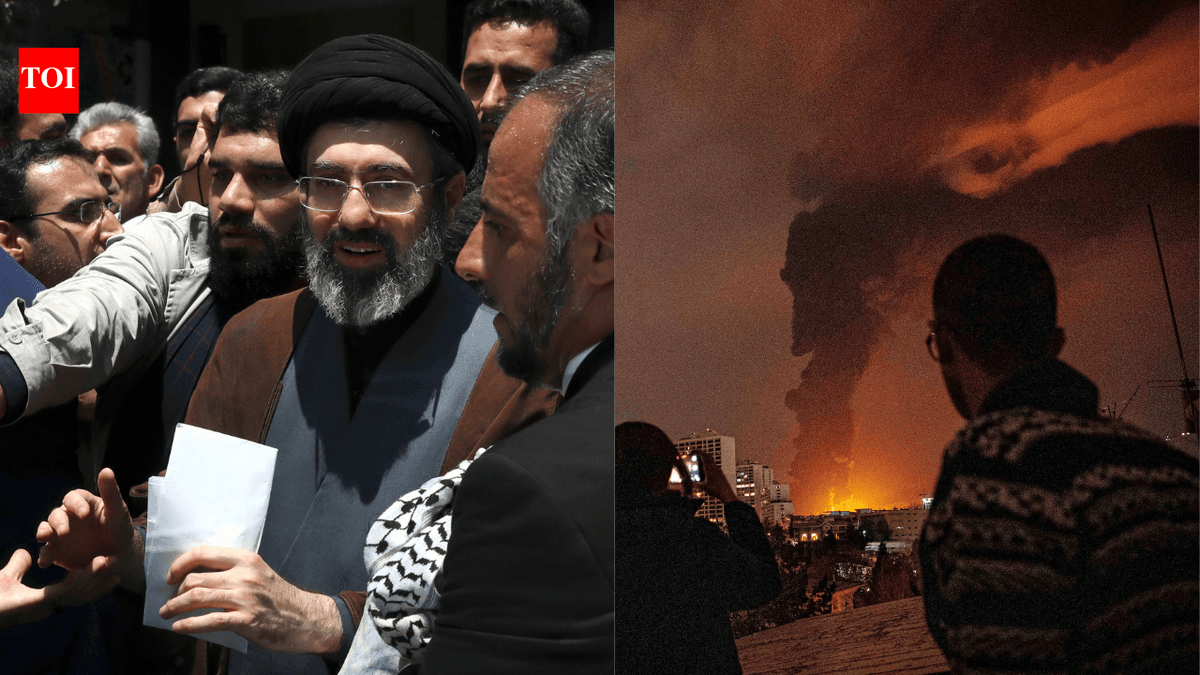
Following a decapitation strike on Ayatollah Ali Khamenei, his son Mojtaba has been declared the new Supreme Leader as hostilities continue across the Middle East.
The political landscape of the Islamic Republic has shifted dramatically following a devastating military engagement involving global powers. On the tenth day of an intense conflict, Iran officially announced that Mojtaba Khamenei would succeed his father as the country’s new ruler. This leadership change occurred while clashes continued with the United States and Israel, marking a pivotal moment in the ongoing war. The transition of power took place against a backdrop of significant casualties, widespread displacement, and severe economic repercussions affecting global markets.
The humanitarian cost of the conflict has been substantial. Official figures indicate that at least 1,230 people have been killed within Iran itself. Beyond its borders, the fighting has resulted in 397 deaths in Lebanon and 11 fatalities in Israel. Additionally, seven American citizens have lost their lives since the war between the United States, Israel, and Iran began. In Lebanon alone, the intensity of the fighting has forced more than half a million people to flee their homes. While authorities report an official figure of 517,000 displaced individuals who registered on the government’s online portal, it is believed that the actual number is likely higher due to unregistered movements.
Israel has issued evacuation warnings for dozens of villages across southern Lebanon and the entirety of Beirut’s southern suburbs. These directives have forced families to seek shelter in various locations, including schools, cars, and open areas near the Mediterranean coast. Beyond the immediate battlefield, the conflict has triggered a widening humanitarian and economic shockwave. Global energy markets have been rattled significantly, pushing oil prices above $100 a barrel and tightening natural gas supplies after QatarEnergy halted production.
The war in the Middle East began on February 28 with a massive joint strike by the United States and Israel targeting military bases, missile launch sites, and strategic facilities across Iran. The operation included locations in Tehran, Isfahan, and Kermanshah. The most dramatic development was the killing of Iran Supreme Leader Ayatollah Ali Khamenei in what analysts described as a decapitation strike aimed at crippling Iran’s leadership. Several senior military commanders were also reported killed during this initial assault.
According to reports regarding the operation, the strike involved the Blue Sparrow missile, which briefly travelled toward space before descending at high speed. Israeli officials stated that the missile struck Khamenei’s guarded compound in Tehran during a meeting of senior officials, killing the 86-year-old cleric. Iran responded quickly, launching missiles and drones toward Israel and US military facilities in the region. Air-raid sirens sounded across Israeli cities as defense systems were activated to counter the incoming threats.
On the second day, Iran escalated its response with waves of ballistic missiles and drones targeting Israeli territory. Several missiles struck infrastructure sites, though many were intercepted by Israeli air-defense systems. Simultaneously, the United States expanded its air campaign, striking missile launchers, air-defense systems, and facilities linked to the Islamic Revolutionary Guard Corps. Iran also began directing attacks toward American bases and allied states across the Middle East, signaling that the conflict would expand beyond just Iran and Israel.
The war widened on the third day when the Lebanese militant group Hezbollah launched rockets from southern Lebanon toward northern Israel. Israel responded with heavy airstrikes on Hezbollah positions in Beirut’s southern suburbs and other areas across Lebanon, targeting weapons depots, command centers, and infrastructure linked to the group. More than 200 people were reported killed in Israeli strikes across Lebanon after Hezbollah launched rockets and drones. Among the deadliest attacks were overnight airstrikes on the town of Nabi Chit, where at least 16 people were killed and 35 injured.
By the fourth day, the conflict began affecting Gulf states hosting American military bases. Iranian missiles and drones were intercepted over countries including Kuwait, Bahrain, Qatar, and the United Arab Emirates. Some caused damage when debris fell after interceptions. Tensions also escalated in the Strait of Hormuz, a key maritime corridor for global energy supplies. Threats against shipping routes and attacks on vessels disrupted maritime traffic and raised fears of a wider energy crisis. Oil markets reacted sharply amid concerns about supply disruptions.
On Wednesday, the Iranian warship IRIS Dena was torpedoed by a US submarine about 44 nautical miles south of Sri Lanka as it was returning home after participating in naval drills hosted by India. At least 87 people were killed in the strike on the vessel. Meanwhile, air-defense systems in the United Arab Emirates intercepted dozens of projectiles. Debris caused damage in parts of Dubai, including near the international airport and coastal areas. In Bahrain, a missile struck a state-run oil refinery, triggering a fire that was later contained. Kuwait temporarily suspended operations at the US embassy after missiles and drones were detected heading toward the country. Saudi Arabia also reported intercepting drones and a cruise missile targeting military and energy infrastructure near the Ras Tanura refinery.
By day six, the United States and Israel significantly intensified their operations inside Iran. US military officials said hundreds of targets were struck over a 72-hour period, including ballistic missile launchers, military compounds, and naval facilities. Israeli officials claimed roughly 80 percent of Iran’s air-defense systems had been destroyed. Iranian authorities said the death toll from strikes had risen to more than 1,300 people nationwide, with heavy damage reported in multiple cities.
By the seventh day, fighting had spread across multiple fronts. Israel intensified strikes on Hezbollah targets in Lebanon and issued evacuation warnings for parts of Beirut’s southern suburbs and the Bekaa Valley. Clashes were reported along the Lebanon-Syria border, while rockets and drones targeted installations hosting American forces near Baghdad and in the Kurdish region around Erbil. Explosions were also heard in Dubai and Manama as air-defense systems intercepted incoming projectiles. Traffic through the Strait of Hormuz slowed dramatically, disrupting global trade routes. US President Donald Trump demanded Iran’s unconditional surrender, ruling out immediate negotiations.
Israel deployed around 80 jets in a large wave of strikes targeting military infrastructure in Iran on day eight. Explosions were reported across Tehran, and footage showed a fire at Mehrabad Airport. Residents described intense bombardment and widespread fear as an internet blackout limited access to news and warning systems. Missile and drone attacks were also reported across Gulf states, including Saudi Arabia, Qatar, Bahrain, and the UAE.
Missile strikes continued across Gulf nations on day nine, with Bahrain reporting damage to buildings and infrastructure. Bahrain accused Iran of striking one of its desalination plants, raising fears over water security in Gulf states that rely heavily on such facilities. A projectile struck a residential compound in Saudi Arabia’s Al-Kharj Governorate, killing two people and injuring 12 others. In Israel, the military reported its first soldier deaths of the war. Two soldiers were killed in southern Lebanon during fighting with Hezbollah.
On the tenth day, Iran announced that Mojtaba Khamenei, the son of the late Supreme Leader, would succeed his father as the country’s new ruler. The cleric, known to have close ties with the Islamic Revolutionary Guard Corps, assumed leadership as Iran continued missile and drone attacks across the region. The US military said one American service member had died of injuries from an Iranian attack on troops in Saudi Arabia, bringing the total number of US soldiers killed to seven. Saudi Arabia said it intercepted a drone targeting the Shaybah oil field and warned Iran it would be the biggest loser if attacks continued. The United States also began withdrawing non-essential diplomatic staff and families from Saudi Arabia and other Gulf countries due to rising security risks.
The ten-day conflict has fundamentally altered the geopolitical dynamics of the Middle East, resulting in a change of leadership in Tehran while hostilities continue unabated. The death of Ayatollah Ali Khamenei during an early decapitation strike initiated a chain of events that drew in multiple nations and disrupted global energy markets. As Mojtaba Khamenei assumes power, the United States has begun withdrawing diplomatic staff from Gulf countries due to escalating security risks. With US President Donald Trump demanding unconditional surrender and oil prices remaining volatile, the region faces an uncertain future as military operations intensify across multiple fronts.
Jun 13, 2026 07:25 UTC
Trump Blames Iran for Attacks on Indian Ships
Jun 13, 2026 04:59 UTC
Abbas Araghchi Details Draft U.S. Deal Amidst Donald Trump's Drone Accusations
Jun 13, 2026 03:39 UTC
Jaishankar Lodges Strong Protest Over US Navy Attacks on Indian Crew
Jun 13, 2026 02:22 UTC
Border Guard Bangladesh Challenges BSF Over Immigrant Pushbacks
Jun 13, 2026 07:29 UTC
IAF An-32 Aircraft Meets Accident During Landing in Jorhat


