
Section
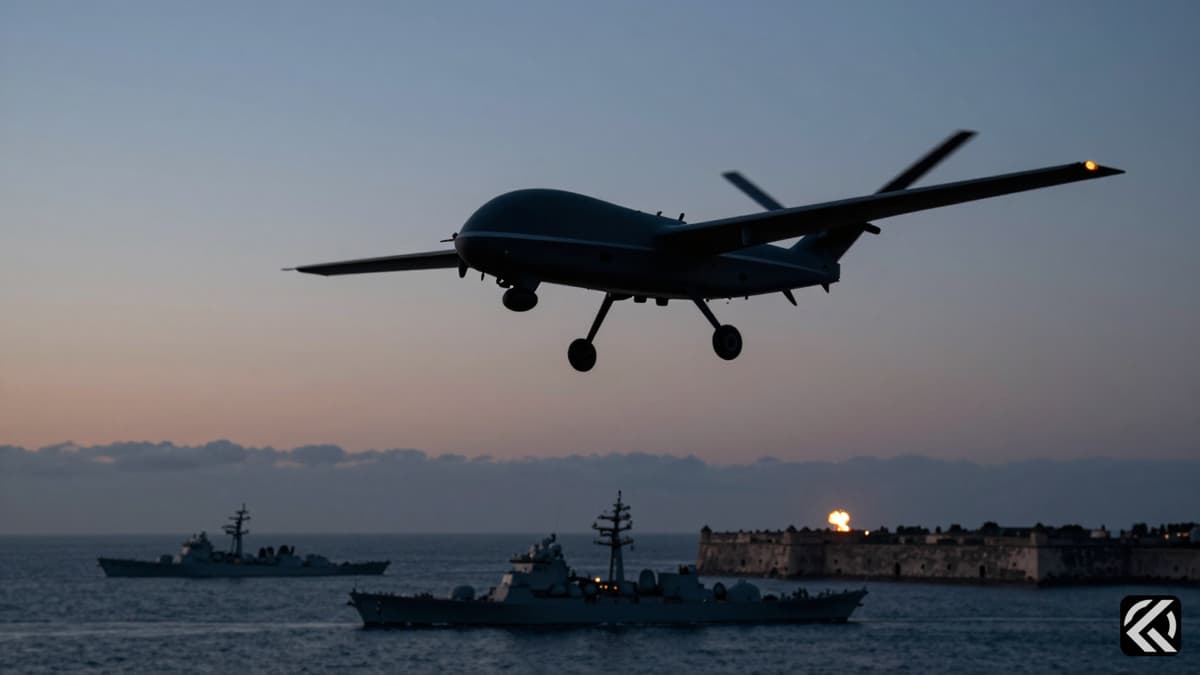
Escalating tensions in the Persian Gulf saw Iran launch strikes on US military installations in Kuwait, which were largely intercepted, prompting immediate retaliatory actions by American forces.
The Middle East experienced a significant escalation in military hostilities on Wednesday, as Iran launched strikes against United States military bases located in Kuwait. This aggressive move was described by Iran's state-run broadcaster, IRIB, as a direct retaliation for what it termed American "hostile actions" within the Persian Gulf, specifically citing incidents near the Strait of Hormuz blockade area and Qeshm Island. While Iranian officials claimed successful hits on American facilities, including the headquarters of the US Fifth Fleet in Bahrain, US authorities strongly denied these assertions, maintaining that their installations remained secure. The incident marks a sharp deterioration in regional stability, raising fears that the fragile ceasefire currently in place is crumbling under the weight of reciprocal military aggression.
Kuwait, the host nation for the targeted US bases, confirmed the immediate threat to its sovereignty and airspace. The Kuwaiti Army's General Staff issued a statement explaining the loud explosions heard by residents in various parts of the country as the result of successful air defense operations. The military clarified that incoming hostile aerial targets, including missiles and drones, were actively engaged by Kuwaiti defense units. This confirmation from Kuwaiti authorities highlights the direct impact of the conflict on local populations, who were subjected to the sonic booms of interception systems firing to protect national airspace from the incoming barrage.
In response to what it characterized as Iranian aggression, the United States military moved swiftly to protect its interests and personnel in the region. US Central Command (CENTCOM) provided a detailed account of the events, stating that Iran had launched several ballistic missiles toward neighboring countries. However, CENTCOM asserted that these attempts failed to achieve their intended objectives. Specifically, the US military reported that two Iranian missiles fired toward Kuwait either fell short of their targets or disintegrated during flight. This technical failure suggests that the missile systems may have suffered from operational issues or were successfully disrupted by defensive measures before impact.
The situation in Bahrain, another key US ally in the region, also saw direct engagement. CENTCOM stated that three missiles launched toward Bahrain were "immediately intercepted by US and Bahrain air defense forces." This coordinated defense between American and Bahraini forces underscores the integrated nature of US military presence in the Gulf and the collective effort to repel Iranian offensive capabilities. The interception of these missiles prevented any potential damage to strategic facilities, including the critical Fifth Fleet headquarters, which Iran had specifically threatened in its propaganda statements.
Beyond ballistic missiles, Iran also utilized unmanned aerial vehicles in its assault. US Central Command confirmed that forces shot down three one-way attack drones that were launched with the intent of targeting civilian mariners who were rightfully transiting through regional waters. The targeting of civilian shipping lanes represents a significant escalation, as it threatens not only military assets but also the economic lifelines of global trade. The successful downing of these drones by US forces demonstrates the effectiveness of layered air defense systems in protecting commercial navigation from hostile aerial threats.
Simultaneously, the United States conducted its own offensive operations. CENTCOM confirmed that American forces carried out military action against an Iranian target on Qeshm Island, an area previously mentioned by Iran as a site of alleged US hostility. The US statement described this action as "self-defense strikes" directed at an Iranian military ground control station. This retaliatory strike indicates that the US is not merely acting defensively but is actively neutralizing perceived threats at their source. The decision to strike Qeshm Island suggests a strategic assessment by Washington that Iranian command and control structures were actively coordinating the attacks on Kuwait and Bahrain.
The Kuwaiti government has since shifted its focus to public safety and damage control. Colonel Saud Abdulaziz Al-Otaibi, a spokesperson for the Kuwaiti Ministry of Defense, urged citizens and residents to remain vigilant. The public was advised to immediately notify authorities via the 112 emergency hotline if they encountered any suspicious objects resulting from the interceptions. Al-Otaibi emphasized the potential hazards of falling debris, shrapnel, or unidentified objects, warning the public to avoid approaching such materials. This directive highlights the lingering physical dangers even after the immediate aerial threats have been neutralized.
Kuwaiti authorities have also stressed the importance of relying solely on official information channels. With the spread of misinformation often accompanying military conflicts, the government sought to control the narrative by directing citizens to adhere to security instructions issued by competent authorities. The General Staff of the Army called for cooperation from all citizens to preserve security and safety. This appeal for unity and caution reflects the heightened state of alert in Kuwait as it navigates the immediate aftermath of being a target in the broader Iran-US conflict.
The US military confirmed that no American personnel were injured during these incidents. CENTCOM reiterated that its forces remain on high alert, prepared to respond to further threats and defend US interests and allies in the region. The statement emphasized that CENTCOM forces remain vigilant and ready to defend against unwarranted Iranian aggression during the ongoing ceasefire. This continued readiness suggests that Washington anticipates further escalation and is preparing for a protracted period of heightened military posturing in the Gulf.
The backdrop to these events is a month-long blockade of the Strait of Hormuz, which has already caused oil prices to soar. The economic implications of this conflict are severe, as the blockade disrupts one of the world's most critical energy chokepoints. The combination of physical military strikes and economic warfare through blockades creates a multifaceted crisis that threatens global stability. The failure of diplomatic channels to prevent these strikes raises questions about the viability of current international mediation efforts.
The recent military exchanges between Iran and the United States have shifted the conflict from rhetorical threats to kinetic warfare. The targeting of US bases in Kuwait and the retaliatory strikes on Qeshm Island indicate a hardening of positions on both sides. While the immediate threat of invasion may have been repelled, the underlying tensions remain volatile. The interception of missiles and drones, while a tactical success, does not address the strategic drivers of the conflict.
The recent exchange of fire between Iran and US forces in Kuwait and Bahrain signifies a critical juncture in Middle Eastern geopolitics. With both sides claiming success in their defensive and offensive operations, the cycle of retaliation is likely to continue. The successful interception of Iranian missiles by US and Kuwaiti defenses has preserved US military infrastructure, but the launch of the strikes themselves demonstrates Iran's willingness to escalate. Conversely, the US strike on Qeshm Island signals a resolve to punish perceived aggression. Looking forward, the situation in the Gulf is expected to remain precarious, with a high risk of further military incidents. The ongoing Strait of Hormuz blockade exacerbates these tensions, creating a dual threat of military conflict and economic instability. Future diplomatic efforts will face significant hurdles as trust between the adversaries erodes further. The international community must monitor the situation closely, as the potential for a wider regional war remains a tangible and immediate concern.
Jun 11, 2026 12:59 UTC
US Strike on Settebello Kills Indian Sailors Amid Strait of Hormuz Tensions
Jun 11, 2026 12:49 UTC
Air India Flight 171 Crash Sparks Debate Over Boeing 787 Dreamliner Faults
Jun 11, 2026 08:51 UTC
US-Iran Conflict: Indian Seafarers Killed in Gulf Strike
Jun 11, 2026 18:04 UTC
Healey Quits Government Over Defence Spending Dispute


