
Section
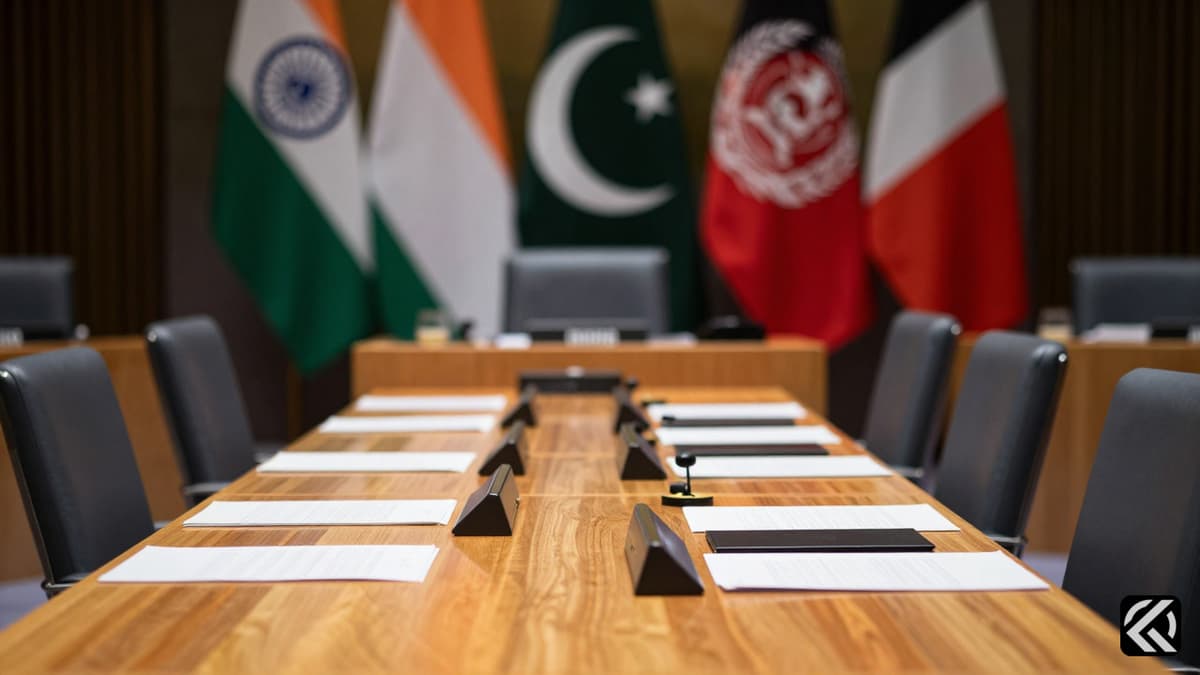
India accuses Pakistan of hypocrisy at the UNSC, highlighting its violent history and recent strikes on Afghan civilians during the holy month of Ramadan.
India’s Permanent Representative to the United Nations, Ambassador Harish Parvathaneni, delivered a sharp rebuke to Pakistan during the Annual UNSC Open Debate on the Protection of Civilians in Armed Conflict. Speaking on Wednesday, May 20, 2026, Parvathaneni characterized Pakistan’s conduct as reflecting a decades-long pattern of externalizing internal failures through violence. He explicitly rejected Pakistan’s attempts to focus on Jammu and Kashmir, calling the issue strictly internal to India and labeling Pakistan’s stance as ironic given its own history.
The Indian ambassador’s remarks were a direct response to Pakistan’s representative raising the Kashmir dispute during the debate. Parvathaneni turned the spotlight back onto Pakistan’s actions, specifically highlighting a recent and deadly airstrike on Afghan territory. He pointed out that this violence occurred during Ramadan, a period traditionally associated with peace, reflection, and mercy. According to Parvathaneni, the timing and nature of the attack were particularly egregious, describing it as a barbaric act that targeted a facility that could not be justified as a military target.
The specific incident in question involved an airstrike on the Omid Addiction Treatment Hospital in Kabul earlier this year. Parvathaneni cited data from the United Nations Assistance Mission in Afghanistan (UNAMA) to underscore the civilian toll of this aggression. The report indicated that the attack claimed the lives of 269 civilians and injured a further 122 individuals. The ambassador emphasized that the strikes took place at the conclusion of tarawih evening prayers, a time when numerous patients were leaving the mosque, thereby maximizing the number of innocent victims.
Parvathaneni condemned the attack as cowardly and unconscionable, arguing that it was hypocritical for Pakistan to espouse high principles of international law while simultaneously targeting innocent civilians in the dark. He stated that such actions should come as no surprise, given Pakistan’s history of "bombing its own people" and conducting systematic genocide. To illustrate this point, he referenced historical events, specifically the Operation Searchlight campaign.
Describing the 1971 events, Parvathaneni noted that Pakistan sanctioned a systematic campaign of genocidal mass rape of 400,000 women citizens by its own army. Operation Searchlight was the codename used by the Pakistani Army for its actions against the Bangladeshi nationalist movement in East Pakistan, now Bangladesh, in March 1971. The ambassador used this historical context to frame recent events as part of a continuous pattern of inhuman conduct rather than isolated incidents.
He argued that Pakistan’s repeated attempts to externalize internal failures have led to increasingly desperate acts of violence both within and beyond its borders. Parvathaneni asserted that with "no faith, no law, and no morality," the world can see through Pakistan’s propaganda. He emphasized that the international community has not forgotten the barbaric airstrike on the hospital in Kabul, particularly because it occurred during a holy month dedicated to mercy.
The debate highlighted the deepening diplomatic tensions between the two nations. While Pakistan sought to bring attention to the situation in Jammu and Kashmir, India successfully shifted the narrative to focus on Pakistan’s own record of human rights abuses and cross-border aggression. The mention of the displaced population in Afghanistan further amplified the severity of the situation. According to UNAMA, over 94,000 people had been assessed as displaced due to cross-border armed violence perpetrated against Afghan civilians.
Parvathaneni’s speech served as a stark warning to Pakistan, suggesting that its international reputation is severely damaged by its own actions. By linking current events to historical atrocities, India aimed to delegitimize Pakistan’s moral standing in the international forum. The ambassador’s words reflected a broader sentiment in India that Pakistan’s foreign policy is driven by a need to distract from its internal shortcomings through external aggression.
The UNSC debate provided a platform for India to document its grievances against Pakistan’s conduct. By citing specific UN reports and historical facts, India sought to establish an indisputable record of Pakistan’s violations of international norms. The focus on the Omid Addiction Treatment Hospital attack, with its specific casualty figures and timing, provided concrete evidence to support the broader allegations of genocide and inhuman conduct.
As the debate concluded, the international community was left with a stark choice in interpreting the narratives presented. India’s detailed account of Pakistan’s actions, from the 1971 atrocities to the 2026 airstrikes, presented a comprehensive case against Pakistan’s claim to moral authority. The ambassador’s assertion that the world can see through Pakistan’s propaganda suggests a growing global skepticism towards Pakistan’s diplomatic assertions.
The incident also underscored the humanitarian crisis in Afghanistan, with thousands displaced by cross-border violence. The focus on civilian casualties, particularly those in medical facilities during holy months, highlighted the vulnerability of non-combatants in regional conflicts. This aspect of the debate may influence future discussions on the protection of civilians in armed conflict at the UN.
India’s presentation at the UNSC highlights a significant escalation in rhetorical hostilities, suggesting that Pakistan’s diplomatic efforts to shift focus to Kashmir are increasingly counterproductive. If Pakistan continues to engage in cross-border aggression, as seen in the Kabul airstrike, its international standing may further deteriorate. The detailed documentation of historical and recent atrocities by India suggests a long-term strategy to isolate Pakistan morally and politically. Future UN debates may see similar focus on Pakistan’s internal and external human rights records, potentially leading to stricter international scrutiny and reduced diplomatic support for its claims.
Jun 11, 2026 17:21 UTC
Bangladesh Opposition Mobilizes Against India-Bangladesh Border Push-Ins and BSF Killings
Join 50,000+ readers getting the global briefing every morning.
No spam. Unsubscribe anytime.
Jun 11, 2026 17:40 UTC
Boelter Pleads Guilty in Minnesota Political Assassinations
Jun 11, 2026 17:21 UTC
Bangladesh Opposition Mobilizes Against India-Bangladesh Border Push-Ins and BSF Killings
Jun 11, 2026 17:21 UTC
John Healey Quits as UK Defence Secretary Over Funding Dispute
Jun 11, 2026 16:19 UTC
UK Defence Secretary John Healey Quits Over Funding Dispute


