
Section
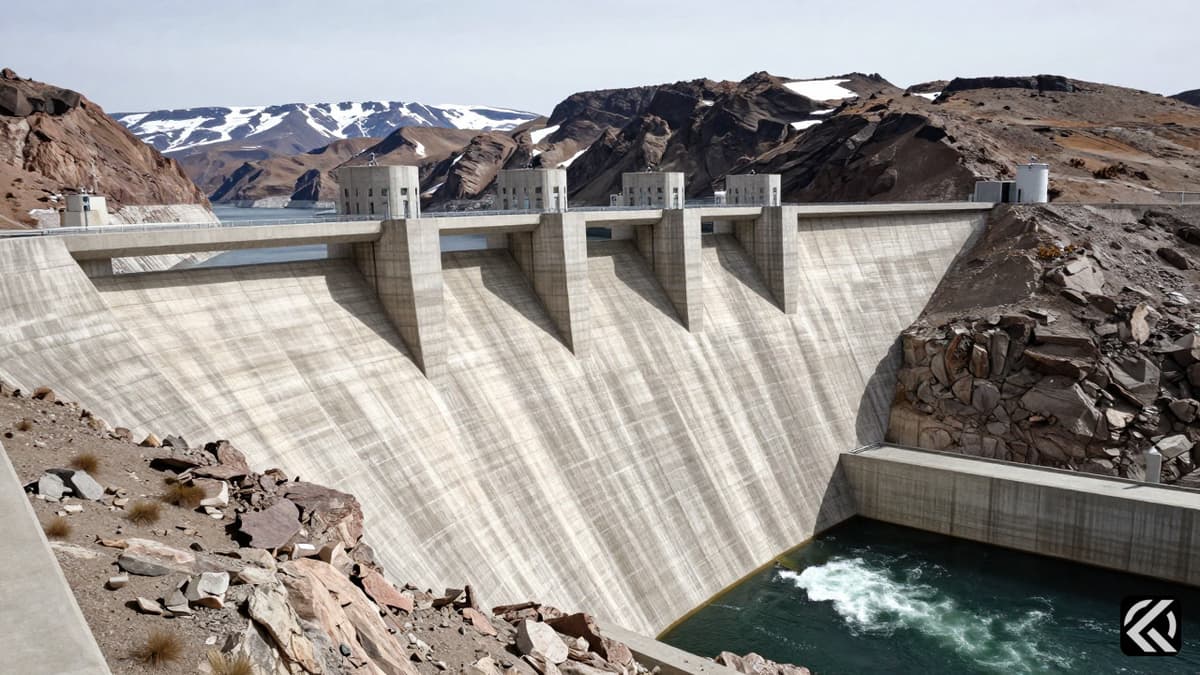
New Delhi has firmly rejected a recent ruling by the Court of Arbitration regarding hydroelectric pondage, reinforcing its stance that the tribunal lacks legitimacy.
India on Saturday, May 16, 2026, officially rejected an award reportedly issued by the Court of Arbitration (CoA) in The Hague on May 15, 2026. This ruling concerned the maximum pondage limits at Indian hydroelectric projects on the Indus river system. The rejection was not merely procedural; it was a fundamental denial of the tribunal's authority. India reiterated its long-standing position that it does not recognize the tribunal as legitimately constituted under the relevant international frameworks.
Ministry of External Affairs spokesperson Randhir Jaiswal delivered the government’s stance with uncompromising clarity. He stated that India categorically rejects the present so-called award. This rejection mirrors the firm refusal to accept all prior pronouncements made by what New Delhi describes as the illegally constituted CoA. Jaiswal emphasized that any proceeding or decision stemming from this body is null and void in the eyes of the Indian government.
Crucially, Jaiswal confirmed that India’s decision to hold the Indus Waters Treaty (IWT) in abeyance remains in full force. This status was established in April 2025, following the Pahalgam terror attack in Jammu and Kashmir, which resulted in the deaths of 26 civilians. The suspension of the treaty underscores the severe diplomatic and strategic implications of the current standoff between New Delhi and Islamabad.
The lack of transparency surrounding the specific details of the disputed award adds another layer of complexity to the situation. No official communication of the award is publicly available on the website of the Permanent Court of Arbitration (PCA), which serves as the secretariat to the CoA. Consequently, the precise technical details of the pondage award remain unavailable to the public and international observers.
The most recent press release listed on the PCA website is dated May 11, 2026. This release announced the conclusion of a three-day hearing held on April 28. The hearing addressed Pakistan’s request for interim measures and the general status of the Treaty itself. It did not, however, include the specific text or rationale of the May 15 award regarding pondage limits.
The CoA is a five-member arbitral panel chaired by Prof. Sean D. Murphy. It was constituted in January 2023 after Islamabad challenged the design of India’s Kishenganga and Ratle hydroelectric projects. India has consistently refused to participate in the proceedings. New Delhi argues that the technical questions involved fall strictly within the remit of a Neutral Expert appointed in parallel by the World Bank. This legal distinction has been a cornerstone of India’s strategy to delegitimize the CoA’s authority.
The history of this dispute dates back to the initial arbitration request. In its August 2025 Award on Issues of General Interpretation, the CoA ruled largely in Pakistan’s favour. That earlier decision restricted how India calculates permissible pondage for run-of-river plants. It also narrowed the design latitude available to Indian engineers under the Treaty’s provisions. This ruling had significant implications for the operational flexibility of Indian hydroelectric projects on the western rivers.
During the most recent proceedings, the asymmetry of participation was stark. The Court concluded a three-day hearing on April 28, 2026. According to a PCA press release, Pakistan was represented by Acting Co-Agent Syed Haider Shah. The Pakistani legal team included prominent counsel such as Sir Daniel Bethlehem KC and Prof. Philippa Webb KC. In contrast, India did not respond to an invitation to participate. New Delhi did not appear before the tribunal, maintaining its boycott of the process.
The refusal to engage is not new but is a calculated legal strategy. India contends that the CoA overstepped its jurisdiction by addressing technical design issues rather than general interpretation of the treaty. By withholding participation, India seeks to prevent the CoA from establishing a precedent that could bind Indian engineering standards for hydroelectric generation. The rejection of the May 15 award extends this strategy to the specific operational metrics of pondage.
Pondage refers to the storage capacity of reservoirs used in run-of-river hydroelectric projects. These facilities are designed to generate electricity while maintaining minimal water storage to ensure continuous flow downstream. The CoA’s earlier restrictions on pondage calculations directly impact the efficiency and power output of projects like Kishenganga and Ratle. By rejecting the award, India preserves its ability to design and operate these projects according to its own engineering standards, regardless of the tribunal’s findings.
The diplomatic fallout from this rejection is expected to be significant. Pakistan, having secured a ruling in its favour from the CoA, will likely view India’s dismissal of the award as a violation of the dispute resolution mechanisms agreed upon in the Indus Waters Treaty. However, since India has suspended the treaty, the legal recourse available to Islamabad is severely limited. The absence of a functioning treaty means that traditional diplomatic channels for resolving water disputes are currently non-operational.
International reactions to the dispute may vary. The United States and the World Bank, as guarantors of the Indus Waters Treaty, have historically mediated between the two nations. The current abeyance of the treaty places this historical role in suspension. While the World Bank’s appointment of a Neutral Expert remains a parallel track, the CoA’s active proceedings have overshadowed this mechanism. India’s rejection reinforces the priority of the Neutral Expert route over the CoA for technical disputes.
The timeline for resolution remains unclear. Without Indian participation in the CoA, the tribunal’s rulings lack domestic enforcement power in India. Conversely, Pakistan may seek to leverage international pressure or other diplomatic avenues to enforce the award’s terms. The stalemate reflects a broader deterioration in Indo-Pakistani relations. The terror attack in Pahalgam served as the immediate catalyst for suspending the treaty, but the underlying hydroelectric dispute remains a persistent point of contention.
The rejection of the Court of Arbitration’s award solidifies India’s hardline stance on the Indus Waters Treaty. New Delhi’s refusal to recognize the tribunal’s legitimacy ensures that the CoA’s rulings hold no legal weight in India. This position, coupled with the treaty’s suspension since April 2025, creates a legal vacuum in water management. Future impacts may include heightened tensions over hydroelectric development and potential unilateral actions by either nation. Without a reinstated treaty framework, diplomatic mediation by the US or World Bank will be essential to prevent further escalation in the region.
Jun 11, 2026 17:21 UTC
Bangladesh Opposition Mobilizes Against India-Bangladesh Border Push-Ins and BSF Killings
Join 50,000+ readers getting the global briefing every morning.
No spam. Unsubscribe anytime.
Jun 11, 2026 17:40 UTC
Boelter Pleads Guilty in Minnesota Political Assassinations
Jun 11, 2026 17:21 UTC
Bangladesh Opposition Mobilizes Against India-Bangladesh Border Push-Ins and BSF Killings
Jun 11, 2026 17:21 UTC
John Healey Quits as UK Defence Secretary Over Funding Dispute
Jun 11, 2026 16:19 UTC
UK Defence Secretary John Healey Quits Over Funding Dispute


