
Section
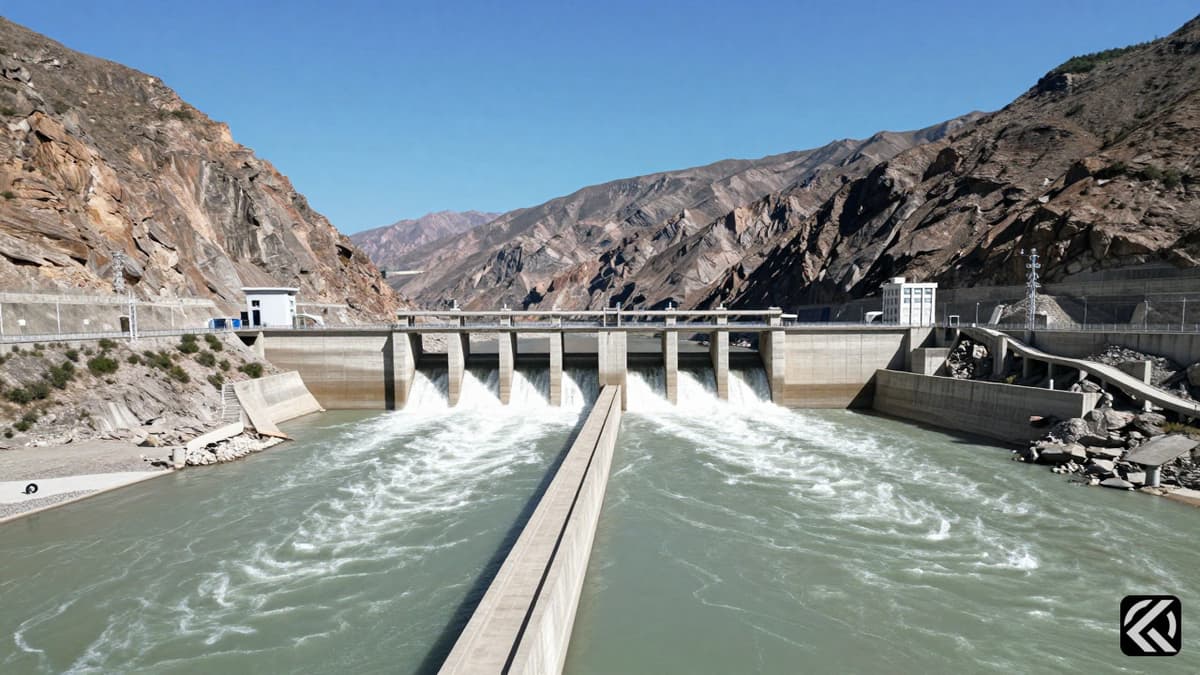
India has firmly rejected a recent ruling by the Court of Arbitration regarding water limits, escalating tensions with Pakistan and leaving the treaty's future in serious doubt.
India on Saturday, May 16, 2026, officially rejected an award reportedly issued by the Court of Arbitration (CoA) on May 15, 2026, which concerned maximum pondage limits at Indian hydroelectric projects on the Indus river system. This rejection underscores New Delhi’s steadfast refusal to acknowledge the tribunal’s legitimacy.
The Ministry of External Affairs spokesperson, Randhir Jaiswal, reiterated that India does not recognize the tribunal as legitimately constituted. He stated that any proceeding or decision by the body was null and void, emphasizing that India’s decision to hold the Indus Waters Treaty in abeyance remains in full force.
No official communication of the award is publicly available on the website of the Permanent Court of Arbitration (PCA), which serves as the secretariat to the CoA. Consequently, the specific details of the pondage award remain unavailable to the public. The most recent press release listed on the PCA website is dated May 11, 2026, announcing the conclusion of a three-day hearing held on April 28 regarding Pakistan’s request for interim measures and the status of the Treaty itself.
The CoA is a five-member arbitral panel chaired by Prof. Sean D. Murphy, which was constituted in January 2023. It was established at Pakistan’s request after Islamabad challenged the design of India’s Kishenganga and Ratle hydroelectric projects. India has consistently refused to participate in these proceedings, arguing that the technical questions involved fall within the remit of a Neutral Expert appointed in parallel by the World Bank.
In its August 2025 Award on Issues of General Interpretation, the CoA ruled largely in Pakistan’s favour. This previous ruling restricted how India calculates permissible pondage for run-of-river plants and narrowed the design latitude available under the Treaty. The Court most recently concluded a three-day hearing on April 28, 2026, on Pakistan’s request for interim measures and on the status of the Treaty itself. A PCA press release noted that Pakistan was represented by Acting Co-Agent Syed Haider Shah along with counsel including Sir Daniel Bethlehem KC and Prof. Philippa Webb KC. In contrast, India did not respond to an invitation to participate and did not appear.
India placed the Indus Waters Treaty in abeyance in April 2025 following the Pahalgam terror attack, in which 26 civilians were killed in Jammu and Kashmir. This strategic move was driven by security concerns and a reassessment of India’s obligations under the agreement, which had governed water sharing between the two nations for decades.
The rejection of the recent CoA award marks a significant escalation in the diplomatic and legal friction between the two neighbors. By declaring the tribunal’s proceedings null and void, India is not only dismissing the specific pondage restrictions but also invalidating the entire arbitration process initiated by Pakistan. This stance aligns with India’s broader legal argument that technical disputes over hydroelectric project designs should be handled by a Neutral Expert, not an arbitral court with jurisdictional challenges.
The absence of any official documentation from the PCA regarding the May 15 award adds a layer of ambiguity to the situation. While Pakistan’s legal team, including prominent international counsel, has been actively involved in presenting their case for interim measures, India’s complete non-participation suggests a strategy of isolation rather than engagement. This refusal to engage allows India to maintain that the tribunal lacks authority over its internal infrastructure projects.
The context of the Indus Waters Treaty being in abeyance is critical to understanding the current standoff. The treaty, originally brokered by the World Bank in 1960, divided the waters of the Indus river system between India and Pakistan. With the treaty currently suspended due to the aftermath of the Pahalgam attack, the legal mechanisms for dispute resolution are effectively stalled. The CoA’s previous ruling in August 2025, which favored Pakistan on technical interpretations, is now being disregarded by New Delhi, further eroding any remaining trust in the treaty’s enforcement mechanisms.
The implications of this rejection extend beyond legal technicalities. The pondage restrictions challenged by Pakistan are crucial for the operational efficiency of India’s hydroelectric projects. By dismissing the CoA’s authority, India retains full discretion over the design and operation of these projects, potentially impacting regional water dynamics and diplomatic relations in South Asia.
India’s categorical rejection of the CoA’s pondage award solidifies its position of non-compliance, leaving the legal status of the India-Pakistan dispute unresolved through traditional arbitral channels. With the treaty held in abeyance since April 2025 and no official communication of the latest award available, the long-term impact points toward a potential permanent dismantling of the treaty’s framework. If diplomatic channels fail to revive the agreement, India may proceed with its hydroelectric projects without constraint, risking further international legal challenges and heightened regional tensions over water security.
Jun 11, 2026 17:21 UTC
Bangladesh Opposition Mobilizes Against India-Bangladesh Border Push-Ins and BSF Killings
Join 50,000+ readers getting the global briefing every morning.
No spam. Unsubscribe anytime.
Jun 11, 2026 17:40 UTC
Boelter Pleads Guilty in Minnesota Political Assassinations
Jun 11, 2026 17:21 UTC
Bangladesh Opposition Mobilizes Against India-Bangladesh Border Push-Ins and BSF Killings
Jun 11, 2026 17:21 UTC
John Healey Quits as UK Defence Secretary Over Funding Dispute
Jun 11, 2026 16:19 UTC
UK Defence Secretary John Healey Quits Over Funding Dispute


