
Section
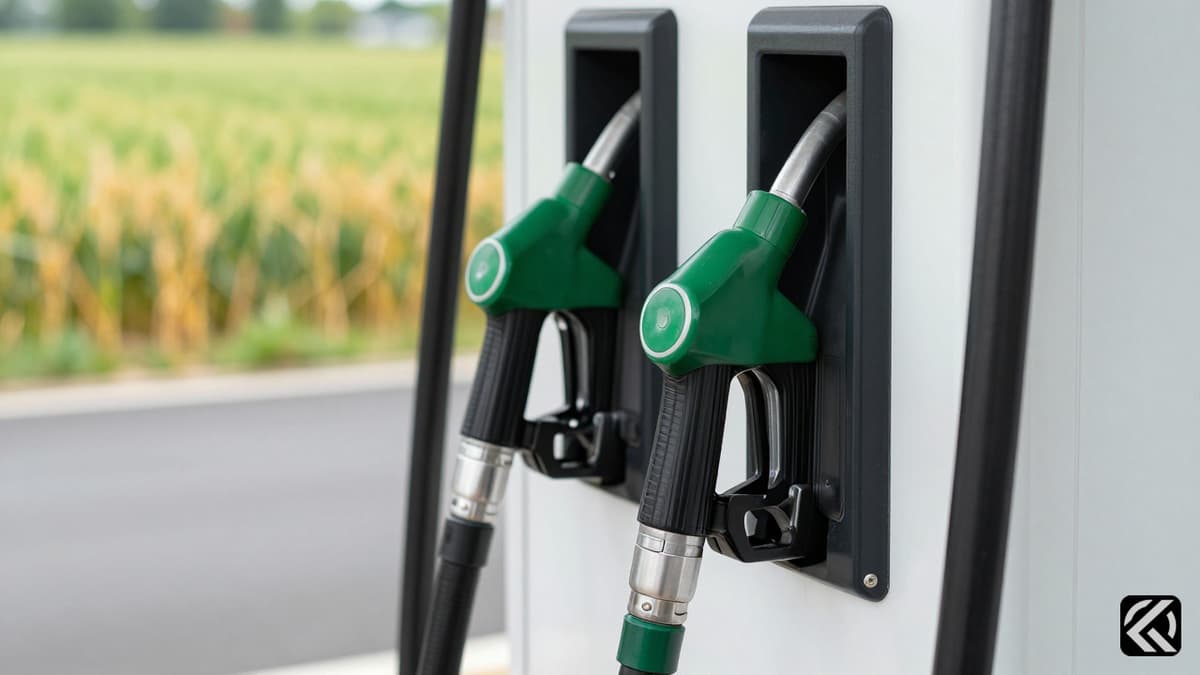
The Indian government has eliminated central excise duties on petrol blended with 22% to 30% ethanol, a strategic move to accelerate biofuel adoption and enhance national energy security.
The Indian government has officially exempted the levy of central excise duty on petrol blended with a greater quantum of ethanol, specifically ranging from 22% to 30%. This significant fiscal measure was announced late Wednesday with the explicit potential to popularize the uptake of biofuels across the country. In practical terms, this exemption applies to petrol blended with ethanol at precise ratios of 22%, 25%, 27%, and 30%.
The Bureau of Indian Standards (BIS) had previously notified the fuel standards for these specific blends on May 19 of this year. However, it is important to note that these higher-blended fuels are not presently available in commercial markets. The government’s move to remove excise duties comes shortly after India formally launched the E85 variant of petrol on June 5. E85 consists of 85% ethanol blended with 15% gasoline and is priced at approximately ₹20 per litre cheaper than the E20 variant, which serves as the regular petrol variant currently sold in the market.
This fiscal exemption is not an isolated event but part of a broader, calculated strategy to transform the nation's energy landscape. Following the successful achievement of the 20% ethanol blending mandate under the EBP Programme, the government and the BIS have set their sights higher. The BIS explicitly stated in a social media post that the new standard aims to promote cleaner transportation, enhance energy security, and reduce crude oil imports. Furthermore, the policy is designed to actively support the agriculture sector by creating a stable demand for ethanol-producing crops.
The timing of this notification is critical. The introduction of E85 on June 5 demonstrated the technical feasibility of higher ethanol blends. By offering a price advantage of ₹20 per litre compared to regular petrol, the market signal was already clear. However, the removal of central excise duties on the 22-30% range removes a financial barrier for refiners and distributors, encouraging them to stock and sell these variants more aggressively. While E85 is currently available, the focus on the 22-30% tier suggests a stepwise approach to infrastructure and engine compatibility adjustments, ensuring that the transition is manageable for both the automotive sector and consumers.
The economic implications are substantial. By reducing the cost of these blends, the government intends to accelerate the shift away from fossil fuels. This aligns with national goals to curb the import bill for crude oil, which places significant strain on the national foreign exchange reserves. The support for the agriculture sector is equally vital; as ethanol production increases, farmers benefiting from the sale of sugarcane and maize as feedstock will see direct economic benefits. This creates a circular economic model where agricultural surplus drives industrial fuel production, which in turn supports rural economies.
The gap between the announced standards and commercial availability remains the primary challenge. Although the BIS notified the standards in May, the infrastructure for blending, storage, and dispensing higher-percentage ethanol blends requires significant expansion. The current commercial reality is that these fuels are not yet widely available, making the excise duty exemption a proactive measure to stimulate supply chain development rather than an immediate consumer benefit.
Industry stakeholders are expected to respond to this policy by ramping up production capabilities. The price differential between E85 and regular petrol indicates that consumer acceptance could be high if the supply chain matures. The government’s decision to focus on the 22-30% range alongside the already launched E85 suggests a diversified approach to Ethanol blending. This allows for testing and adoption across different vehicle types and regional markets, depending on local agricultural output and logistical constraints.
As the nation moves forward, the success of this initiative will depend on the coordinated efforts of refiners, agricultural producers, and policymakers. The reduction in E85 and other high-blend costs is expected to drive faster adoption rates among private vehicle owners and public transport operators alike. The long-term impact will likely be a measurable decrease in carbon emissions from the transportation sector and a more resilient national economy less dependent on volatile global crude oil prices.
The exemption of central excise duty on higher ethanol blends marks a pivotal shift in India's energy policy, directly supporting the agricultural sector and reducing dependence on imported crude oil. As infrastructure adapts to the newly notified BIS standards, the availability of affordable high-blend fuels like E85 is poised to expand rapidly. This proactive fiscal strategy is expected to accelerate the nationwide adoption of biofuels, leading to cleaner urban air quality and enhanced national energy security in the coming years.
Jun 11, 2026 17:21 UTC
Bangladesh Opposition Mobilizes Against India-Bangladesh Border Push-Ins and BSF Killings
Join 50,000+ readers getting the global briefing every morning.
No spam. Unsubscribe anytime.
Jun 11, 2026 17:40 UTC
Boelter Pleads Guilty in Minnesota Political Assassinations
Jun 11, 2026 17:21 UTC
Bangladesh Opposition Mobilizes Against India-Bangladesh Border Push-Ins and BSF Killings
Jun 11, 2026 17:21 UTC
John Healey Quits as UK Defence Secretary Over Funding Dispute
Jun 11, 2026 16:19 UTC
UK Defence Secretary John Healey Quits Over Funding Dispute


