
Section
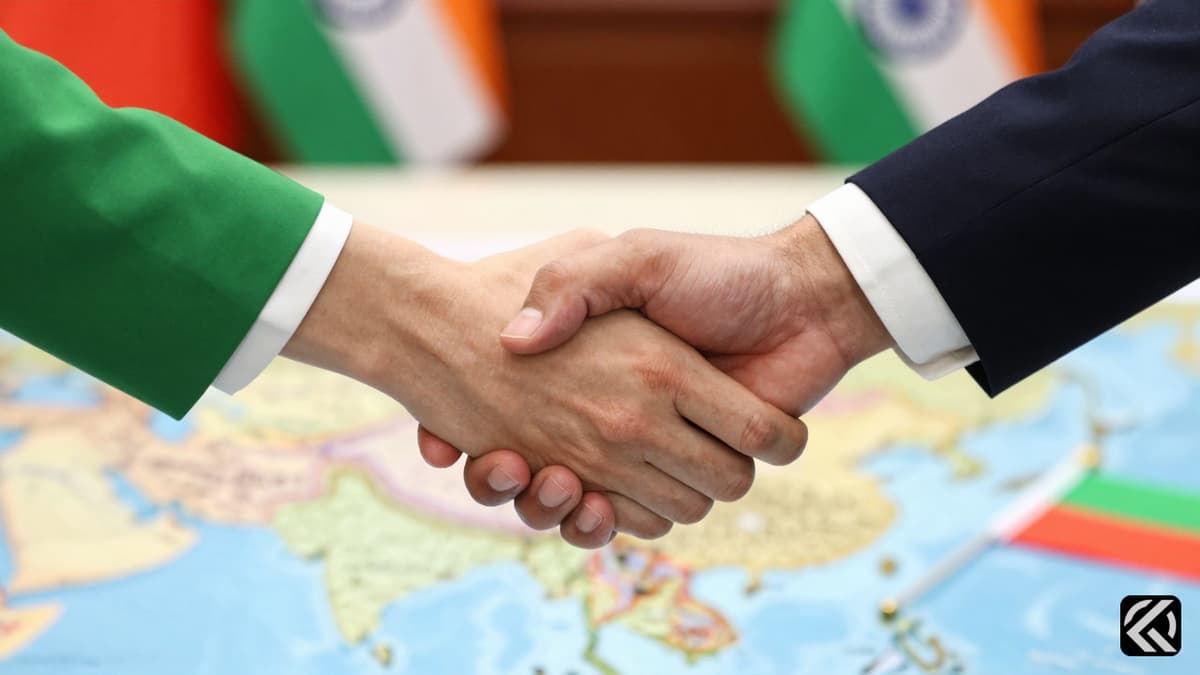
New Delhi defends its diplomatic engagement with Myanmar’s military leadership, asserting that sustained dialogue is crucial for regional stability and border security.
New Delhi has firmly stated its intention to continue diplomatic engagement with Myanmar, even as Prime Minister Narendra Modi held talks with the country’s military leader, Min Aung Hlaing, in the Indian capital. This high-level meeting underscores India’s complex diplomatic positioning in Southeast Asia, balancing strategic interests with international pressure regarding human rights.
Indian Foreign Secretary Vikram Misri addressed the media on Monday, clarifying that New Delhi’s policy is not designed to serve as a commentary on Myanmar’s internal political arrangements. Instead, the government believes that active engagement remains the most effective pathway forward in a region plagued by instability. This stance contrasts sharply with the approach of Western nations, which have sought to isolate Myanmar’s military rulers since they overthrew the elected government of Aung San Suu Kyi in a 2021 coup. That coup triggered a severe crackdown on opponents and ignited a brutal civil war that continues to destabilize the region.
The conflict originated when Myanmar’s army chief, Min Aung Hlaing, ousted the civilian government and detained leaders, including Nobel Peace Prize laureate Aung San Suu Kyi. Since then, resistance groups formed after the coup have captured significant swathes of territory. Some of these groups, known as the People’s Defence Force (PDF), nominally operate under the shadow government known as the National Unity Government (NUG), while others have allied with ethnic armies to fight the military. Despite this, Misri emphasized that isolation is counterproductive. “We have always proceeded on the principle that sustained dialogue is what is important,” Misri stated, adding that history has shown disengagement yields no results better than engagement.
Critics and human rights groups have argued that Min Aung Hlaing’s visit risks lending legitimacy to a military-backed government. This visit marks the first time Min Aung Hlaing has traveled to India since being sworn in as president in April, following an election that critics allege was designed to cement his hold on power. His previous visit to India was in 2019, when he served as Myanmar’s military chief. Upon arriving in India on Saturday, Min Aung Hlaing first traveled to the eastern state of Bihar to visit Bodh Gaya, a significant Buddhist pilgrimage site where believers say the Buddha attained enlightenment.
India shares a vast 1,643-kilometre (1,020-mile) land border with Myanmar, as well as a maritime boundary in the Bay of Bengal. This geographic proximity makes Myanmar strategically critical to India’s security interests. The two countries have cooperated on border security and intelligence sharing to combat armed rebel groups operating near the frontier. Although Min Aung Hlaing and the Indian Prime Minister did not address the media after their meeting, which is unusual for such bilateral talks, Foreign Secretary Misri outlined the scope of their discussions.
The leaders covered trade, defence, and security cooperation, border management, and regional issues. Talks also focused on expanding economic and technology ties, with both sides agreeing to deepen collaboration across sectors including energy and critical minerals. Furthermore, they agreed to accelerate major connectivity projects to boost economic integration. Bilateral trade between the two nations was recorded at $1.95bn in the 2025-2026 period, according to New Delhi. Min Aung Hlaing is expected to hold talks with business representatives during his five-day visit, which includes a stop in the financial hub of Mumbai.
Beyond economics, the conversation addressed pressing security concerns, specifically cooperation against cybercrime and human trafficking. These issues have severely impacted thousands of Indians lured to scam centres in the region. Misri highlighted that India and Myanmar have worked together to rescue more than 2,400 Indian nationals over the past 18 months, demonstrating a pragmatic approach to protecting citizens despite political differences.
The diplomatic engagement has drawn sharp criticism from Myanmar’s opposition. Zin Mar Aung, the foreign minister of the NUG, wrote a letter to Indian External Affairs Minister Subrahmanyam Jaishankar on May 28, expressing deep concern about the visit. In her correspondence, she noted that since the 2021 coup, which overturned the democratic will of the people, Myanmar has endured prolonged conflict, instability, and immense humanitarian suffering.
“India has long championed democratic governance, the rule of law, and regional stability,” Zin Mar Aung wrote. “We therefore urge the Government of India to weigh carefully the broader implications of formal engagement that may normalise or legitimise military rule in Myanmar.”
New Delhi’s decision to engage with Myanmar’s military government reflects a pragmatic prioritization of border security and counter-terrorism over ideological alignment. By maintaining dialogue, India aims to secure its northeastern frontiers and combat cross-border criminal networks that exploit the region’s instability. The successful rescue of thousands of Indian nationals underscores the practical benefits of this engagement. However, this policy continues to invite criticism from democratic proponents and Western allies who view the military regime as illegitimate. As the civil war persists and resistance groups gain ground, India’s stance may face increasing pressure to realign with international norms. Yet, given the geographic realities and shared security threats, it is likely that India will continue its policy of sustained engagement, focusing on tangible outcomes in trade, security, and citizen welfare rather than political condemnation.
Jun 11, 2026 17:21 UTC
Bangladesh Opposition Mobilizes Against India-Bangladesh Border Push-Ins and BSF Killings
Join 50,000+ readers getting the global briefing every morning.
No spam. Unsubscribe anytime.
Jun 11, 2026 17:40 UTC
Boelter Pleads Guilty in Minnesota Political Assassinations
Jun 11, 2026 17:21 UTC
Bangladesh Opposition Mobilizes Against India-Bangladesh Border Push-Ins and BSF Killings
Jun 11, 2026 17:21 UTC
John Healey Quits as UK Defence Secretary Over Funding Dispute
Jun 11, 2026 16:19 UTC
UK Defence Secretary John Healey Quits Over Funding Dispute


