
Section
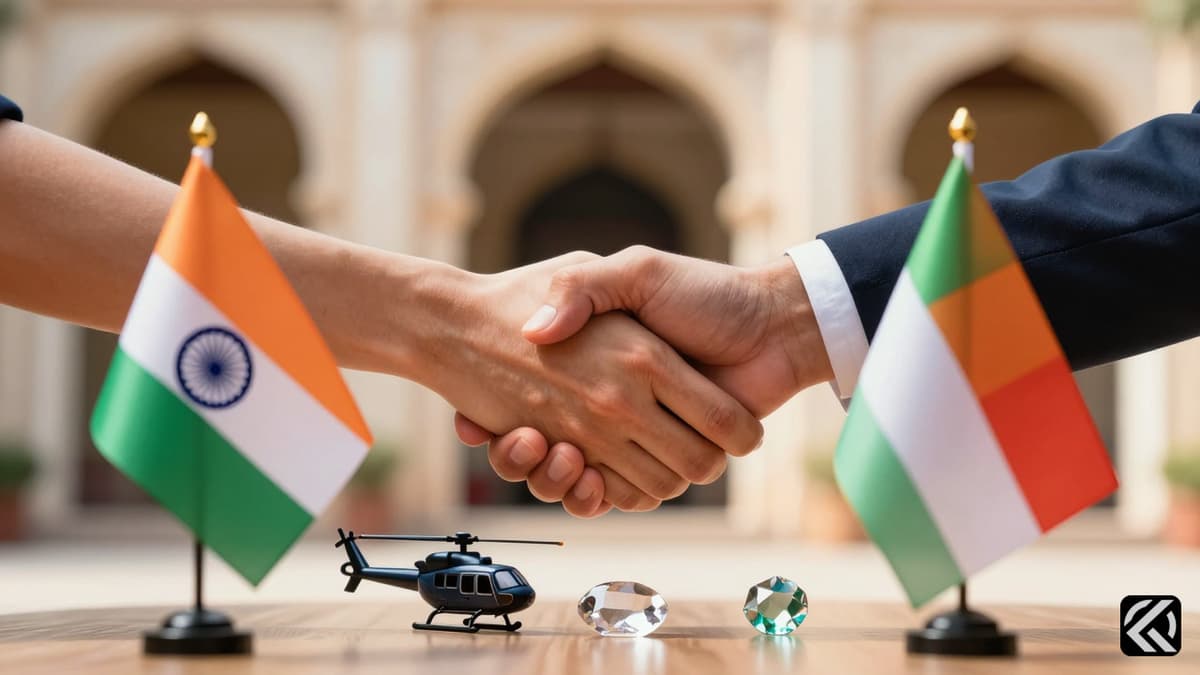
India and Italy have officially upgraded their diplomatic ties to a special strategic partnership, marked by landmark agreements on defense, critical minerals, and shared security goals during high-level talks.
NEW DELHI: In a significant diplomatic milestone, India and Italy have officially elevated their bilateral relationship to a special strategic partnership. This upgrade marks a pivotal shift in international relations, driven by the first bilateral visit by an Indian Prime Minister to Italy in 26 years. The historic engagement brought together Narendra Modi and Italian Prime Minister Giorgia Meloni, resulting in the signing of multiple high-impact agreements. These include a comprehensive defense industrial roadmap and a crucial accord on cooperation in critical minerals. The visit concluded with a joint statement reinforcing mutual commitments to security, economic connectivity, and technological innovation, signaling a robust new chapter in India-Italy strategic partnership.
The summit yielded twelve distinct outcomes, highlighting the depth of cooperation between the two nations. Among the most significant were memorandums of understanding (MoUs) aimed at preventing tax crimes and money laundering, as well as initiatives to boost connectivity through enhanced maritime transport and port cooperation. Both leaders publicly endorsed the India-Middle East-Europe Economic Corridor (IMEC) project, urging concrete steps to advance the initiative within 2026. While the policy outcomes were substantial, the personal rapport between the leaders also drew considerable attention. Prime Minister Meloni described her friendship with Prime Minister Modi as genuine, rooted in mutual respect and trust. This camaraderie was visibly demonstrated when PM Modi gifted Meloni ‘Melody’ toffees and the two posed for a selfie at the historic Colosseum. PM Modi further extended an invitation for Meloni to visit India, which she promptly accepted.
Beyond the personal diplomacy, the joint statement carried heavy geopolitical weight regarding security. Both leaders strongly condemned cross-border terrorism, specifically referencing the April 2025 Pahalgam terrorist attack. They agreed on the necessity of working together on concrete projects in Africa, where both countries maintain a significant presence. These collaborative efforts will span healthcare, connectivity, artificial intelligence, and renewable energy sectors. In his media address, PM Modi emphasized that close cooperation in defense and security serves as a symbol of deep mutual trust. He noted that defense industrial cooperation is rapidly increasing, with the newly launched roadmap paving the way for co-development and co-production efforts.
The defense roadmap specifically targets technological cooperation in the production of helicopters, naval platforms, marine armament, and electronic warfare systems. Leaders recognized the critical importance of protecting critical infrastructure and related supply chains by strengthening industrial resilience. Consequently, they agreed to launch a maritime security dialogue, reaffirming their shared commitment to a free, open, peaceful, and prosperous Indo-Pacific region. On the issue of terrorism, PM Modi highlighted that the joint initiative against terror-financing sets an important global example. He stated that responsible democracies must not only condemn terrorism but also take concrete steps to disrupt its financial networks. The joint statement reiterated the commitment to collaborate at the United Nations, the Financial Action Task Force (FATF), and other multilateral platforms to combat terror.
Geopolitical tensions were also addressed, with both leaders expressing concern over the situations in Ukraine and West Asia. PM Modi reiterated India’s stance that all such problems must be resolved through dialogue and diplomacy. The joint statement also called for the freedom of navigation and the resumption of global flows through the Strait of Hormuz. Turning to the economic and technological future, PM Modi described technology and innovation as the engines of the India-Italy partnership. He identified immense potential for cooperation in artificial intelligence, quantum technology, space, and civil nuclear energy. Highlighting India’s role as a powerhouse of scale, talent, and affordable innovation, he announced the principle of “Design and Develop in India and Italy, and Deliver for the World.” This approach aims to combine strengths across sectors ranging from fashion to fintech, leather to logistics, and mobility to manufacturing.
A cornerstone of this upgraded relationship is the MoU for critical minerals cooperation. The agreement establishes a structured framework for collaboration, with a strong emphasis on sustainability and resilient supply chains. This deal addresses the growing global demand for resources essential to technology and defense industries, positioning India and Italy as key partners in securing these vital materials. By focusing on sustainability, the nations aim to mitigate environmental impacts while ensuring stable access to resources needed for green energy transitions and industrial manufacturing.
The integration of these diverse sectors-from defense to critical minerals and from digital connectivity to traditional industries like leather and fashion-demonstrates a holistic approach to bilateral ties. The emphasis on co-development rather than mere trade suggests a long-term structural alignment. By committing to design and develop products jointly, India and Italy are likely to create new export markets that cater to global demand. This strategy leverages India’s manufacturing scale and Italy’s design and engineering expertise. The focus on supply chain resilience in both defense and critical minerals indicates a shared concern over global geopolitical instability. As both nations navigate complex international landscapes, this partnership offers a model of economic diplomacy that prioritizes security alongside prosperity.
The launch of the defense industrial roadmap and the critical minerals MoU fundamentally reshape the defense landscape for both nations. The agreement to co-develop helicopters, naval platforms, and electronic warfare systems will likely reduce reliance on third-party suppliers, enhancing national sovereignty. Furthermore, the focus on maritime security dialogue aligns with broader Indo-Pacific stability goals. The partnership’s emphasis on disrupting terror-financing networks strengthens global counter-terrorism frameworks. Looking ahead, the joint commitment to the India-Middle East-Europe Economic Corridor suggests a significant shift in trade routes, potentially bypassing traditional chokepoints. This could alter global logistics, benefiting both economies by opening new markets in Europe and the Middle East. The sustainable approach to critical minerals may also set industry standards for ethical sourcing. As both countries expand cooperation in AI, quantum, and space, the technological spillover effects could drive domestic innovation hubs in both New Delhi and Rome. Ultimately, this special strategic partnership is poised to influence global defense procurement patterns and supply chain security models for years to come.
Jun 11, 2026 12:59 UTC
US Strike on Settebello Kills Indian Sailors Amid Strait of Hormuz Tensions
Jun 11, 2026 12:49 UTC
Air India Flight 171 Crash Sparks Debate Over Boeing 787 Dreamliner Faults
Jun 11, 2026 08:51 UTC
US-Iran Conflict: Indian Seafarers Killed in Gulf Strike
Jun 11, 2026 18:04 UTC
Healey Quits Government Over Defence Spending Dispute


