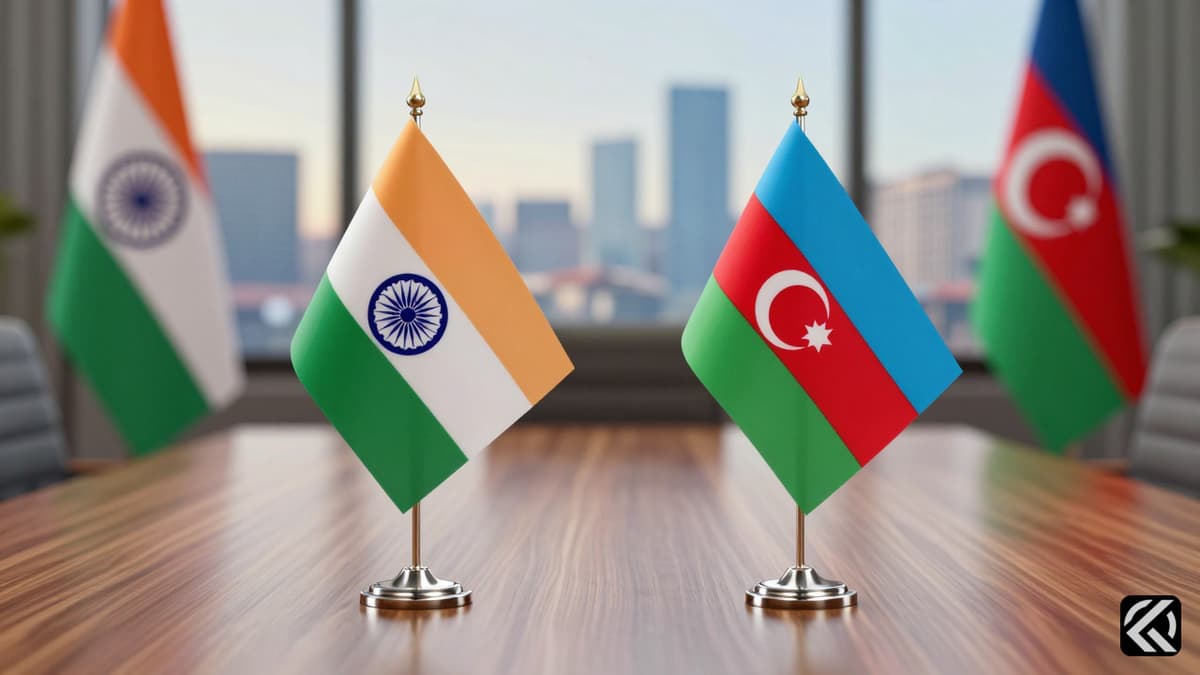
After a year of diplomatic friction stemming from Operation Sindoor, India and Azerbaijan have agreed to reset ties. Senior officials met in Baku to resolve differences and discuss future cooperation.
India and Azerbaijan have officially decided to reset diplomatic ties after a year of significant friction. This shift was confirmed during the sixth round of Foreign Office consultations held in Baku. The talks, occurring on a Friday, marked the first high-level engagement between the two nations since 2022.
The diplomatic freeze had been largely driven by deep-seated differences regarding Azerbaijan-Pakistan relations and India-Armenia relations. These tensions were particularly exacerbated last year following Operation Sindoor. During that incident, New Delhi was angered by Azerbaijan's public condemnation of India's military strikes on Pakistani sites. This occurred after the Pahalgam terror attacks, with Baku calling for restraint and diplomatic resolution. Furthermore, the Azerbaijani government had accused New Delhi of arming Armenia during the Nagorno-Karabakh conflict, a dispute where Islamabad supports Baku.
In a formal statement, the Ministry of External Affairs (MEA) confirmed that the two sides comprehensively reviewed the state of bilateral relations. The discussions covered a wide array of sectors including trade, technology, tourism, pharmaceuticals, energy, and culture. Crucially, the dialogue also addressed people-to-people exchanges and the fight against cross-border terrorism.
The reference to terrorism is particularly significant given the historical context. Last year, New Delhi was frustrated by the lack of support from Baku regarding the Pahalgam attacks. Azerbaijan's Foreign Ministry had issued a statement on May 7 of the previous year condemning military attacks against Pakistan. At that time, the two countries were on opposite sides of a geopolitical rift. However, the current agreement indicates a smoothing of these differences, suggesting that the immediate aftermath of the conflict has allowed for a return to dialogue.
Trade and energy cooperation have also seen a resurgence. Azerbaijan has recently resumed crude oil exports to India, which constitute 98% of its total exports to the Indian market. ONGC Videsh continues to maintain its stake in oil and gas fields and an energy pipeline in the country, reinforcing the economic bond between the two nations.
Brotherly relations
Despite the recent diplomatic warmth, past rhetoric remained sharp. In September, during a meeting with Pakistani Prime Minister Shehbaz Sharif, Azerbaijan President Ilham Aliyev had accused India of blocking Azerbaijan's ascension to the Shanghai Cooperation Organisation. A statement from his office on September 1, 2025, noted that while India had attempted to retaliate in international organizations, such moves held no significance as "brotherly relations take precedence above all."
However, the thaw in relations became tangible through recent administrative actions. The newly appointed Indian Ambassador to Baku, Abhay Kumar, has presented his credentials and engaged with government officials on bilateral issues. Additionally, Azerbaijan facilitated the safe exit of more than 200 Indians fleeing U.S.-Israel strikes on Iran. This is a notable pivot; in June 2025, Indian nationals were specifically advised to avoid land borders with Turkiye or Azerbaijan due to the rift over support for Pakistan, being directed instead through Armenia and Turkmenistan.
"We are thankful to the government of Azerbaijan for the support that they have rendered for the exit of Indian nationals from Iran through the land border," stated MEA spokesperson Randhir Jaiswal. When pressed on the specific tensions over Operation Sindoor, Jaiswal side-stepped the question, focusing instead on the successful evacuation efforts.
Sources indicate that during the Friday talks, both sides agreed to resolve remaining differences through open dialogue and discussion. MEA Secretary (West) Sibi George met with Deputy Foreign Minister Elnur Mammadov, as well as Foreign Policy Adviser President Aliyev and Foreign Minister Jeyhun Bayramov. The officials reviewed bilateral ties and exchanged views on regional and global matters of India-Azerbaijan bilateral relations.
The agreement to hold the next round of talks in Delhi marks a concrete step toward normalizing the relationship. With the resumption of energy exports and the successful evacuation of citizens, the momentum for strengthened ties appears solid. The explicit mention of resolving differences through dialogue suggests that the geopolitical friction caused by the regional conflict and the Operation Sindoor events is being managed through diplomatic channels rather than confrontation. As the two nations move forward, the focus is shifting from past grievances to shared interests in trade, energy security, and counter-terrorism, promising a more stable regional dynamic in the near future.
Jun 8, 2026 04:15 UTC
Trump Urges Netanyahu to Halt Iran Strike for Peace
Join 50,000+ readers getting the global briefing every morning.
No spam. Unsubscribe anytime.
Jun 8, 2026 02:28 UTC
Trump Walks Out of Meet the Press After Rejecting Evidence Demands
Jun 8, 2026 02:17 UTC
Magnitude 7.8 Quake Shakes Philippines, Urging Immediate Evacuations
Jun 8, 2026 00:51 UTC
Trump Claims Iran Nuclear Deal Imminent Despite Diplomatic Fractures
Jun 8, 2026 00:47 UTC
Iran Fires Missiles at Israel After Beirut Strike


