Yemen's Houthis have launched their first major attack on Israel, escalating the Iran Israel war and reigniting fears of a global shipping crisis in the Red Sea.
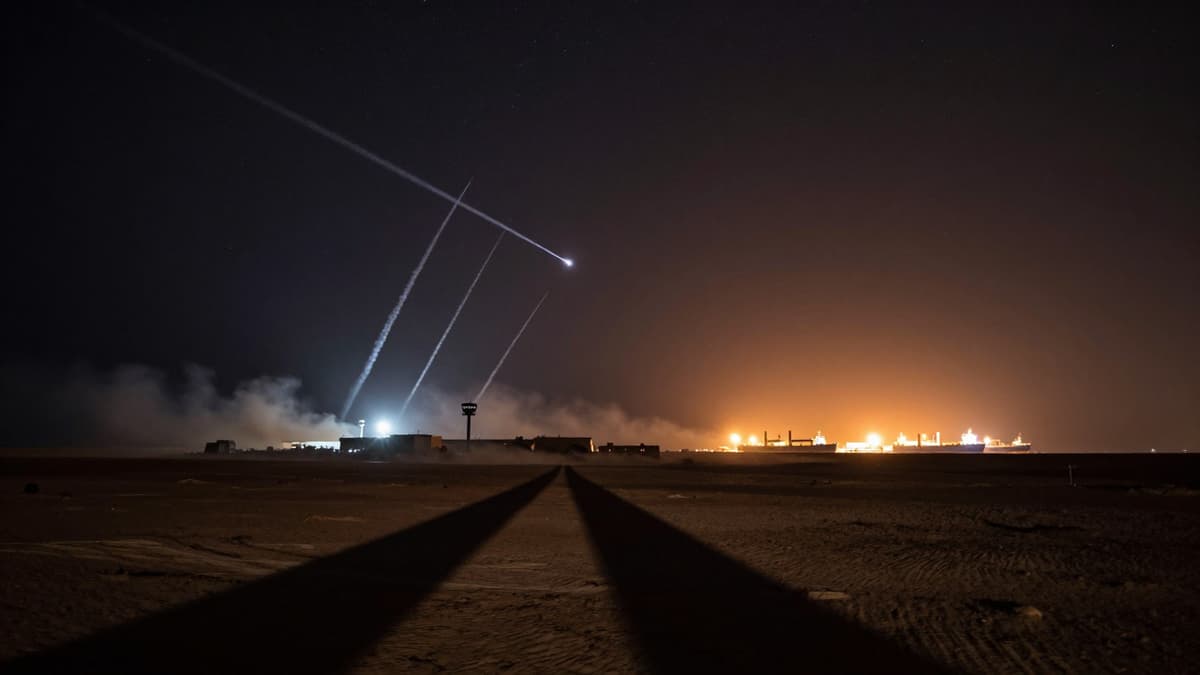
On Saturday, marking one month into the escalating Iran Israel war, Yemen's Houthi rebels launched their first strike against Israel since the conflict began, opening a fresh and dangerous front. This new escalation involves a barrage of ballistic missiles targeting sensitive military sites in southern Israel, signaling a dangerous shift in the regional balance of power.
The attack was confirmed by Houthi military spokesman Yahya Saree on the group's Al-Masirah television, who claimed the operation targeted key Israeli installations while warning that strikes would continue until aggression against allied groups ends. The operation coincided with air raid sirens sounding in Beersheba and explosions reported in Tel Aviv, as Israeli emergency services responded to multiple impact sites while Iran and Hezbollah continued their own overnight attacks. This coordinated effort underscores the rapidly expanding nature of the Houthi rebel strike, which analysts warn could further widen the conflict significantly.
Regional tensions have reached a fever pitch as hostilities between Israel and Iran intensify across multiple borders. Israeli forces have recently targeted key nuclear-linked facilities, including sites associated with uranium processing and heavy water production, prompting Tehran to vow retaliation. The situation in Saudi Arabia has become particularly volatile, with repeated attacks on Prince Sultan Air Base resulting in more than two dozen US personnel reportedly wounded over the past week. Missiles and drones struck the base in multiple waves, damaging aircraft and infrastructure, highlighting the direct involvement of international forces in the expanding theater of war.
Cross-border violence has also expanded into Lebanon, where fighting between Israeli forces and Hezbollah has intensified, leading to hundreds of reported casualties since the war began. Israeli cities, including Tel Aviv, have faced repeated missile alerts, underscoring the widening scope of the conflict despite brief signs of diplomatic progress, such as Iran allowing limited humanitarian shipments through the Strait of Hormuz. The Houthi leadership's decision to join the fray now risks reigniting broader regional tensions, particularly along key maritime routes that are critical for global commerce.
The implications of the Houthis' entry extend far beyond the immediate battlefield, posing a severe threat to global economic stability. The Red Sea, a critical artery for global commerce, may once again become a primary target for attacks. During earlier conflicts, Houthi attacks forced shipping companies to reroute vessels around Africa, significantly increasing costs and transit times. The group's leadership has now hinted at further escalation, including the possibility of targeting vessels linked to Israel or even attempting to close the Bab al-Mandeb Strait. Experts warn that such a move could severely impact global trade, especially when combined with existing tensions in the Strait of Hormuz, creating a scenario one regional analyst described as "a nightmare on top of a nightmare" for international shipping.
There are also growing concerns over military escalation at sea. The potential redeployment of the USS Gerald R. Ford into the Red Sea could expose US naval forces to sustained attacks, similar to earlier confrontations involving other American carriers in the region. The Houthis, who have controlled Sanaa since 2014, had maintained an uneasy ceasefire with Saudi Arabia in recent years, but their current actions suggest a willingness to abandon that stability to join the broader conflict.
The convergence of the Houthis' new front with existing hostilities creates a precarious situation for global trade and energy markets. With the group threatening to disrupt the Bab al-Mandeb Strait, a route through which roughly $1 trillion in goods pass annually, the potential for a Red Sea shipping crisis has returned with renewed urgency. If shipping routes are closed or vessels are targeted, the ripple effects will be felt globally, likely driving up costs for consumers worldwide and disrupting supply chains that rely on this passage. As the conflict moves further away from de-escalation, the international community faces the challenge of managing a widening war that threatens to engulf the entire Middle East and its vital economic lifelines.
Jun 8, 2026 04:15 UTC
Trump Urges Netanyahu to Halt Iran Strike for Peace
Join 50,000+ readers getting the global briefing every morning.
No spam. Unsubscribe anytime.
Jun 8, 2026 02:28 UTC
Trump Walks Out of Meet the Press After Rejecting Evidence Demands
Jun 8, 2026 02:17 UTC
Magnitude 7.8 Quake Shakes Philippines, Urging Immediate Evacuations
Jun 8, 2026 00:51 UTC
Trump Claims Iran Nuclear Deal Imminent Despite Diplomatic Fractures
Jun 8, 2026 00:47 UTC
Iran Fires Missiles at Israel After Beirut Strike


