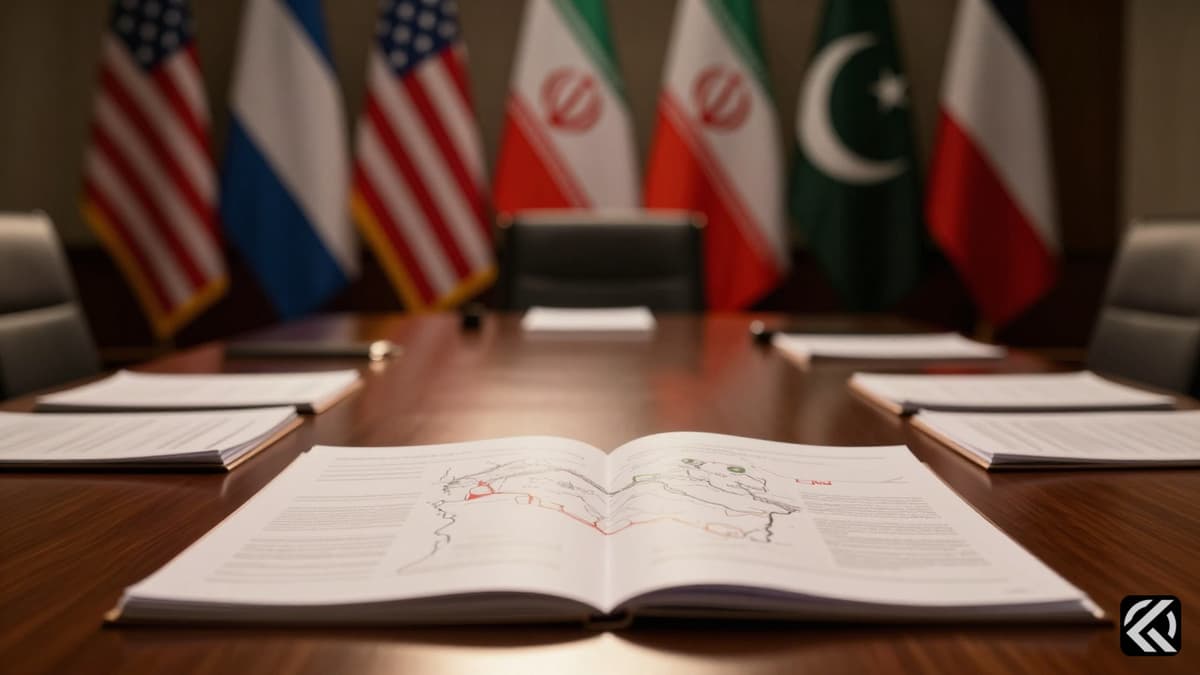
Historic negotiations continue past midnight in Pakistan regarding a fragile truce, while tensions escalate in Lebanon as funerals for 13 officers mark a surge in grief.
The international community watched closely as historic, direct talks between the United States and Iran continued past midnight in Pakistan on April 11, 2026, seeking to establish a fragile U.S.-Iran ceasefire to end the West Asia war. Simultaneously, the Israel-Hezbollah war intensified, causing a surge in grief and rage across Lebanon as the region braced for the potential outcome of these diplomatic negotiations.
On the sidelines of these high-stakes discussions, Israeli Prime Minister Benjamin Netanyahu issued sharp criticisms regarding Turkey's stance on the ceasefire, vowing that Israel would continue its military operations against Iran and its regional proxies. While the U.S. and Iran engaged in trilateral talks in Islamabad, the death toll in Lebanon from Israeli strikes rose to 2,020, according to the Lebanese Health Ministry, marking a tragic milestone in the ongoing conflict. The atmosphere in Beirut was heavy with sorrow as women and toddlers wept for lost family members during funerals for 13 Lebanese state security officers killed just a day prior.
The negotiations in Pakistan represented a significant departure from recent diplomatic practices, where both sides typically held talks via mediators in separate rooms. Instead, U.S., Iranian, and Pakistani officials engaged in direct, in-person trilateral discussions. Iranian state television reported that two rounds of talks had already concluded, with a third round expected either late on Saturday evening or on Sunday, April 12.
Tensions arose as Iranian media outlets, including Fars and Tasnim news agencies, reported that the United States was making "excessive demands" specifically concerning the strategic Strait of Hormuz. These demands were described as unacceptable by Iranian sources, adding a layer of complexity to the negotiations. Despite these frictions, a senior White House official confirmed that the talks were ongoing, emphasizing the high-level nature of the engagement between the two former adversaries.
U.S. President Donald Trump acknowledged the beginning of these talks in a phone interview but admitted uncertainty regarding their success, stating, "I have no idea" how the negotiations would proceed. He noted that the U.S. military knew the specific locations of mines laid by Iran in the Strait of Hormuz and that operations to clear these strategic waterways had already begun. Admiral Brad Cooper of U.S. Central Command confirmed the transit of warships to establish a safe passage for the maritime industry, a move intended to ensure the free flow of commerce, of which a fifth of the world's crude oil passes through this critical channel.
In the midst of these diplomatic efforts, Israeli Prime Minister Benjamin Netanyahu took a firm stance against perceived diplomatic failures. Following comments by Turkish President Recep Tayyip Erdogan warning of possible sabotage to the ceasefire agreement, Netanyahu responded on X, asserting that Israel would continue fighting Iran's regime and its proxies. He criticized Erdogan's past actions regarding Kurdish citizens, contrasting Israel's determined leadership with Turkey's approach.
Netanyahu further elaborated on Israel's strategic objectives, claiming in a televised statement that the joint U.S.-Israeli campaign had successfully crushed Iran's nuclear and ballistic missile programs. He declared that the war had weakened Tehran's leadership and its regional allies, asserting that the tables had turned: "They wanted to strangle us, and [now] we are strangling them."
Regarding the conflict on its northern border, Netanyahu stated that Lebanon had approached Israel for peace talks, leading to a conditional approval for negotiations. He outlined two non-negotiable conditions for any agreement: the dismantling of Hezbollah's weapons and the establishment of a real peace deal that would "last for generations."
Meanwhile, the humanitarian cost of the Israel-Hezbollah war continued to mount. Over the past week, funeral scenes reminiscent of those in Beirut had played out hundreds of times across Lebanon. The Israeli airstrike that killed the 13 Lebanese officers was one of many intensifying attacks against what Israel identified as Iran-backed Hezbollah infrastructure. The Lebanese Health Ministry reported that 248 women, 165 children, and 85 health workers had been among the dead, with nearly 100 people killed in the last 24 hours alone.
Internationally, calls for peace grew louder. Pope Leo delivered a fiery address from St. Peter's Basilica, denouncing the idolatry of self and money and calling for an end to the display of power. He implored the world to embrace love and moderation, stating, "Enough of war! True strength is shown in serving life." Similarly, French President Emmanuel Macron spoke with Iran's President Masoud Pezeshkian, emphasizing the urgent need to de-escalate the situation through the ongoing ceasefire talks.
The path to peace remains uncertain as the U.S. demands regarding the Strait of Hormuz face resistance from Tehran. While the U.S. moves to clear mines and secure the waterway, the "excessive demands" reported by Iranian media suggest a potential impasse that could derail the U.S.-Iran ceasefire talks. If the negotiations in Pakistan stall, the risk of further military escalation in the Strait and the broader West Asia region remains high.
The humanitarian situation in Lebanon, particularly the rising casualty count and the public's growing rage, adds another layer of volatility. As Benjamin Netanyahu insists on the total dismantling of Hezbollah's arsenal as a prerequisite for peace, and the U.S. seeks a broader strategic settlement with Iran, the gap between the warring parties' demands appears wide. The upcoming meeting in Washington, announced by the Lebanese presidency, will be a critical test of whether the parties can translate the momentum of these Islamabad talks into a tangible agreement. Without a resolution, the Israel-Hezbollah war threatens to spiral further, drawing in more regional actors and deepening the human toll already evidenced by the thousands of dead and wounded. The world now waits to see if the "new passage" established by the U.S. military will lead to a lasting diplomatic passage as well.
Jun 8, 2026 00:51 UTC
Trump Claims Iran Nuclear Deal Imminent Despite Diplomatic Fractures
Jun 8, 2026 00:47 UTC
Iran Fires Missiles at Israel After Beirut Strike
Jun 7, 2026 22:00 UTC
US, Iran Peace Hops Fade 100 Days Into War
Jun 7, 2026 20:57 UTC
Iran Strikes Israel: IRGC Promises Week of Continuous Offensive
Jun 8, 2026 02:28 UTC
Trump Walks Out of Meet the Press After Rejecting Evidence Demands


