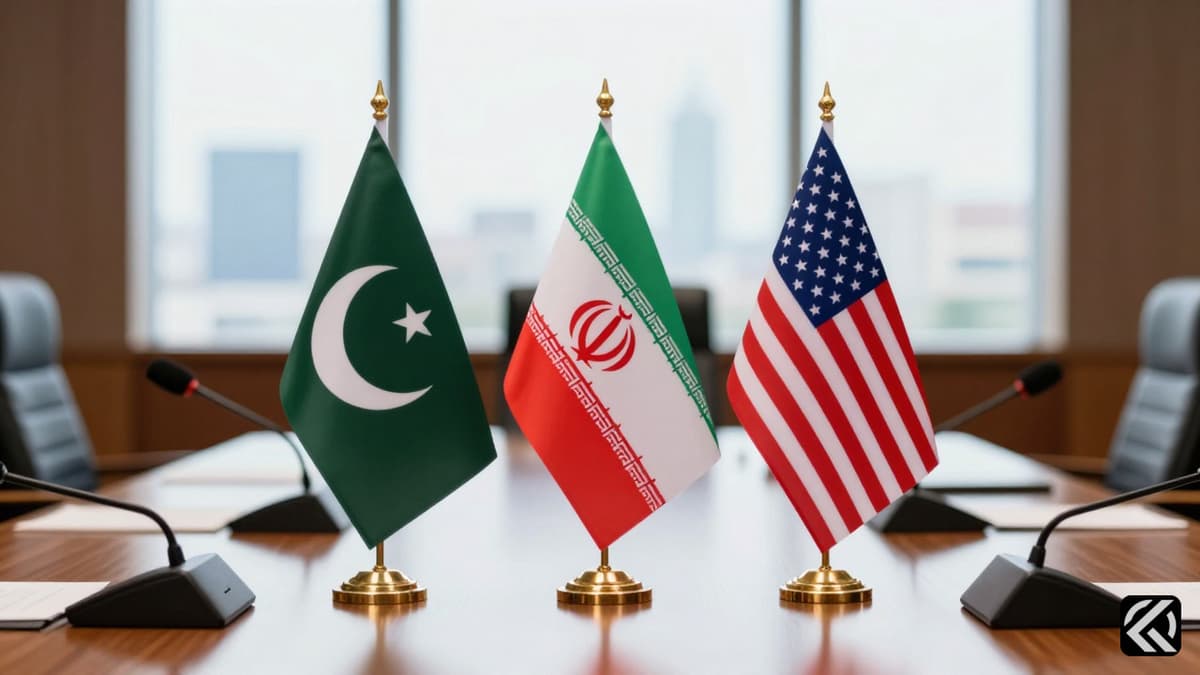
Congress MP Shashi Tharoor sparked controversy by questioning the authenticity of Islamabad's diplomatic stance, alleging US influence behind the Prime Minister's social media posts.
NEW DELHI: Congress MP Shashi Tharoor sharply criticized Islamabad on Saturday, suggesting Pakistan's influence in mediating the conflict between Iran and the United States was heavily scripted by Washington. While reporting on the ongoing Iran US ceasefire talks, Tharoor raised doubts about the authenticity of Prime Minister Shehbaz Sharif's social media activity, alleging that the US government directly authored the controversial post. This scrutiny emerged just as diplomats from both nations gathered in the Pakistani capital to negotiate a resolution to the escalating regional tension.
The controversy centers on a specific post by Pakistan's Prime Minister Shehbaz Sharif, which appeared on his official X account shortly before a major diplomatic breakthrough. Tharoor pointed out that the heading on the draft message read "Draft for Pakistan PM," a phrasing he found suspicious and indicative of external authorship. During a press interaction, Tharoor questioned whether any external party would allow such a label to remain visible if they were writing on behalf of another nation's leader. He argued that the language and specific phrases used in the post mirrored those recently utilized by US President Donald Trump, suggesting a coordinated effort rather than an independent Pakistani diplomatic initiative.
Tharoor's comments highlight a specific moment when Sharif posted a message calling for a two-week ceasefire and a pause in diplomatic tensions. The post appeared to align perfectly with a sudden shift in US strategy. Earlier, President Trump had issued a severe Donald Trump Iran threat, warning of sweeping strikes on Iranian infrastructure if Tehran did not meet specific demands. However, just hours before his deadline expired, Trump paused the planned attacks. He attributed this decision to conversations with Sharif and Pakistan's military leadership, signaling that the Pakistani Prime Minister's intervention played a crucial role in de-escalating the situation.
The post in question urged Trump to extend his deadline by two weeks to allow for further talks. It also called on Iran to reopen the Strait of Hormuz for the same period as a goodwill gesture. Sharif emphasized that such a pause was essential for achieving long-term peace and stability in the region. Within hours of this diplomatic overture, both Washington and Tehran confirmed a two-week ceasefire, marking a significant de-escalation from the brink of major military conflict. This rapid agreement suggests that the dialogue facilitated through Pakistan's channels was highly effective, even as political observers debate the origin of the messaging that triggered it.
Meanwhile, the physical reality of these high-stakes negotiations unfolded in Islamabad. Delegations from both the United States and Iran arrived on Saturday to hold peace talks regarding the ongoing war in the Middle East. The Iranian delegation, a substantial group of 71 members led by Parliament Speaker Bagher Ghalibaf and including top diplomat Abbas Araghchi, landed in the Pakistani capital early in the day. The arrival of such a high-level group underscored the gravity of the situation and the necessity of direct dialogue.
Simultaneously, the American delegation arrived at noon. This group included US Middle East envoy Steve Witkoff and Jared Kushner. The American side is being led by US Vice President JD Vance. The presence of these key figures in Islamabad indicates that the Pakistan PM Shehbaz Sharif tweet was not merely a social media exchange but part of a larger, synchronized diplomatic strategy. The convergence of these two powerful delegations in a neutral third country signals a critical turning point in the region's geopolitical landscape.
As the talks proceed, the implications for regional stability are profound. The agreement to a two-week ceasefire provides a window for finalizing a broader agreement, a sentiment echoed by Trump who expressed cautious optimism about the pause. The breakthrough followed a dramatic shift from Trump's earlier rhetoric, which had threatened significant military action. The involvement of Pakistan's leadership in bridging this gap has solidified the country's role as a pivotal mediator, though the origins of the communication that catalyzed this shift remain a subject of intense debate in political circles.
The convergence of US and Iranian delegations in Islamabad, prompted by the initial diplomatic overtures from Pakistan, marks a potential turning point in Middle East geopolitics. Based on the rapid agreement to a two-week ceasefire and the subsequent pause in military threats, the immediate future suggests a period of reduced hostilities. However, if the diplomatic channels tested during these talks prove effective, the region may see a transition from a temporary truce to a more permanent framework for stability. The extent to which the mediation continues to hold will depend on the sustained cooperation between Washington, Tehran, and Islamabad in the coming weeks.
Jun 8, 2026 02:17 UTC
Magnitude 7.8 Quake Shakes Philippines, Urging Immediate Evacuations
Jun 8, 2026 00:51 UTC
Trump Claims Iran Nuclear Deal Imminent Despite Diplomatic Fractures
Jun 8, 2026 00:47 UTC
Iran Fires Missiles at Israel After Beirut Strike
Jun 7, 2026 22:00 UTC
US, Iran Peace Hops Fade 100 Days Into War
Jun 8, 2026 04:15 UTC
Trump Urges Netanyahu to Halt Iran Strike for Peace


