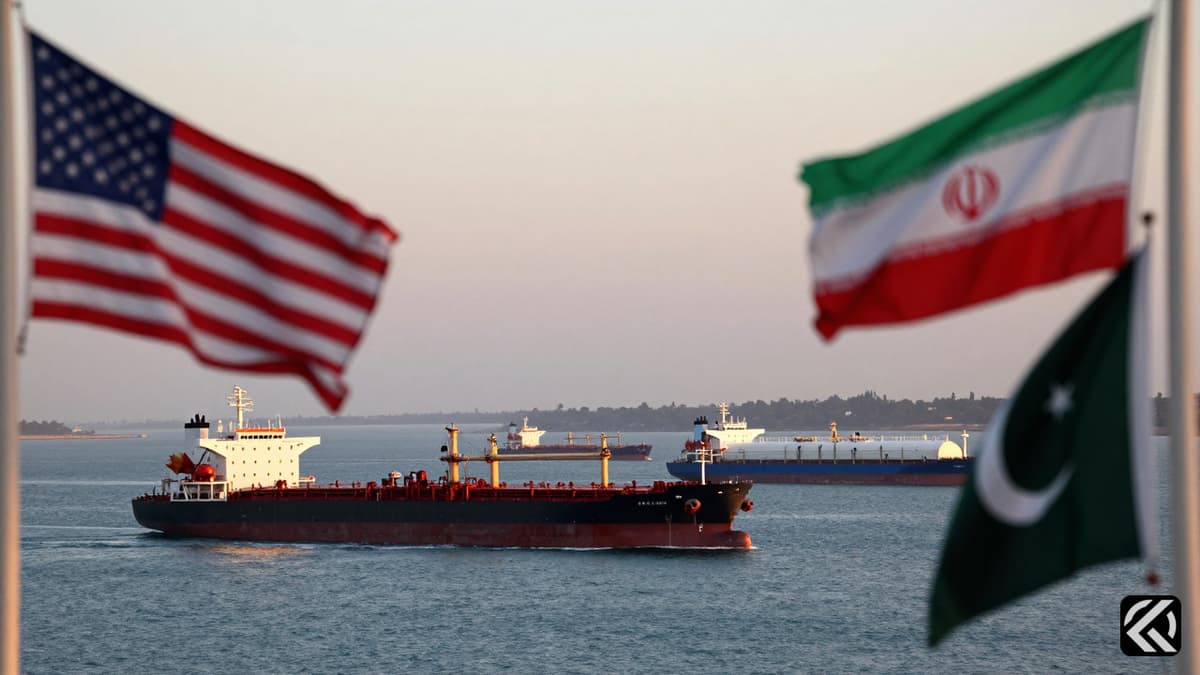
High-stakes diplomacy unfolds in Islamabad as US and Iranian delegations prepare for talks, with Pakistan playing a crucial mediation role amidst rising fuel costs and regional tensions.
As US Vice President JD Vance met with Pakistani Prime Minister Shehbaz Sharif in Islamabad on Saturday, high-stakes negotiations between Washington and Tehran loom ahead. Pakistan has emerged as a pivotal player in the efforts to end the ongoing war in Iran, which is now in its sixth week. The meeting, covered by pool reporters, marks a critical juncture in the region's diplomatic landscape as both sides seek a resolution to the escalating conflict.
The atmosphere in Islamabad was charged with anticipation as Sharif met earlier in the day with the Iranian delegation, setting the stage for potential bilateral discussions. The US delegation, comprising special envoy Steve Witkoff and President Donald Trump's son-in-law Jared Kushner, arrived to engage directly with the Pakistani leadership. Meanwhile, the Pakistani Foreign Minister and Interior Minister joined Sharif for the talks, which were held without press coverage, according to the Prime Minister's office. Sharif expressed hope that these talks would serve as a stepping stone toward durable peace in the region, commending the commitment of both sides to engaging constructively.
Simultaneously, the economic ripple effects of the war are becoming increasingly severe for global markets. European airports face a critical jet fuel crunch that could hamstring air travel across the region. ACI Europe, representing European airports, warned that if passage through the Strait of Hormuz does not resume significantly within the next three weeks, a systemic jet fuel shortage is set to become a reality for the European Union. The body warned that reduced air connectivity would significantly harm the European economy, exacerbating the macro-economic impact of rising oil prices.
The aviation industry is already reacting to the surge in jet fuel prices, which have more than doubled globally in the last year. Some Asia-Pacific airlines, including Air New Zealand and Vietnam Airlines, have begun cutting flights. Similarly, America's Delta Air Lines announced plans to reduce its flight schedule until the fuel environment improves. The peak summer season, crucial for tourism-dependent EU economies, is approaching, adding urgency to the call for urgent monitoring of jet fuel supply.
The diplomatic push in Islamabad is led by significant figures on both sides. Iran's delegation, consisting of 71 people including negotiators, experts, and security personnel, is led by parliament speaker Mohammad Bagher Ghalibaf. Foreign Minister Abbas Araghchi is also part of this group. The complexity of the negotiations is reflected in the size of the delegation, which includes technical and expert committees for necessary consultations. In contrast, the US delegation includes the aforementioned high-level officials.
A key figure in the background of these negotiations is Asim Munir, the head of Pakistan's powerful military. Munir, described as President Trump's "favorite field marshal," was among the first to welcome VP JD Vance to Islamabad. Munir has played a prominent role in Pakistan's ties with the US during Trump's second term, including an unprecedented lunch at the White House last June. He utilized his personal favor with Trump and longstanding relationship with Iran to help broker the ceasefire this week. On the tarmac, Munir greeted the VP in a black suit and green tie, an outfit change from the military uniform he wore earlier to welcome the Iranian delegation.
The trust dynamics within the negotiation table are complex. A senior Gulf source told CNN that Iranians have very little trust in US President Donald Trump's special envoy, Steve Witkoff, whose previous negotiations have been cut short by US strikes. Despite this, a senior Pakistani source praised JD Vance's role in pushing the US and Iran towards a diplomatic solution, suggesting that the vice president has been key to bringing the talks to Islamabad. The source assessed that it may take a few days of negotiations to lock in a ceasefire and noted that Pakistani officials are hopeful Vance will extend his stay to facilitate the process.
US intelligence indicates that China may be preparing to deliver new air defense systems, specifically shoulder-fired anti-air missile systems known as MANPADs, to Iran within the next few weeks. This potential move is viewed as provocative, especially given Beijing's claim of helping broker the fragile ceasefire. While a spokesperson for the Chinese embassy denied providing weapons to any party to the conflict, the intelligence suggests Iran may be using the ceasefire to replenish weapons systems with the help of foreign partners.
MarineTraffic data shows several ships, most of them Chinese, heading toward or transiting the Strait of Hormuz. However, traffic remains a small fraction of the normal 100 ships a day. A Chinese bulk carrier recently passed through after a month-long voyage, while two Chinese crude oil tankers laden with oil were heading towards the strait. A Botswana-flagged LNG tanker was also making a second attempt at leaving the Gulf. Iran maintains that vessels can only pass with its approval, citing US breaches of the ceasefire agreement, including continued Israeli strikes against Hezbollah, as justification for the current restrictions.
The convergence of diplomatic efforts in Islamabad and the looming fuel crisis creates a volatile but potentially transformative period for the region. If the negotiations succeed in locking in a ceasefire and ensuring the free flow of oil through the Strait of Hormuz, the economic impact on Europe and global markets could be mitigated. However, the deep-seated mistrust between Tehran and Washington, coupled with intelligence suggesting continued foreign arms deliveries to Iran, suggests that the path to a lasting peace remains fraught with obstacles. The international community will be watching closely to see if the talks can withstand the geopolitical pressures and resolve the fundamental issues threatening regional stability and global energy security.
Jun 8, 2026 00:51 UTC
Trump Claims Iran Nuclear Deal Imminent Despite Diplomatic Fractures
Jun 8, 2026 00:47 UTC
Iran Fires Missiles at Israel After Beirut Strike
Jun 7, 2026 22:00 UTC
US, Iran Peace Hops Fade 100 Days Into War
Jun 7, 2026 20:57 UTC
Iran Strikes Israel: IRGC Promises Week of Continuous Offensive
Jun 8, 2026 02:28 UTC
Trump Walks Out of Meet the Press After Rejecting Evidence Demands


