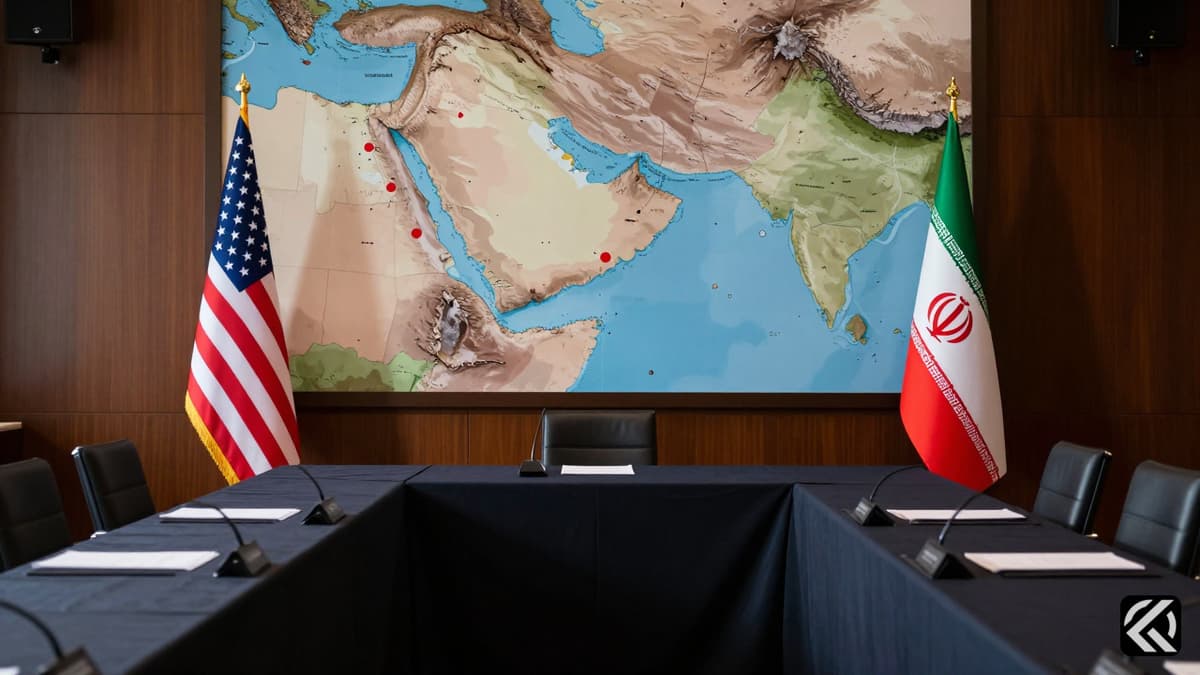
In a critical diplomatic push on day 43 of the conflict, high-ranking officials from Tehran and Washington gather in Pakistan to negotiate a truce while violence continues.
On day 43 of the US-Iran conflict, a high-stakes diplomatic effort has commenced in Islamabad, Pakistan. Senior Iranian officials have arrived at the seat of negotiations to meet with their American counterparts, hoping to halt the escalating violence that has swept across the region. This critical meeting marks a potential turning point as the two nations attempt to negotiate a truce while the death toll in neighboring Lebanon continues to rise and internal unrest in Iran intensifies due to a prolonged internet shutdown.
The gravity of the situation is palpable as the Iranian delegation, led by Parliamentary Speaker Mohammad Bagher Ghalibaf and Foreign Minister Abbas Araghchi, steps into the Iranian delegation to Islamabad for these essential talks. They face a determined US team headed by Vice President JD Vance, joined by special envoy Steve Witkoff, Jared Kushner, and Secretary of State Marco Rubio. Ahead of the meetings, Vance signaled a potential path forward, stating Washington is ready to "extend an open hand" if Iran engages in negotiations in good faith. However, this gesture of diplomacy is set against a backdrop of intense hostility, with Iran maintaining a state-imposed internet blackout that has now surpassed 1,000 hours, according to monitoring group NetBlocks.
The geopolitical landscape surrounding these talks is fracturing. While diplomats gather in Pakistan, the reality on the ground remains volatile. In Lebanon, the Health Ministry reported that at least 357 people were killed in Israeli attacks on Wednesday alone, with the total death toll expected to rise further. Since early March, nearly 2,000 people have been killed by Israeli air strikes and ground operations, leaving the country in a severe food security crisis as supply chains are disrupted and prices surge. Despite the scheduled ceasefire negotiations, Israel's military operations have continued, with the Israeli military reporting that Hezbollah fired approximately 30 projectiles into northern Israel, triggering air raid sirens and causing damage.
Tensions have been further inflamed by harsh rhetoric from US President Donald Trump, who asserted that Iran has "no cards" to play in these upcoming discussions. In a stark warning to Tehran, the President indicated that US warships are being reloaded with weaponry capable of striking Iran should the negotiations fail to produce a deal. Trump also vowed that the Strait of Hormuz would be reopened "fairly soon," with or without Iran's cooperation, emphasizing that Washington would "open up the Gulf" despite ongoing disruptions to global energy supplies. This urgency is compounded by domestic economic pressures in the United States, where consumer prices have surged to a two-year high, adding to the administration's need for a quick outcome. Former US ambassador Douglas Silliman noted that Trump is likely pushing for a rapid resolution to alleviate economic strain, with the reopening of the Gulf seen as a critical priority.
The diplomatic efforts have also drawn scrutiny regarding Israel's role in the region. Reports indicate that the US has asked Israel to halt attacks on Hezbollah in Lebanon to prevent derailing the negotiations. With the current US-Iran ceasefire set to expire on April 21, the window for a successful truce is narrow. Meanwhile, in Gaza, an Israeli air strike at the Bureij refugee camp killed at least six people, and tensions have flared in Jerusalem where over 100,000 people attended Friday prayers at the Al-Aqsa Mosque. Turkish President Recep Tayyip Erdogan has heavily criticized a new Israeli law allowing the death penalty for Palestinian prisoners, calling it a "worse version of the apartheid regime."
Amidst the chaos, skepticism remains high within Iran. Analyst Zohreh Kharazmi told Al Jazeera that while Tehran believes it holds leverage, including control over the Strait of Hormuz, many Iranians remain distrustful of the United States. The parliamentary speaker has demanded a truce in Lebanon and the release of blocked assets as part of the talks. As the talks proceed, the world watches to see if diplomacy can halt the violence or if the reloaded warships and expanding ground offensives will dictate the outcome of this volatile conflict.
The convergence of high-level diplomatic efforts in Islamabad and the brutal reality on the ground in Lebanon, Israel, and Gaza suggests a fragile peace is being attempted under extreme duress. The US administration, driven by surging inflation and the need to stabilize global energy markets via the Strait of Hormuz, appears willing to risk military escalation if diplomacy fails. As the deadline for the potential ceasefire approaches on April 21, the failure of these talks could lead to an immediate intensification of hostilities, with US warships poised for action and Iran maintaining its leverage over global shipping routes. If the negotiations do not yield a swift agreement, the region faces the high probability of prolonged and escalated conflict, with significant humanitarian and economic consequences extending far beyond the immediate borders of the involved nations.
Jun 8, 2026 00:51 UTC
Trump Claims Iran Nuclear Deal Imminent Despite Diplomatic Fractures
Jun 8, 2026 00:47 UTC
Iran Fires Missiles at Israel After Beirut Strike
Jun 7, 2026 22:00 UTC
US, Iran Peace Hops Fade 100 Days Into War
Jun 7, 2026 20:57 UTC
Iran Strikes Israel: IRGC Promises Week of Continuous Offensive
Jun 8, 2026 02:28 UTC
Trump Walks Out of Meet the Press After Rejecting Evidence Demands


