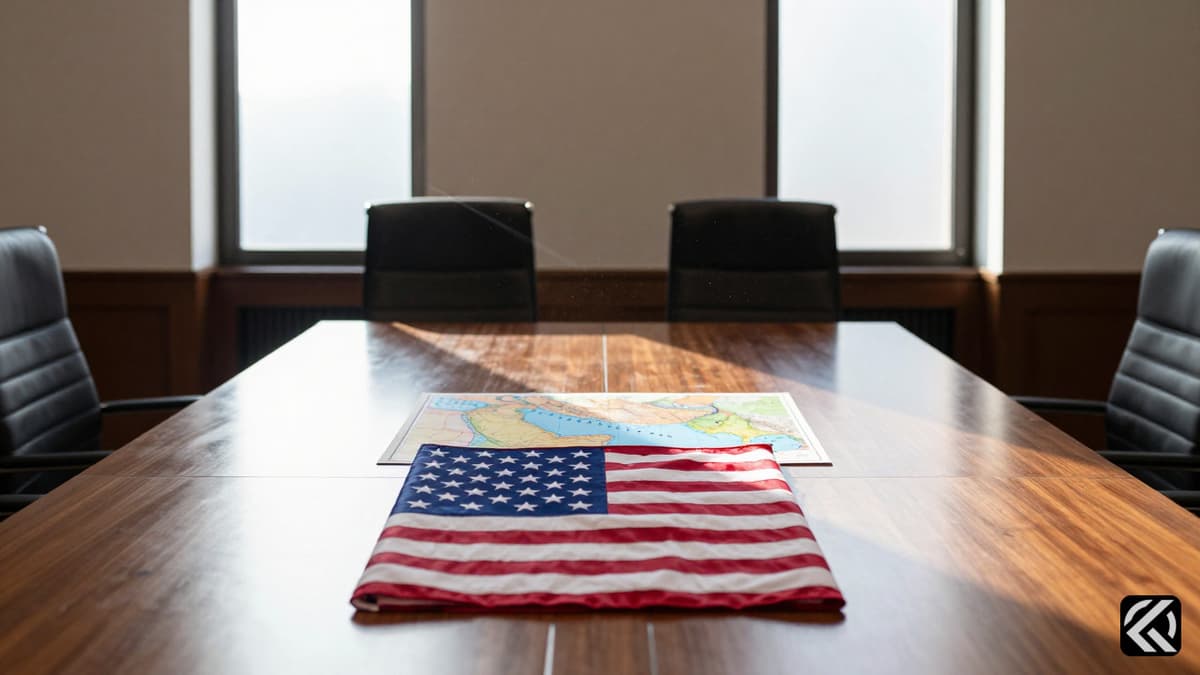
President Trump jokingly places the burden of ending the Iran war on Vice President JD Vance during an Easter lunch, setting the stage for a high-stakes diplomatic mission in Pakistan.
During a lighthearted moment at the Trump White House Easter lunch, President Donald Trump shifted the mood by addressing the Vice President's new burden. Trump joked that if a deal to end the war in Iran fails, he will blame JD Vance, but if it succeeds, he will take the credit. This remark occurred during an East Room event attended by senior officials, including Secretary of State Marco Rubio and Defence Secretary Pete Hegseth. The moment captured the precarious position Vance now holds as he leads a US delegation to Islamabad for critical negotiations.
The stakes for Vance are unprecedented in his short time as Vice President. He is tasked with leading talks with Iran, a mission described as a political minefield with limited upside and significant risks if negotiations collapse. The challenge involves navigating the competing interests of multiple stakeholders, including a weakened Iranian regime, a wary Israeli ally, and European nations that oppose the war and have been reluctant to assist in reopening the strategic waterway known as the Strait of Hormuz. A six-week military campaign has already engulfed the Middle East and roiled the global economy, making any agreement difficult to achieve.
A European official, speaking on condition of anonymity, noted that US allies are watching Vance closely. The official stated that Vance must step into the room and deliver a result, or he will be diminished. The situation requires a delicate balance; the deal must satisfy Trump, who has vacillated between calls for peace and threats to destroy Iran's civilization, while also securing the backing of the regime in Tehran. Additionally, Vance must convince European allies who have opposed the war and address the concerns of Trump's Make America Great Again (MAGA) base, many of whom are skeptical of foreign interventions.
This mission presents a complex contradiction for Vance, a former Marine who has previously expressed deep skepticism about US entanglements abroad. According to reports, Vance privately raised doubts with Trump regarding potential strikes on Iran. Jeff Rathke, president of the American-German Institute, noted that Vance's desire for restraint is hard to square with the current conflict. "Vance has tried to distance himself from the Iran campaign," said a senior European diplomat. "This war is absolutely not in his playbook."
To make progress, Vance must navigate the volatility of President Trump. In the days leading up to a temporary ceasefire, Trump gave Iran a 24-hour deadline to negotiate, warned on Truth Social that a civilization would die if they refused, and then announced the truce with less than two hours remaining before a planned escalation. A senior diplomat described the tense hours as some of the most nervewracking of Trump's second term.
Despite the volatility, Trump has tasked Vance with leading the negotiations. White House spokeswoman Anna Kelly confirmed that Vance is collaborating with special envoy Steve Witkoff and Jared Kushner, both of whom are joining the team in Pakistan. Before departing Washington, Vance attempted to lower expectations, stating that the US is willing to extend an open hand if Iran negotiates in good faith, while warning them not to "play us."
Vance's role as the face of "America First" has evolved through high-profile interactions, including a sharp critique of European immigration policy at the Munich Security Conference and a heated Oval Office meeting with Ukrainian President Volodymyr Zelensky. Mark Bednar, a strategist who worked on the transition team, called Vance the "perfect surrogate" for these negotiations due to his firm understanding of Trump's goals and the trust the president places in him. However, this alignment does not erase the tension between Vance's past anti-interventionist views and his current duty to execute a war policy he has previously questioned.
Vance was chosen to lead the delegation, though questions remain about whether this is a no-win assignment. A US official noted that the move signals to Iran that the administration is serious about reaching a deal. Retired Israeli brigadier general Assaf Orion welcomed Vance's inclusion as proof that America is committed to a durable peace.
Vance Foreign Policy Strategy Vance must now demonstrate his ability to shift from an "attack dog" to a diplomat. In Pakistan, he must navigate tense relations between adversaries while addressing technical challenges such as ending Iran's nuclear program and reopening the Strait of Hormuz. Unlike previous indirect talks led by Witkoff, Vance is now directly involved in the core negotiations. His ability to tune out the chatter in Washington and deliver a result will define his future standing.
If Vance can secure a deal, he will have successfully balanced the conflicting demands of a volatile president, regional allies, and domestic critics. If he fails, the risk of being "diminished" remains real. The coming weeks will reveal whether Vance can leverage his unique position as Trump's loyal lieutenant to achieve a breakthrough in a conflict that has already tested the limits of global stability. The outcome of these Vance Iran peace talks will not only determine the immediate future of the Middle East but also offer crucial clues about how Vance might handle foreign policy if he runs for president in 2028.
The deployment of the Vice President to Islamabad marks a significant escalation in diplomatic efforts to conclude the six-week war. Success in these negotiations hinges on Vance's ability to navigate a fragile truce while satisfying a president who frequently changes his mind. The immediate future will test whether the US can stabilize the Strait of Hormuz and prevent further global economic roiling. Long-term, the resolution-or lack thereof-will define the legacy of the Trump-Vance foreign policy approach and the durability of the "America First" doctrine in a volatile global landscape.
Jun 8, 2026 02:17 UTC
Magnitude 7.8 Quake Shakes Philippines, Urging Immediate Evacuations
Join 50,000+ readers getting the global briefing every morning.
No spam. Unsubscribe anytime.
Jun 8, 2026 02:17 UTC
Magnitude 7.8 Quake Shakes Philippines, Urging Immediate Evacuations
Jun 8, 2026 00:51 UTC
Trump Claims Iran Nuclear Deal Imminent Despite Diplomatic Fractures
Jun 8, 2026 00:47 UTC
Iran Fires Missiles at Israel After Beirut Strike
Jun 7, 2026 22:38 UTC
Congress Party Claims Unity for INDIA Bloc Delhi Meeting


