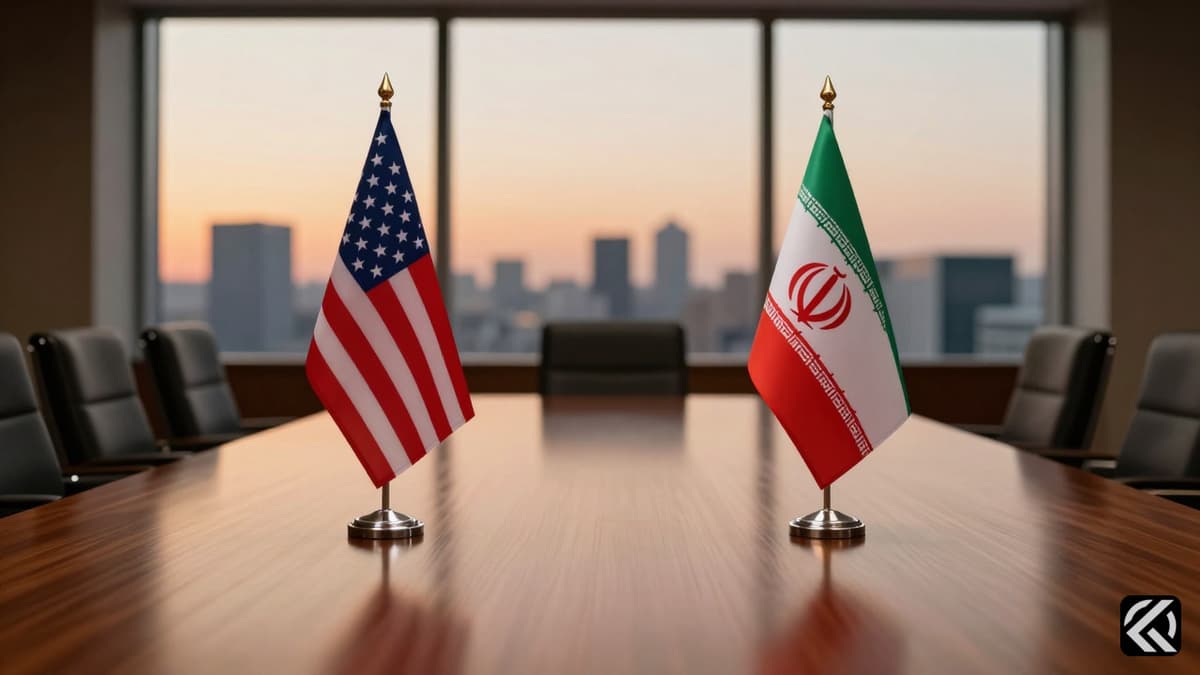
A historic moment unfolds as Iranian and US officials convene in Islamabad, signaling a desperate push for diplomacy amid a widening regional conflict and deep-seated distrust.
The Iranian delegation, led by Parliament Speaker Mohammad Bagher Ghalibaf, has arrived in Pakistan to initiate historic Iran-US peace talks. This gathering marks the highest-level face-to-face interaction between the two nations since the 1979 Islamic Revolution, a period that shattered their strategic bond and cast a long shadow over relations for decades. While the delegation expresses deep distrust of the US, the mere presence of Vice President JD Vance in Islamabad signals a desperate attempt by both sides to end the ongoing war and avoid further escalation through diplomacy.
The arrival of the delegation follows a timeline of intense conflict that began on February 28, when US-Israel strikes on Tehran killed Supreme Leader Ayatollah Ali Khamenei and triggered regional upheaval. Despite the violence, a 14-day ceasefire was announced between the US and Iran on April 7, though its terms were immediately contested. While Iran and the US engage in these preliminary discussions in Pakistan, the situation in the Levant remains volatile. Israeli and Lebanese officials are set to meet in Washington DC to begin talks on a Israel-Lebanon ceasefire, a move that comes after Israel stated there would be no ceasefire in Lebanon and that Hezbollah remains excluded from negotiations.
The Iranian delegation includes key figures who will determine the outcome of these Iran-US peace talks. Speaker Mohammad Bagher Ghalibaf, who has recently emerged as a prominent figure in the government, has publicly expressed Iran's skepticism regarding the US commitment to a deal. Reports also suggest that the US administration previously considered Ghalibaf as a potential partner or future leader, adding a layer of complexity to their current interactions. Joining him are Foreign Minister Abbas Araghchi, a veteran of nuclear negotiations, and Central Bank Governor Abdolnaser Hemmati. Their presence underscores the economic stakes, as Iran demands the lifting of all economic sanctions that have crippled its economy for years.
Iran's current economic state is described as worse than before the war began, exacerbated by US and Israeli attacks on major industries like steel and petrochemicals. The government has also enforced an internet outage since the start of the conflict on February 28, causing further damage to businesses. During the talks, the Iranian side has laid out preconditions, including a ceasefire in Lebanon and the unfreezing of billions of dollars in Iranian assets. These demands highlight the deep complexities facing the negotiators, as the regime insists that the right to enrich uranium is non-negotiable, even as the US seeks a commitment that Iran will never pursue a nuclear weapon.
The nuclear program negotiations remain the most significant and oldest issue at the heart of the conflict. Since President Donald Trump withdrew from the landmark nuclear deal in 2018, Iran has enriched uranium to levels beyond what is needed for a civil program. The US demands that Iran hand over its enriched material, which is believed to be located under the rubble of a facility near Isfahan, and commit to never developing a bomb. Conversely, Iran argues that its enrichment rights are a sovereign right that cannot be compromised. The dispute extends to the Strait of Hormuz, which Iran has used as a potent weapon by establishing a chokehold on global maritime traffic. Tehran seeks to institute new rules, including tolls or inspection rights, a proposal that is considered a non-starter by Gulf states and the wider international community.
President Donald Trump, speaking to reporters before boarding a plane to Charlottesville, Virginia, expressed confidence in the diplomatic mission. When asked if he had a backup plan for the talks, Trump stated, "you don't need a back-up plan." He added that he wished Vice President JD Vance luck as he flew to Islamabad. Trump also clarified his conditions for a successful outcome, stating simply, "No nuclear weapon," while noting his belief that a regime change has already occurred. He further asserted that the US would ensure the Strait of Hormuz remains open "with or without" Iranian cooperation, dismissing reports that Iran might toll ships passing through the waterway.
In the parallel track of diplomacy, the path to an Israel-Lebanon ceasefire remains fraught with disagreement. While Lebanese President Joseph Aoun has called for direct talks, Israel has maintained that Hezbollah, the main obstacle to peace, will not be part of the negotiations. Israeli Prime Minister Benjamin Netanyahu reiterated that the deal with Iran did not cover Lebanon and that Israel would continue its attacks on the country. Despite this, both nations agreed to participate in talks mediated by the US on Tuesday. The conflict in Lebanon has already claimed over 1,700 lives since Israel launched its campaign last month, with a massive aerial attack on April 8 killing at least 303 people and wounding 1,150, drawing international condemnation for alleged ceasefire violations.
The stakes for these talks are incredibly high, with the fragile ceasefire in place facing constant threats. The timeline of events has been rapid and chaotic, with the US and Iran agreeing to a 14-day truce just days before the conflict in Lebanon intensified. The inclusion of key government figures in the Iranian delegation, including the head of the parliament and the central bank governor, indicates a serious effort to address the multifaceted crisis. However, analysts remain skeptical about the resolution of core issues like the nuclear program or the status of the Strait of Hormuz within this brief window.
While the specific terms of the Iran-US peace talks remain contested, the mere commencement of these high-level dialogues in Islamabad represents a significant shift from the rhetoric of the past decade. The historical context of the 1979 revolution and the subsequent breakdown of relations makes this meeting a pivotal moment that could alter the trajectory of the region. However, the lack of consensus on a Israel-Lebanon ceasefire and the unresolved nuclear issues suggest that immediate, comprehensive solutions are unlikely. Predictive analysis based on the source material indicates that the most immediate success would be the survival of the fragile ceasefire rather than a complete resolution of deep-seated grievances. The international community, particularly Gulf nations, will likely focus on ensuring that the Strait of Hormuz remains open, as any disruption would have catastrophic global economic consequences. As the talks proceed, the world watches to see if diplomacy can overcome the deep distrust and military realities that currently define the region.
Jun 8, 2026 00:51 UTC
Trump Claims Iran Nuclear Deal Imminent Despite Diplomatic Fractures
Jun 8, 2026 00:47 UTC
Iran Fires Missiles at Israel After Beirut Strike
Jun 7, 2026 22:00 UTC
US, Iran Peace Hops Fade 100 Days Into War
Jun 7, 2026 20:57 UTC
Iran Strikes Israel: IRGC Promises Week of Continuous Offensive
Jun 8, 2026 02:28 UTC
Trump Walks Out of Meet the Press After Rejecting Evidence Demands


