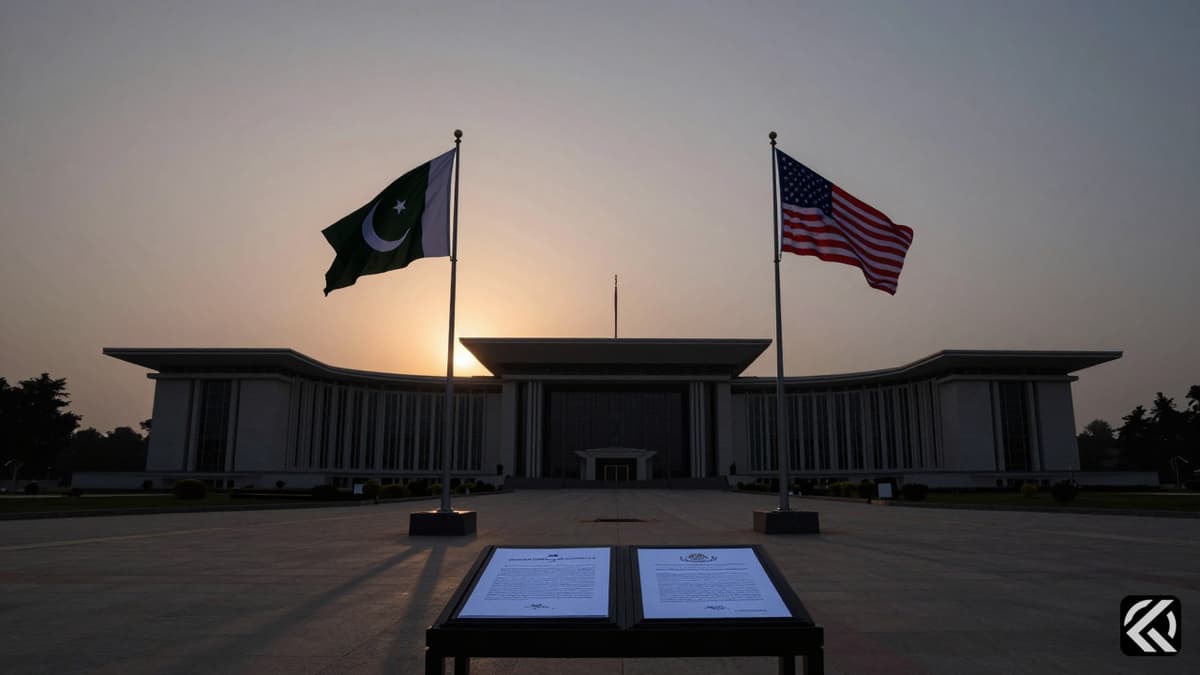
Amidst high-stakes Iran-US mediation in Islamabad, Shashi Tharoor raises eyebrows with allegations that Pakistan's role is compromised by Washington's influence.
NEW DELHI: Congress MP Shashi Tharoor sharply criticized Islamabad on Saturday while the city hosted critical peace negotiations between Iran and the United States. The controversy centers on recent social media activity by Pakistan Prime Minister Shehbaz Sharif, which Tharoor claims reveals a compromised position regarding the ongoing regional crisis.
The incident began when Sharif briefly posted a message on his official X account regarding the escalating conflict. The post called for a two-week ceasefire and a diplomatic pause, urging Donald Trump to extend his deadline for military action. Shortly after, Washington and Tehran confirmed a two-week truce, a breakthrough that occurred days after Trump threatened sweeping strikes on Iranian infrastructure. Tharoor pointed out the suspicious nature of the PM's post, suggesting it was not an independent diplomatic move but rather influenced by Washington.
Tharoor highlighted allegations that the post was actually drafted in Washington, noting the heading "Draft for Pakistan PM" reportedly appeared on the document. "If you and I wrote something for the Indian Prime Minister, would we write 'Draft for India's PM' above it?" Tharoor asked reporters, emphasizing the linguistic oddities of the message. He further noted that the language used mirrored that of Washington and included phrases similar to those used by Donald Trump just hours earlier. The Congress MP questioned the extent of Pakistan's independence, stating, "Only Pakistan can play the kind of role it has played with Washington."
The diplomatic efforts in Islamabad involved high-profile delegations from both sides arriving on Saturday. The Iranian delegation, led by Parliament Speaker Bagher Ghalibaf and consisting of 71 members including top diplomat Abbas Araghchi, landed early in the day. In response, the US Middle East envoy Steve Witkoff and Jared Kushner arrived at noon, with the American delegation led by US Vice President JD Vance. These meetings were crucial as the two nations moved toward a temporary truce to avert a major escalation in the Middle East.
The context of these talks was defined by recent threats from Donald Trump, who had warned of comprehensive attacks on Iranian infrastructure unless Tehran met specific demands. However, the President paused planned attacks shortly before his deadline, citing conversations with Sharif and Pakistan's military leadership as the catalyst for the delay. Trump announced that the two-week period would allow time to finalize an agreement, signaling a shift from threat to cautious optimism. The post by Sharif had urged all warring parties to observe a ceasefire, framing the pause as essential for long-term regional stability, and had specifically appealed to Iran to reopen the Strait of Hormuz as a goodwill gesture.
Tharoor's critique adds a layer of political tension to the already fragile diplomatic landscape. By questioning the authenticity and origin of the Prime Minister's message, he challenges the narrative of Pakistan's neutrality in the Iran-US talks. The implication that the post was written in Washington suggests a deeper alignment between Islamabad and Washington than might be publicly acknowledged. The coincidence of the post's timing with the US-Iran truce only strengthens the allegations that the diplomatic maneuvering was coordinated from the American capital rather than arising from Pakistan's independent foreign policy stance.
The convergence of the two delegations in the Pakistani capital marks a pivotal moment in Middle East relations, potentially altering the trajectory of the conflict. The agreement on a two-week ceasefire, driven by the interplay between Trump's ultimatum and the mediated pause, suggests that dialogue can supersede military threats under specific conditions. If this temporary truce holds, it could pave the way for more substantial negotiations on the Strait of Hormuz and infrastructure security. However, the controversy surrounding the origin of the initial ceasefire call raises questions about the long-term reliability of Pakistan's mediation efforts. Should these doubts persist, it may complicate future diplomatic initiatives, forcing the international community to seek alternative venues for resolving the crisis. The success of these talks will ultimately depend on whether the ceasefire proves sustainable and if the underlying mistrust between the US and Iran can be addressed.
Jun 8, 2026 02:17 UTC
Magnitude 7.8 Quake Shakes Philippines, Urging Immediate Evacuations
Jun 8, 2026 00:51 UTC
Trump Claims Iran Nuclear Deal Imminent Despite Diplomatic Fractures
Jun 8, 2026 00:47 UTC
Iran Fires Missiles at Israel After Beirut Strike
Jun 7, 2026 22:00 UTC
US, Iran Peace Hops Fade 100 Days Into War
Jun 8, 2026 04:15 UTC
Trump Urges Netanyahu to Halt Iran Strike for Peace


