The DC appeals court has granted the Trump administration extra time to appeal a ruling against the White House ballroom, while questioning the administration's national security claims.
The United States appeals court has granted a temporary extension to the pause on the White House ballroom construction, pushing the deadline to April 17. This ruling allows the administration of Donald Trump additional time to seek Supreme Court review of a lower court order that previously barred further building.
This development follows a March 31 order issued by Judge Richard Leon, a George W. Bush appointee, who mandated a pause on the project. The district court ruled that the transformation required the White House grounds, necessitating congressional authorization which had not been obtained. While Leon's initial injunction included exceptions for safety and security measures, it also included a 14-day temporary stay to allow for an appeal, a period that was set to expire this week.
On Saturday, a three-judge panel from the District of Columbia extended the stay on the injunction. However, the decision was not unanimous. Judges Patricia Millett and Bradley Garcia, both appointed by Democratic presidents, formed the majority opinion, while Judge Neomi Rao, a Trump appointee, issued a dissent. The majority opinion expressed skepticism regarding the administration's arguments, specifically concerning the alleged national security risks posed by the delay.
The Trump administration had previously argued that pausing the erection of the facility would create a security risk and filed an emergency motion on April 4 to lift barriers. However, the appeals court noted that the administration had failed to demonstrate how the national security concerns were not already covered by the exemptions in the original order. The majority written opinion stated, "Defendants have not, on this record, explained how, if at all, the injunction interferes with their existing plans for safety and security at the remaining portions of the White House during the construction project."

Furthermore, the court highlighted inconsistencies in the administration's timeline arguments. The team had argued that the delay presented a risk, yet they had acknowledged that the White House ballroom is a multi-year project not expected to be completed for nearly three years from the time ground was broken. The judges questioned how a delay during legal proceedings imposed harm beyond the "expected and consciously undertaken risks of a lengthy and major construction project."
In light of these unresolved issues, the appeals court remanded the case back to the lower court. The judges requested clarification on factual questions regarding the national security exception and the scope of the construction necessary for safety. In her dissent, Judge Rao argued that this request for further fact-finding would impede the administration's work and that the "irreparable injury" caused by halting the project outweighed the "generalized aesthetic harms" raised by critics.
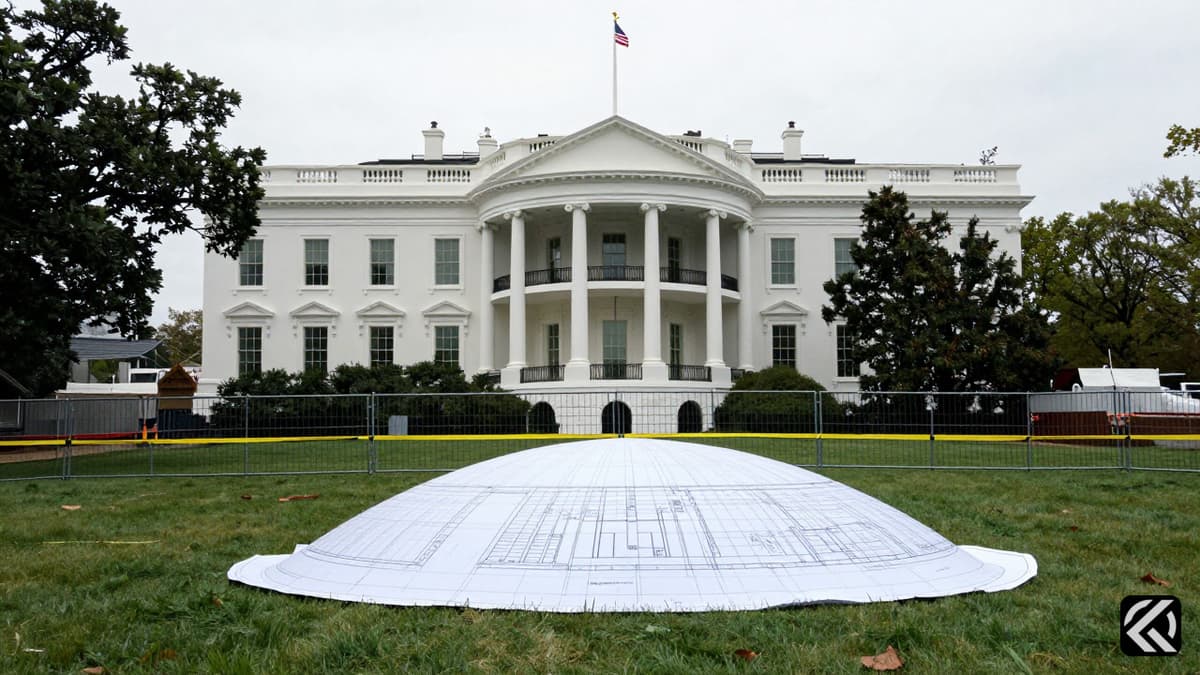
The construction of the White House ballroom has become a significant flashpoint since ground was broken last October. To accommodate the massive 90,000-square-foot structure, the East Wing, which had stood since 1902, was abruptly torn down within three days without prior notice. Critics, including the National Trust for Historic Preservation, filed a lawsuit in December arguing that the President exceeded his authority by unilaterally deciding to build such a transformative project without seeking Congressional approval.
Judge Leon had previously sided with the National Trust in his March decision. He wrote that the administration's interpretation of the statutes incorrectly assumed Congress granted the President nearly unlimited power to construct anything on federal land in the District of Columbia. Leon stated, "This clearly is not how Congress and former Presidents have managed the White House for centuries, and this Court will not be the first to hold that Congress has ceded its powers in such a significant fashion!"
The current judicial standoff highlights a deeper constitutional question regarding executive power versus legislative authority over federal land usage. The appeals court's decision to remand the case rather than immediately lifting the stay suggests that the lower court's findings on the lack of authorization remain the central legal hurdle. If the administration cannot definitively prove that the construction is strictly limited to safety and security needs without the ballroom's full scope, the injunction may return.
The dissenting view offered by Judge Rao indicates a potential shift if the Supreme Court eventually reviews the case, as she prioritizes the potential injury to the President's ability to complete the project over the aesthetic and procedural concerns of the plaintiffs. However, the majority's focus on the timeline discrepancies and the lack of evidence regarding specific security threats suggests that the legal path to completion remains complex. The outcome will likely depend on how the lower court interprets the "safety and security" exemptions in the face of the administration's own admissions about the project's lengthy timeline.
Jun 8, 2026 04:15 UTC
Trump Urges Netanyahu to Halt Iran Strike for Peace
Join 50,000+ readers getting the global briefing every morning.
No spam. Unsubscribe anytime.
Jun 8, 2026 02:28 UTC
Trump Walks Out of Meet the Press After Rejecting Evidence Demands
Jun 8, 2026 02:17 UTC
Magnitude 7.8 Quake Shakes Philippines, Urging Immediate Evacuations
Jun 8, 2026 00:51 UTC
Trump Claims Iran Nuclear Deal Imminent Despite Diplomatic Fractures
Jun 8, 2026 00:47 UTC
Iran Fires Missiles at Israel After Beirut Strike