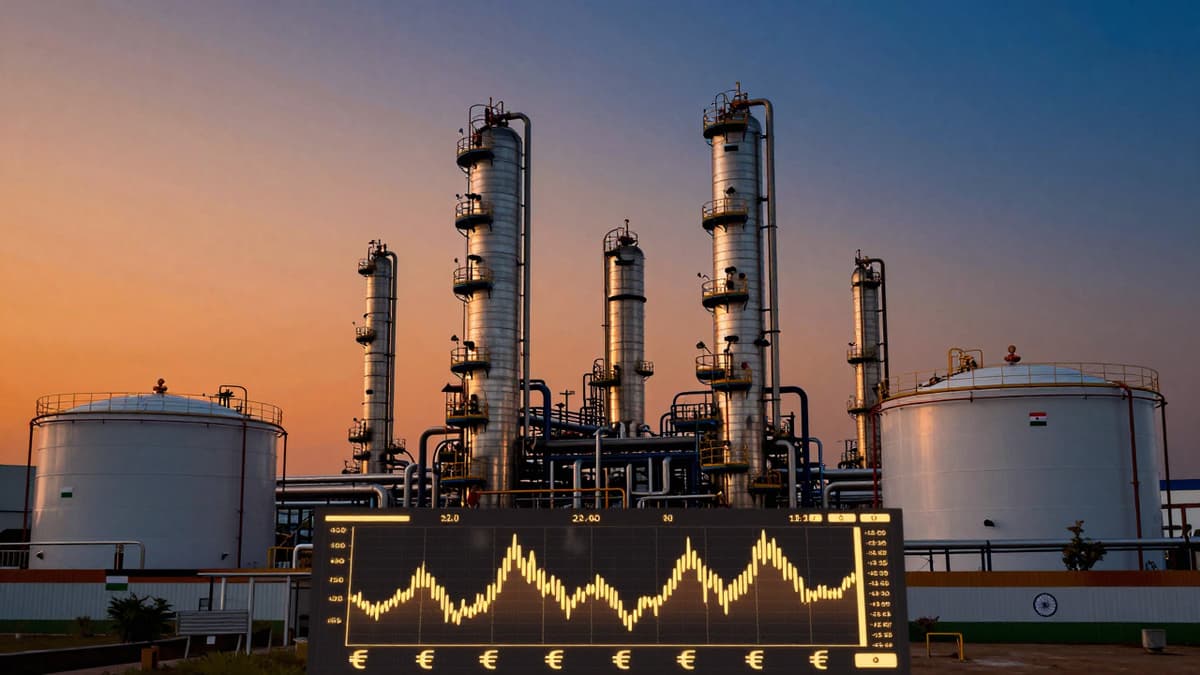
The Central Government slashed excise duties to counter soaring crude prices, a move causing a massive revenue gap partially offset by new export taxes on diesel and ATF.
The Central Government has stepped in to shield both consumers and oil companies from the impact of high crude prices by slashing the excise duty on petrol and diesel. This significant policy shift aims to stabilize fuel costs for citizens and reduce losses for refiners amidst a 62% surge in crude prices this month. With the Central Board of Indirect Taxes and Customs confirming the move, the exchequer faces a projected revenue hole of over Rs 7,000 crore. To mitigate this financial impact, the government simultaneously imposed an export duty on diesel and aviation turbine fuel (ATF) to curb windfall gains as fuel remains in short supply in international markets.
In a move driven by the skyrocketing average cost of crude for Indian refiners, which rose from $69 in February to $111.93 in March, the Centre decided to cut special additional excise duty by Rs 10 on both auto fuels. This decision comes as fuel retailers, including IndianOil, Hindustan Petroleum, and Bharat Petroleum, are currently losing around Rs 24 on every litre of petrol and Rs 30 on a litre of diesel sold. While most countries are increasing pump prices due to the ongoing situation in West Asia and new export curbs imposed by China, the Indian government sought to absorb these rising input costs to prevent further strain on the economy. Central Board of Indirect Taxes and Customs chairman Vivek Chaturvedi highlighted that the new export levy, set at Rs 21.5 a litre for diesel and Rs 29.5 a litre for ATF, is expected to generate a gain of about Rs 1,500 crore in the first fortnight. However, this gain will only partially offset the revenue the government must forgo.
Finance Minister Nirmala Sitharaman addressed the Rajya Sabha, stating that the government has resolved to provide relief through a significant reduction in excise duties to ensure stable prices. She emphasized that while the government takes a huge hit on taxation revenues, it remains committed to mobilizing additional non-tax revenues to manage the country's fiscal position. Petroleum Minister Hardeep Puri added that the spike in global energy prices has resulted in a scenario where most countries have increased pump prices, yet Indian refiners were taking a hit after months of profits. He clarified that any refinery exporting to foreign nations will now have to pay the new export tax, a measure designed to align the duty with prevailing international rates. This export tax, which will be reviewed fortnightly similar to the mechanism used in 2022, explicitly excludes fuel exported by public sector oil companies to neighboring nations like Nepal, Bhutan, Bangladesh, and Sri Lanka, as well as ATF supplied to foreign-going aircraft.
The political reaction to this fiscal maneuver has been sharply divided across party lines. Home Minister Amit Shah and the BJP lauded the decision, with Shah describing it as an act of "people-centric governance" and "sensitivity-led decision-making." He noted that amid the fuel shortages driving up prices globally, the Modi government's decision brings much-needed relief to citizens. Defence Minister Rajnath Singh echoed these sentiments, calling the move a timely and decisive step that underscores the government's proactive approach and commitment to public welfare. In stark contrast, the Congress party dismissed the announcement as a political tactic. General Secretary Jairam Ramesh argued that the government has not reduced oil prices during previous instances when global crude fell seven times in the last 12 years. He warned that the current reduction is merely a subterfuge ahead of assembly elections, suggesting consumers should wait until April 30th for a genuine assessment.
The government's decision to slash the excise duty cut while imposing an export tax diesel levy represents a critical balancing act in a volatile global market. The immediate impact of this policy involves a direct trade-off: the exchequer sacrifices over Rs 7,000 crore in revenue to support consumers and refiners facing a 62% price surge, while the new export duty aims to recoup approximately Rs 1,500 crore in the short term. Given the government's pledge to review the export tax fortnightly, the fiscal landscape will likely remain dynamic, adapting to the evolving situation in West Asia and China's export curbs. If global crude prices continue to rise or supply shortages persist, the reliance on export duties to offset revenue losses may increase, potentially leading to further adjustments in domestic fuel pricing strategies. The long-term success of this approach will depend on the government's ability to mobilize additional non-tax revenues as promised by Finance Minister Sitharaman to maintain fiscal stability amidst these high-cost energy realities.
Jun 8, 2026 02:17 UTC
Magnitude 7.8 Quake Shakes Philippines, Urging Immediate Evacuations
Join 50,000+ readers getting the global briefing every morning.
No spam. Unsubscribe anytime.
Jun 8, 2026 02:17 UTC
Magnitude 7.8 Quake Shakes Philippines, Urging Immediate Evacuations
Jun 8, 2026 00:51 UTC
Trump Claims Iran Nuclear Deal Imminent Despite Diplomatic Fractures
Jun 8, 2026 00:47 UTC
Iran Fires Missiles at Israel After Beirut Strike
Jun 7, 2026 22:38 UTC
Congress Party Claims Unity for INDIA Bloc Delhi Meeting


